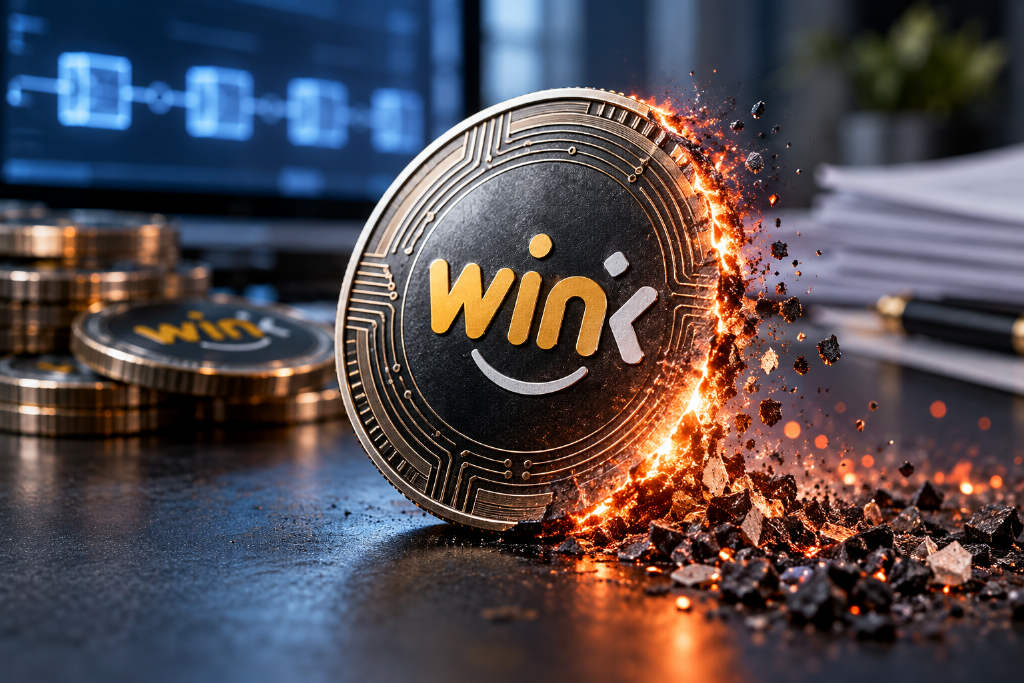
WINkLink said on Oct. 19 that it has completed the first round of execution under its WIN buyback and burn program, which was launched in the third quarter of 2026. In this round, the project burned 67,357,364,510 WIN tokens, or about 67.36 billion.
According to the plan, 100% of the revenue generated by WINkLink will be used to repurchase WIN, creating an ongoing deflationary mechanism backed by protocol revenue. The project said details of the burn and the related on-chain transaction records are publicly available, making the process transparent and verifiable.
WINkLink added that the completion of the first buyback-and-burn round represents a concrete step in optimizing its tokenomics and supporting long-term ecosystem development, while also laying the groundwork for future rounds to proceed on a regular basis.
WINkLink said on Oct. 19 that it has completed the first round of its WIN buyback and burn program, which was launched in the third quarter of 2026.
A total of 67,357,364,510 WIN tokens were burned in the first round, equivalent to about 67.36 billion WIN.
Under the plan, 100% of the revenue generated by WINkLink will be used to repurchase WIN, creating a sustained deflationary mechanism backed by protocol revenue.
The project said details of the burn and the related on-chain transaction records are publicly available, and that the execution process is transparent and verifiable.
WINkLink said the first completed buyback-and-burn round marks a concrete step in optimizing tokenomics and supporting the ecosystem's long-term development, while laying the foundation for future rounds to continue on a regular basis.
This article was originally published by Bit.Fan. For more cryptocurrency news and market insights, visit www.bit.fan. Disclaimer:
The market information, project data, and third-party content displayed on this platform are for industry information sharing only and do not constitute any form of investment advice or return commitment.
Cryptocurrency trading carries high risks. Users should fully assess their risk tolerance and make independent decisions. All profits, losses, and legal responsibilities are borne by the users themselves.