
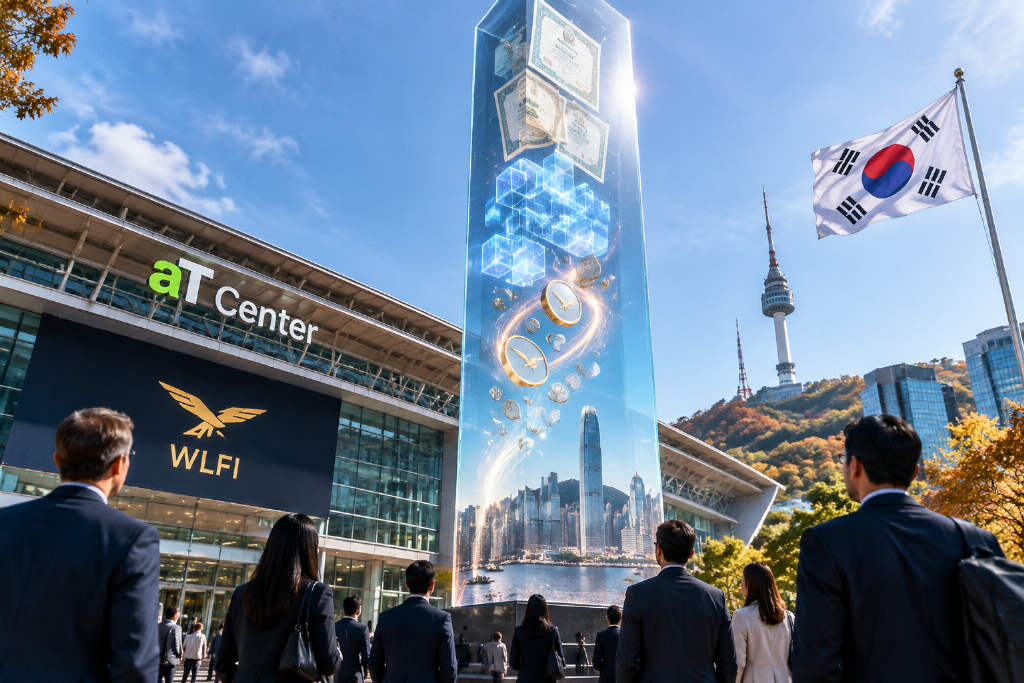
GWDC 2026 Korea was held on Sept. 29-30, 2026 at the aT Center in Seoul, South Korea. The event was hosted by Web3Labs and co-organized by Techub News, HypaiLabs, and TokenPost.
Speaking during a fireside chat on the second day of the conference, WLFI co-founder Ryan Fang said the shift of more asset ownership onto blockchains is a logical technological progression. He said that model would allow people around the world to access any asset using any currency.
Stablecoins as the entry point for on-chain capital
Fang said WLFI has devoted significant effort to stablecoins because they can act as a pricing benchmark and serve as a channel for global capital to enter on-chain assets and investment opportunities.
Regulated equities should move on-chain first
Asked which assets are best suited to go on-chain first, Fang said regulated stocks are the strongest candidate. He said clearer regulation for on-chain stocks and securities in markets outside the United States would be meaningful, and added that he hopes to see assets from South Korea and Hong Kong brought on-chain.
He used his own experience as an example. As an individual investor in the United States, he said he had previously wanted to invest in a Korean company but found it difficult to do so in practice. The issue, he said, was not a lack of willingness to comply with rules. The barrier was that access for overseas individual investors was too high. Even though that company later issued an American depositary receipt, he said that was only one case, while many companies still do not have such a channel.
Fang added that investors in different markets show strong interest in assets tied to robotics, chips, and AI. In his view, the core issue is accessibility in capital markets and investment channels.
Stablecoins could expand into lending, leverage, and payments
On stablecoin use cases, Fang said they are not limited to investment activity and will also take on a larger role in leverage and lending. He said users could borrow in DeFi against on-chain stocks and similar assets used as high-quality collateral, and that this structure is easier to extend to global users than a centralized framework.
He also said the case for stablecoins in global payments remains intact.
Regulation seen as key to investor and institutional confidence
On regulation, Fang said clear rules can give investors confidence in holding assets and can also encourage institutions to commit more capital when investor protection mechanisms are in place. He said the United States has already seen a number of positive developments and that he hopes other countries will also make constructive regulatory progress.
Five- to ten-year outlook centers on blockchain, stablecoin payments, and AI
Looking out five to ten years, Fang said the biggest opportunity lies in the combination of blockchain, stablecoin payments, and AI. He said computing power, storage, model access, and agent payments are becoming digitized. Companies working with stablecoins and blockchain that can find product-market fit in those areas and improve efficiency will hold an advantage.
He said that could make an environment where individuals, institutions, and agents coexist more efficient and more convenient.