Prediction Market Surge and the Copy-Trading Dilemma
As the 2026 World Cup kicks off, prediction markets are experiencing an unprecedented surge in activity. Massive betting on match outcomes, group standings, champion predictions, and golden boot rankings drives trading volumes and user engagement to all-time highs. Yet most retail users struggle to achieve consistent profits amidst constantly shifting probabilities. Many try to follow 'smart money' on social media, but manual copy-trading lags behind real-time probability changes, causing missed opportunities.
The 'Smart Money Trap': Profitable Addresses Are Not Always Copyable
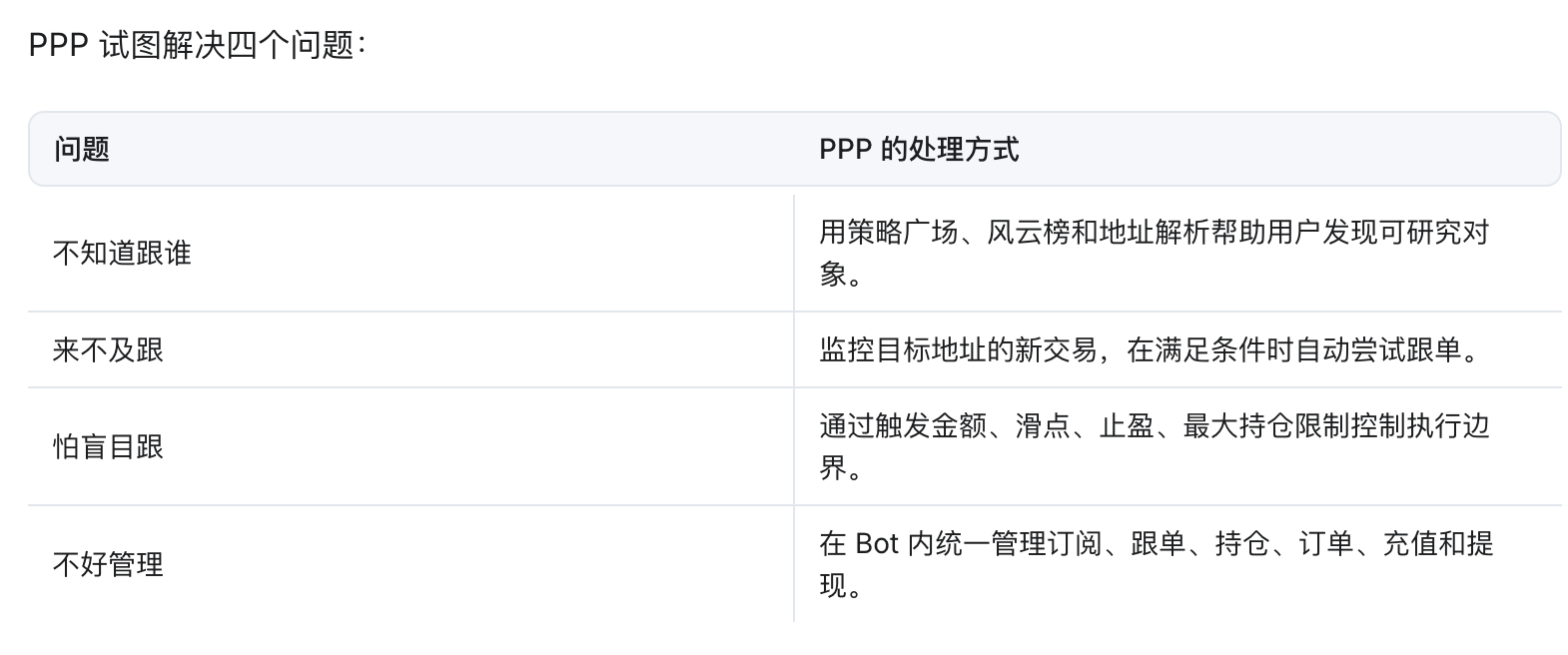
Mainstream copy-trading tools often rank addresses solely by total profit or recent win rate. Users see wallets with millions in gains and blindly follow, only to lose money. PPP (Prediction Position Platform) explains that some addresses profit from privileged information, extreme positions, one-time market moves, or large capital advantages. Retail users ignoring drawdown, liquidity, and position style are prone to unexpected results. A truly copyable address must demonstrate statistically stable profitability over a long period, with indicators like win rate, maximum drawdown, strategy consistency, and position allocation all meeting rigorous standards.
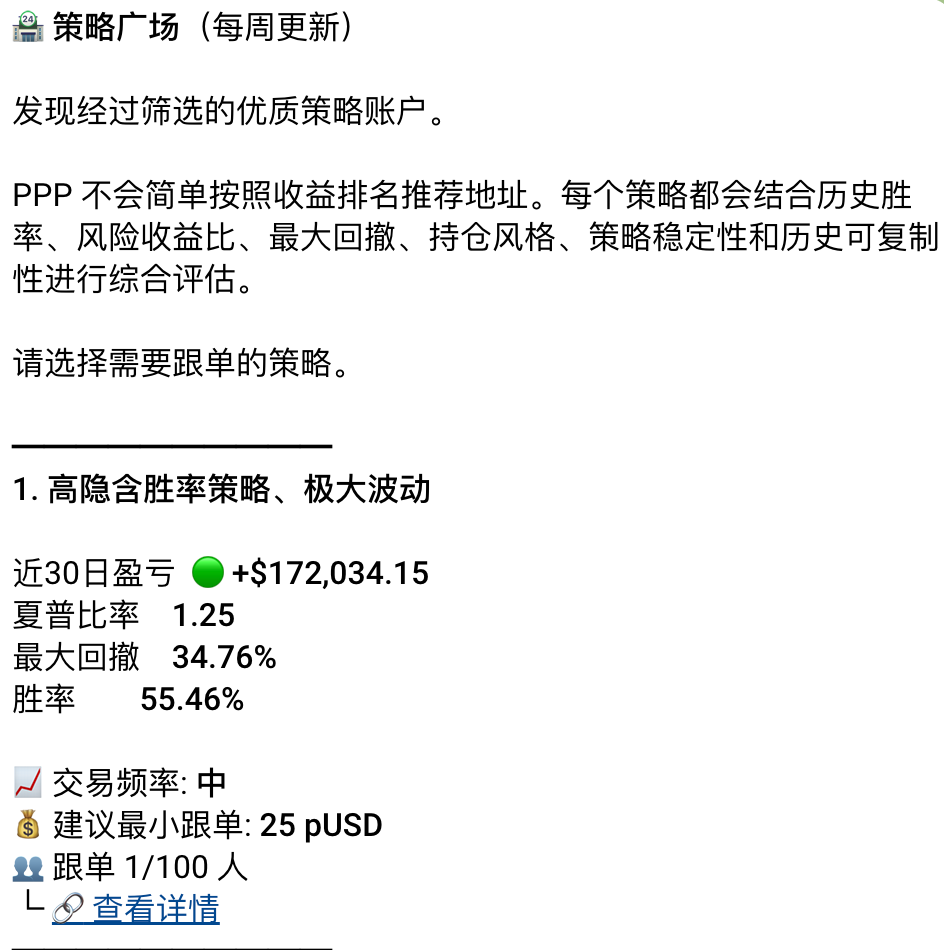
Dual Screening: AI Modeling + Human Review
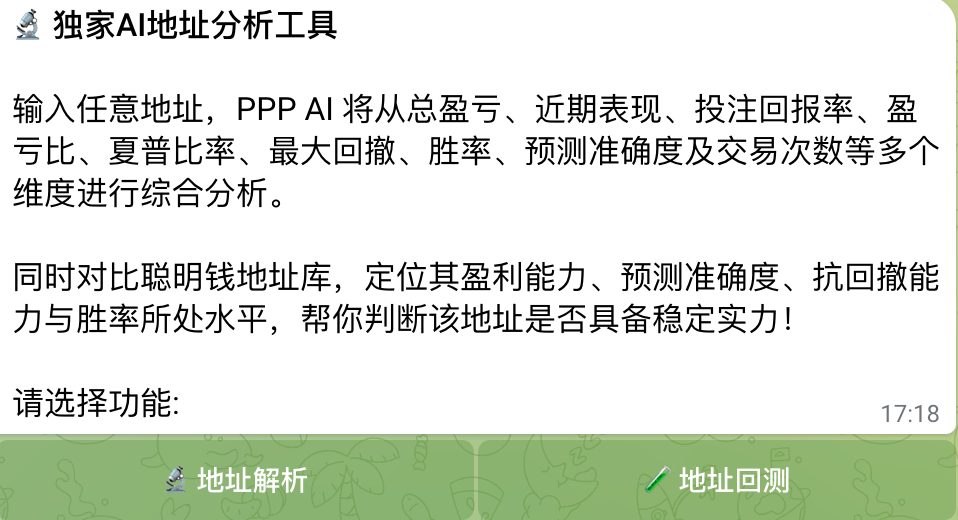
PPP employs a system combining AI modeling with manual review. It analyzes addresses across multiple dimensions: profitability, information advantage (access to insider or early signals), drawdown resilience, pricing accuracy (prediction correctness), win rate, position allocation strategy, trade frequency and consistency, and historical maximum drawdown. The AI first eliminates accidental profits and anomalous samples, then undergoes multiple rounds of human validation to retain addresses with statistical stability and ongoing research value. Although the AI algorithm itself is proprietary, PPP offers an 'AI Address Analysis Tool' that lets users paste any address, compare it against the smart money library, and evaluate its capability percentile across these dimensions.
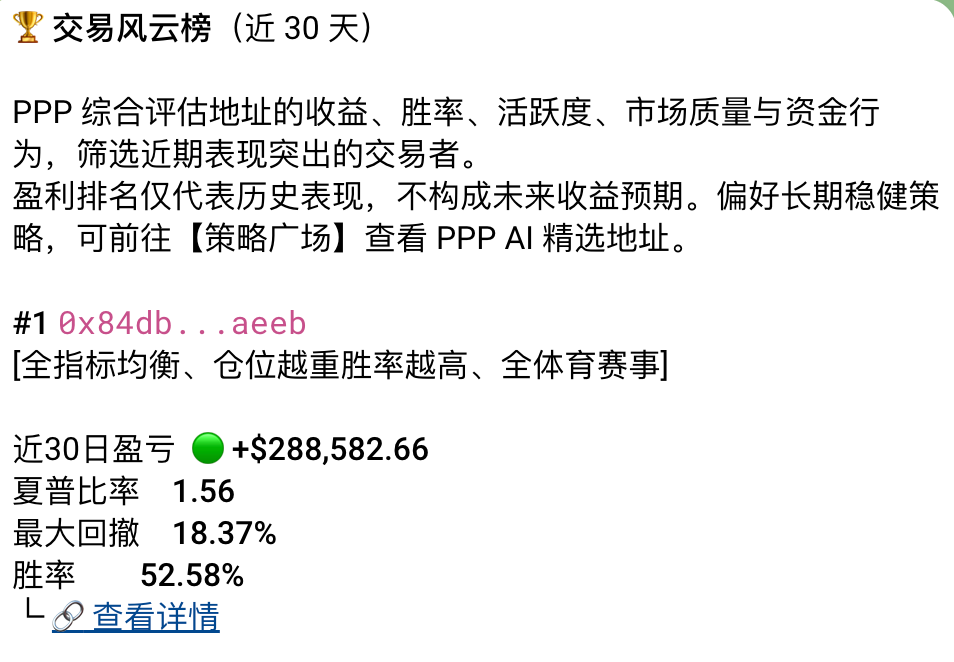
Two Core Products: Strategy Square and Trading Leaderboard
PPP segments screened addresses into two product tiers. The Strategy Square aggregates long-term proven stable strategies. Eligibility requires at least 30 trades, 6+ months of activity, maximum drawdown below 30%, win rate above 60% (under comparable scale), and sustained profitability across at least two prediction market categories. This pool suits users seeking stable copy-trading and undergoes weekly reviews. The Trading Leaderboard showcases short-term high-performance addresses with high elasticity, with no minimum trade count or category breadth. It targets users looking for tactical opportunities, though high returns come with high volatility. PPP clarifies risk warnings. Each strategy is tagged with a concise style description (e.g., 'high implied win rate, high volatility') to help users differentiate.
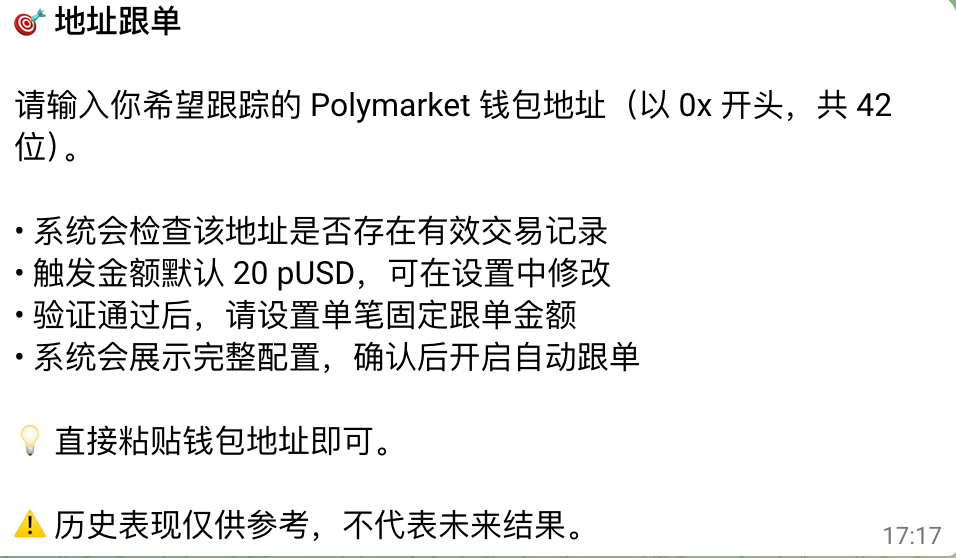
User Test: $100 Trial Hits $164 Peak in One Day
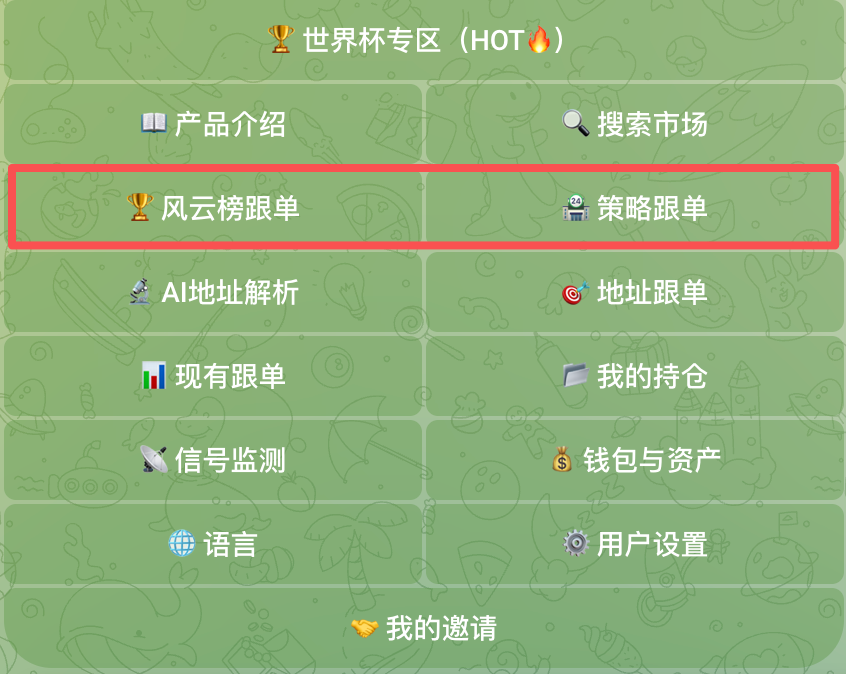
PPP recently launched a Telegram Bot as its primary user interface. Users log in via TG Mini App, create a non-custodial wallet (private keys exportable), and retain any potential Polymarket airdrop rewards. In a test, the author deposited $100, followed two strategies from Strategy Square and two from the Trading Leaderboard. The next day, the account net worth hit $164—a 60%+ single-day return. However, subsequent drawdown occurred due to failing to set different copy amounts for different risk profiles, causing a low-probability event to drain capital. PPP founder Lorne cautions that no historical screening guarantees future profits; users should only risk what they can afford to lose and stay disciplined.
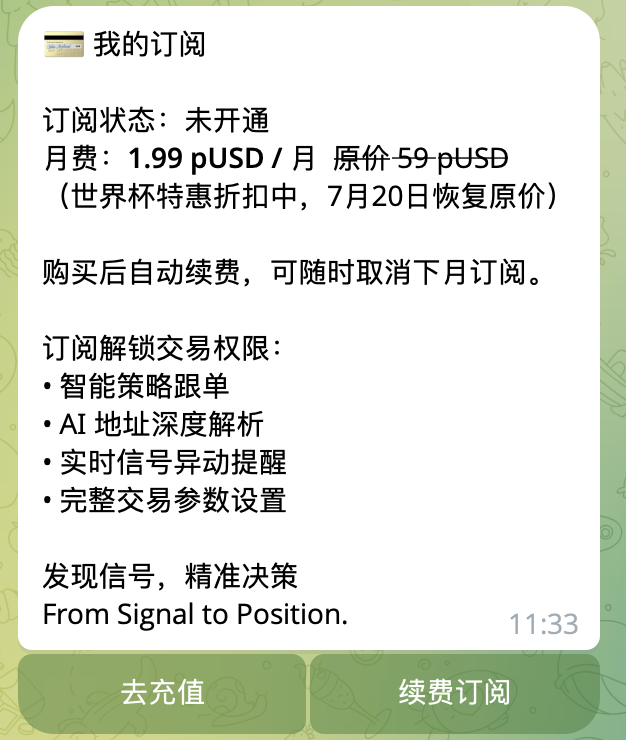
Structuring 'Compilation': From Trading Signals to Executable Strategies
PPP is more than a copy-trading tool; it attempts to build a structured pipeline that transforms chaotic on-chain signals into executable, copyable strategies. By combining AI with deep human review, it denoises and structures raw data, distilling smart money strategies with replicability, then delivers them through a low-friction Telegram Bot. This approach defends against the 'smart money trap' and reduces information asymmetry in prediction markets. Naturally, backtesting cannot promise future returns, and high-return prediction markets are inherently volatile. Ultimately, users' own capital management and risk appetite determine long-term success. As prediction markets evolve, PPP's methodology will be tested in real market games, but it currently offers a higher-confidence entry point for retail users looking to capitalize on the World Cup frenzy.