
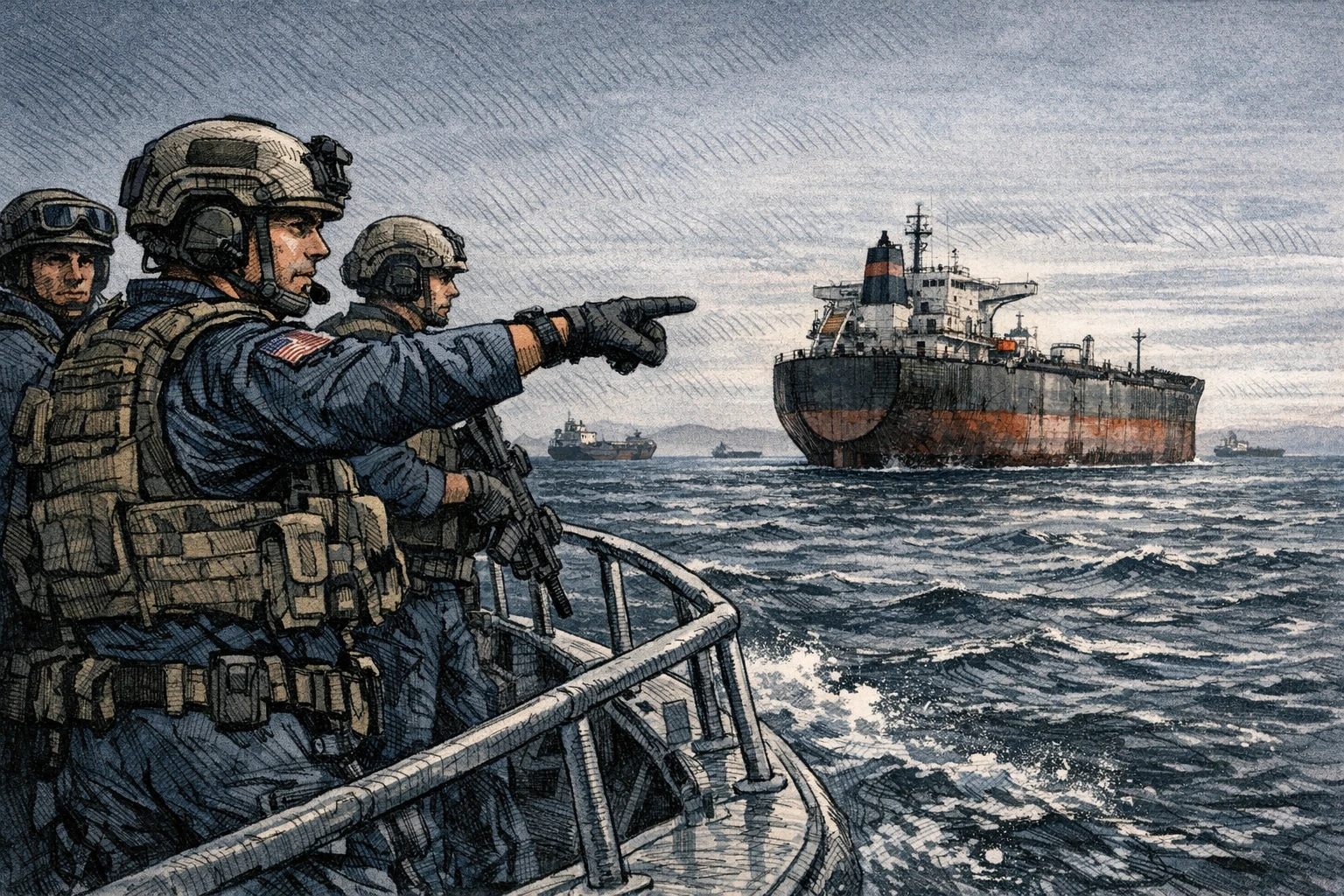
The U.S. military is preparing to broaden inspections and interdictions of Iran-linked vessels to waters far beyond the Strait of Hormuz, according to The Wall Street Journal, which cited U.S. officials. The report said commercial ships that assist Iran in international waters could also face seizure, signaling a much wider enforcement footprint.
Iran-linked tankers and cargo ships fall under a wider dragnet
Under the plan described by the Journal, the target list would include tankers carrying Iranian oil on the high seas after leaving the Persian Gulf, as well as cargo ships suspected of transporting weapons components or indirectly supplying the Iranian government. The scope outlined in the report extends well outside the Gulf and points to a global maritime campaign.
Chairman of the Joint Chiefs of Staff Dan Caine told the Journal on the 16th that the U.S. would actively track all vessels flying the Iranian flag. Ships providing material support to Iran were also identified as targets. The report highlighted so-called shadow fleets, vessels that try to avoid international rules, sanctions, and insurance requirements.
Military pressure is paired with legal action
Enforcement is not limited to naval operations. This week, the U.S. Attorney’s Office for the District of Columbia said it is using indictments and seizure measures from its “legal toolbox” to disrupt maritime networks supporting the Iranian government.
Mark Nevitt, an associate professor at Emory University School of Law, told the Journal that the Trump administration is using several channels at once: building a blockade near Iranian waters, pursuing shadow-fleet activity across global waters, and cutting off flows of missile parts and other military-related supplies. He described the approach as a strategy of maximum pressure through every available legal authority.
Ceasefire deadline remains in focus
Diplomatic signals during the ceasefire have been mixed. Iranian Foreign Minister Araghchi announced on the 17th that the Strait of Hormuz would be opened, but the military restored strict controls on the 18th and fired warning shots at 2 oil tankers attempting to pass through, one of them sailing under the Indian flag.
The current two-week ceasefire between the U.S. and Iran is due to expire on April 22. The Journal noted that while Trump had said earlier that a peace agreement could be reached within the week, major differences between the two sides still appear unresolved.