
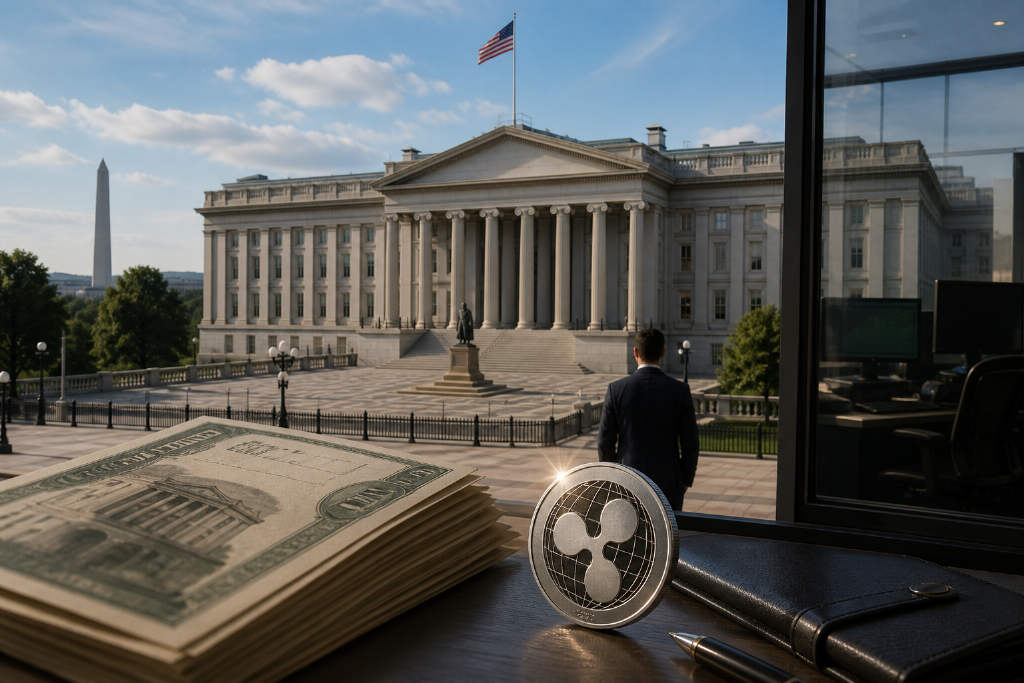
XRP surged this week after a U.S. Treasury bond-market operation unexpectedly became a catalyst for the token. According to a CoinDesk report published on Aug. 23, XRP briefly jumped 51% on the week to about $1.50, putting it on course for its largest weekly gain in roughly 21 months, since November 2024. The advance outpaced Bitcoin, Ether and Solana.
Treasury buyback plan seen as a signal on long-end yields
The move began earlier this week when the U.S. Treasury said it would carry out multiple buybacks of more than $4 billion in long-dated Treasuries from Sept. 9 through Nov. 4. The operations will cover bonds in the 10-year to 30-year range, double the earlier $2 billion ceiling.
LianNews had previously reported that the Treasury’s larger buyback plan helped support the bond market and coincided with a rise in Bitcoin. While the measure is fundamentally a liquidity-management operation in the world’s largest bond market, traders focused on the timing. Long-dated yields had climbed earlier this week to their highest level since 2007, and the announcement was interpreted as a sign that authorities wanted to restrain further upside in yields. In market terms, that was read as a form of yield curve control, setting an effective ceiling for long-term yields without a formal move from the Federal Reserve.
Nearly $2 billion in short liquidations added fuel
Markets treated the signal as supportive for liquidity, sending money toward risk assets and assets viewed as hedges against currency debasement. XRP led that move.
Coinglass data shows nearly $2 billion in crypto short positions were liquidated this week. That wave of forced buying added to the rally and helped magnify gains across the market, with XRP standing out as the top performer among major tokens.
Four-day rebound took XRP to a three-month high
XRP had briefly fallen below $1 in mid-August and was near a two-year low before this rebound. It then climbed to a three-month high within four days, highlighting how sharp the price swings have been.
The report also noted that rallies driven by macro signals and short squeezes can face pullback risk if spot demand does not follow through.