
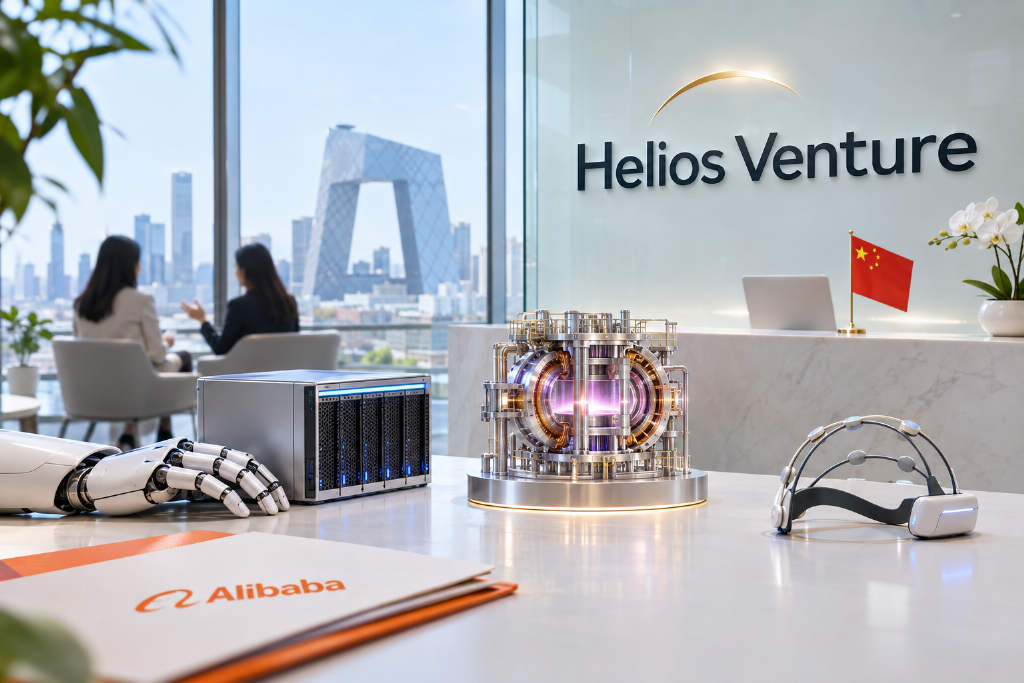
According to LatePost, Yang Tianzhen, founder of Easy Entertainment, and Jiang Shanshan, former head of frontier technology investment at Alibaba, have co-founded Helios Venture, a venture capital firm focused on frontier technologies including AI, embodied intelligence, nuclear fusion, and brain-computer interfaces.
Division of roles at the new firm
Jiang will oversee investments, while Yang will take charge of investor relations, content, and brand building. Jiang previously served as managing director in Alibaba’s strategic investment department. Over the past three years, she led more than ten frontier-technology investments at Alibaba with a combined value of more than RMB 10 billion, including Moonshot AI, robotics company Sharpa, and fusion company Nova Fusion.
LatePost said Jiang left Alibaba in August and then started preparing her own fund. The partnership began after Jiang asked Yang for advice on how to build influence for a new fund, and Yang later proposed that they start the business together.
Brand building is part of the strategy
Jiang said that after leaving Alibaba, a new fund would need to build its own brand if it wanted to compete with leading institutions for high-quality startup projects. Yang is expected to use her background in artist management and content marketing to connect with founders and provide portfolio companies with support in brand communications and founder image management. The two also plan to produce a technology podcast for a general audience.
Jiang summed up the logic of the partnership this way: 「Investment capability is 1, and content is the 0s that come after it.」
Selective, concentrated investment approach
On investment strategy, Jiang said she prefers a selective approach with concentrated bets. She said she had reviewed more than 100 AI application companies but had not invested. In her view, consumer-facing AI productivity tools and entertainment applications may eventually be dominated by large companies or model developers, while more complex areas such as enterprise AI agent infrastructure may leave more room for independent startups.



