
Yangtze Memory Technologies Co. (YMTC) has moved closer to a public listing after its STAR Market IPO application was formally accepted on Aug. 21, with the company seeking to raise 33 billion yuan. The source article says it is the largest IPO ever accepted by the STAR Market and that the filing entered the inquiry stage after nine trading days.
The listing push follows another major memory-chip event in China. On July 24, CXMT went public and reached a market capitalization of 3.2 trillion yuan, becoming the most valuable company in China’s A-share market. In the article’s framing, the two companies represent separate Chinese variables in global memory: CXMT in DRAM and YMTC in NAND.
That distinction matters. The report argues that comparing the two as if they were direct rivals misses the point because they operate in different memory segments. What draws attention instead is how both are pushing into markets long dominated by a small group of entrenched players.
YMTC chose a different technical route early on
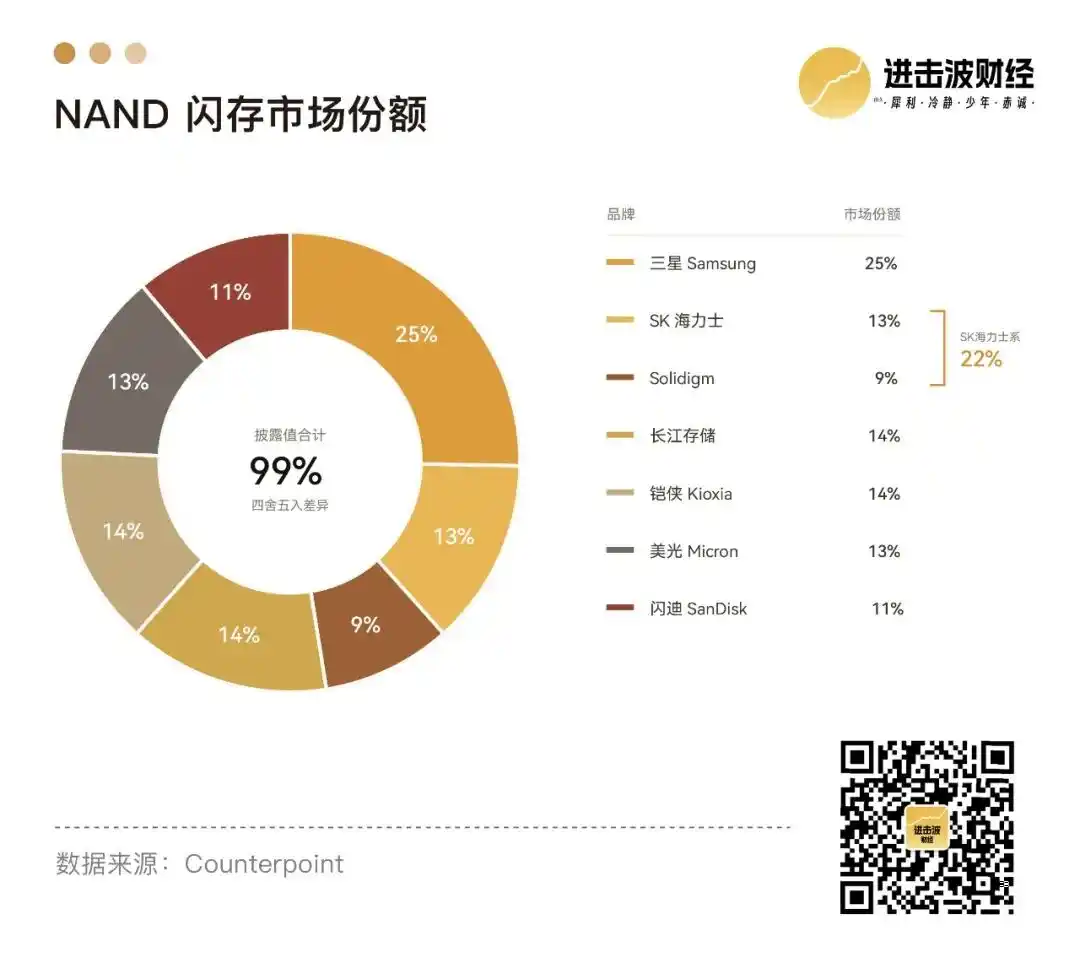
According to the article, DRAM has been dominated for years by Samsung, SK hynix and Micron, while NAND has been divided among Samsung, SK hynix, Micron, Kioxia and SanDisk, which together control more than 90% of the market. Pricing power, technology standards and industrial influence have largely remained in the hands of U.S., Japanese and South Korean companies.
The timeline in the report starts in 2016. That year, CXMT was established in Hefei and YMTC was launched in Wuhan’s Optics Valley. YMTC was set up with backing from Tsinghua Unigroup, the National Integrated Circuit Industry Investment Fund and local state-owned capital from Hubei, with a mandate to build China’s own 3D NAND flash business and break a situation in which China had no international market share in the segment.
At the time, the mainstream NAND manufacturing path was already well defined: memory layers and peripheral circuits were stacked on a single wafer, with higher stacks producing larger capacity but also much more difficult manufacturing. Established vendors such as Samsung and SK hynix already held patent barriers and deep ties with advanced lithography tool suppliers, leaving little room for latecomers trying to follow the same path.
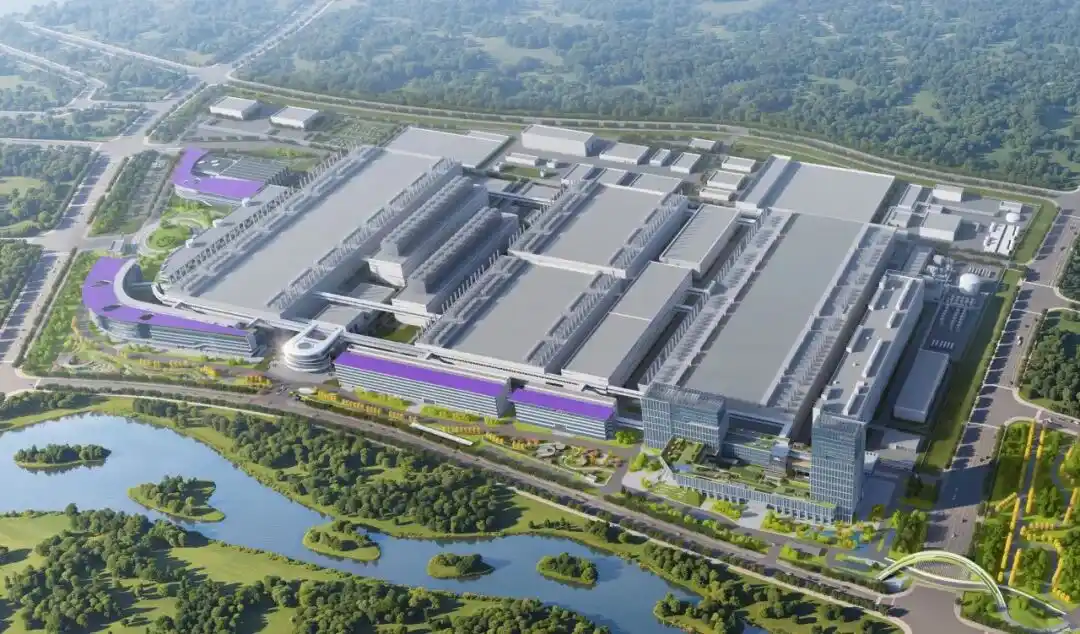
YMTC responded by introducing Xtacking, a different architecture that separates the memory cell array and the peripheral control circuits onto two different wafers and then bonds them together. The article says that approach improved storage density and transfer speed while also shortening development cycles.
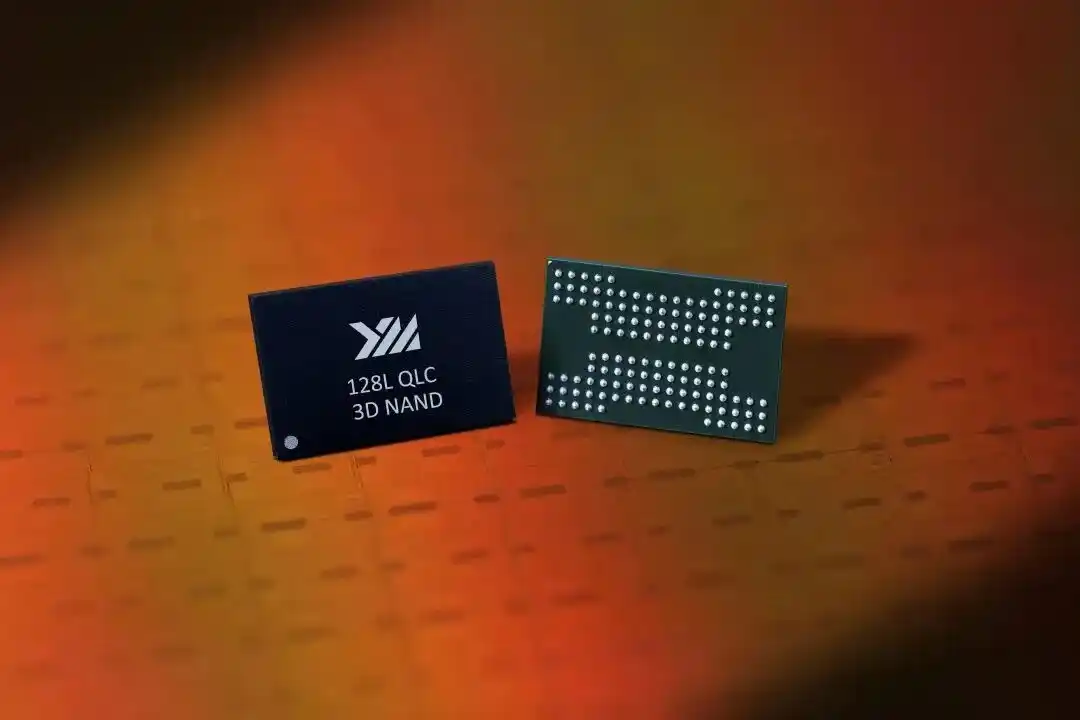
The company’s progress on that route came faster than many expected. In 2019, YMTC used Xtacking to stack 64-layer NAND dies and entered Huawei’s Mate 40 supply chain. In 2021, Xtacking 2.0 reached 128-layer NAND stacking. In 2022, the company launched a 3D NAND product with more than 200 layers and moved into what the article describes as the first tier of the industry.
That momentum also drew Apple’s attention. Bloomberg reported in March 2022 that Apple was considering sourcing NAND chips from YMTC. The article says such a move would have marked an important breakthrough for China’s memory industry if it had gone through.
Apple’s sourcing plan stalled as U.S. pressure grew
The plan did not move ahead. Citing the source article, Apple shelved the procurement idea after pressure from U.S. political circles.
The next blow came at the end of 2022, when the U.S. Congress placed 36 Chinese or Chinese-backed entities on the export control entity list, with YMTC among them. At that time, domestic NAND manufacturing still depended heavily on U.S. equipment, and restrictions also hit U.S. nationals working in key research roles, putting YMTC’s production buildout and R&D under strain.
The company was dealing with internal turmoil at roughly the same time. In 2020, major shareholder Tsinghua Unigroup had debt exceeding 200 billion yuan and suffered a funding-chain break. In 2021, creditors applied for the group’s bankruptcy reorganization.
The article describes Zhao Weiguo, head of Tsinghua Unigroup and founder of YMTC, as one of the most controversial figures in China’s semiconductor industry. It says he pushed a strategy of using capital to buy technology and laid out several transactions: a $1.78 billion acquisition of Spreadtrum Communications in 2013, a $900 million purchase of RDA Microelectronics in 2014, and the 2015 acquisition of a 51% stake in H3C from Hewlett-Packard for $2.5 billion. The report also notes that Tsinghua Unigroup attempted in 2015 to buy Micron Technology for $23 billion, a deal that met strong opposition from the Committee on Foreign Investment in the United States.
By 2018, Tsinghua Unigroup’s total investment scale had exceeded 400 billion yuan, the article says. Two years later, the debt structure began to unravel. In July 2022, the group completed the transfer of 100% of its equity. Around the same time, media reports said Zhao had been taken away by authorities for investigation.
For YMTC, the pressures arrived all at once: its major shareholder blew up, its founder was investigated, U.S. sanctions hit, and the global memory market entered a downturn. The source says sentiment around the company’s outlook became deeply pessimistic at that stage.
After leaving Tsinghua Unigroup, YMTC rebuilt its supply chain
Following Tsinghua Unigroup’s restructuring, YMTC was separated from the group and placed under the control of Hubei state-owned capital and the national semiconductor fund, according to the article. In hindsight, the report characterizes that move as a highly successful intervention.
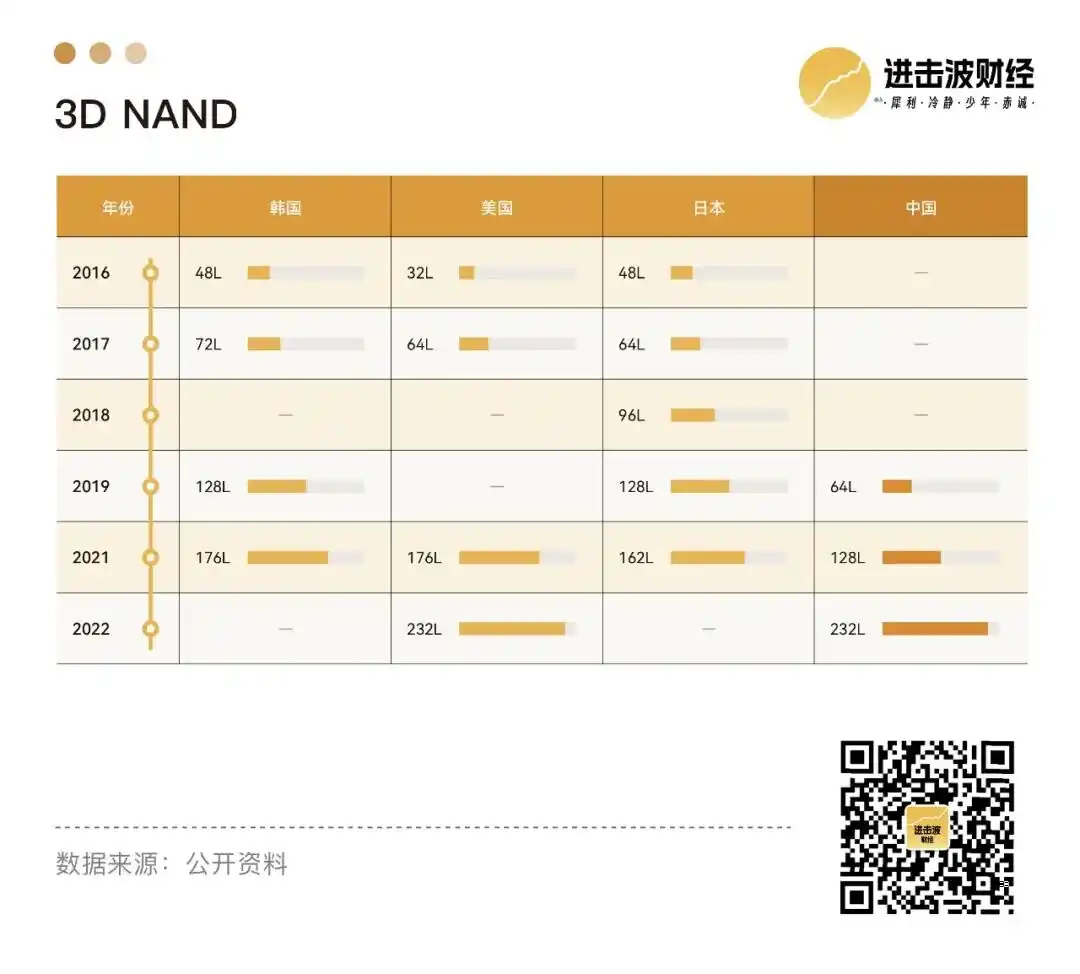
To address equipment cutoffs, YMTC pushed a localization and substitution program. The article describes a layered approach: use domestic equipment wherever possible, rely on non-U.S. equipment where local alternatives were not yet ready, and continue replacing those tools over time.
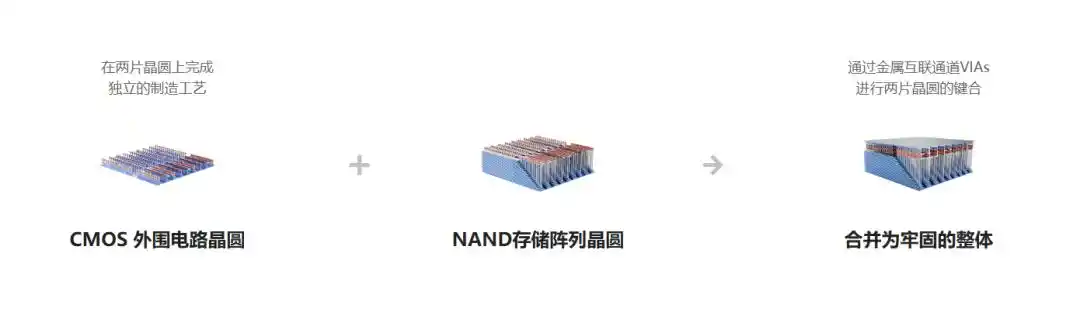
In 2025, YMTC started construction on its Phase III factory in Wuhan, and the share of domestic semiconductor equipment in its procurement reportedly exceeded 50% for the first time. This summer, Advanced Micro-Fabrication Equipment Inc. China, or AMEC, one of YMTC’s key local equipment partners, established its Central China headquarters and an R&D center in Wuhan, strengthening ties across the supply chain, according to the piece.
The article’s conclusion on this point is direct: U.S. technology restrictions did not stop the development of China’s NAND industry and instead accelerated the formation of an independent supply chain.
Prospectus figures show a return to profit
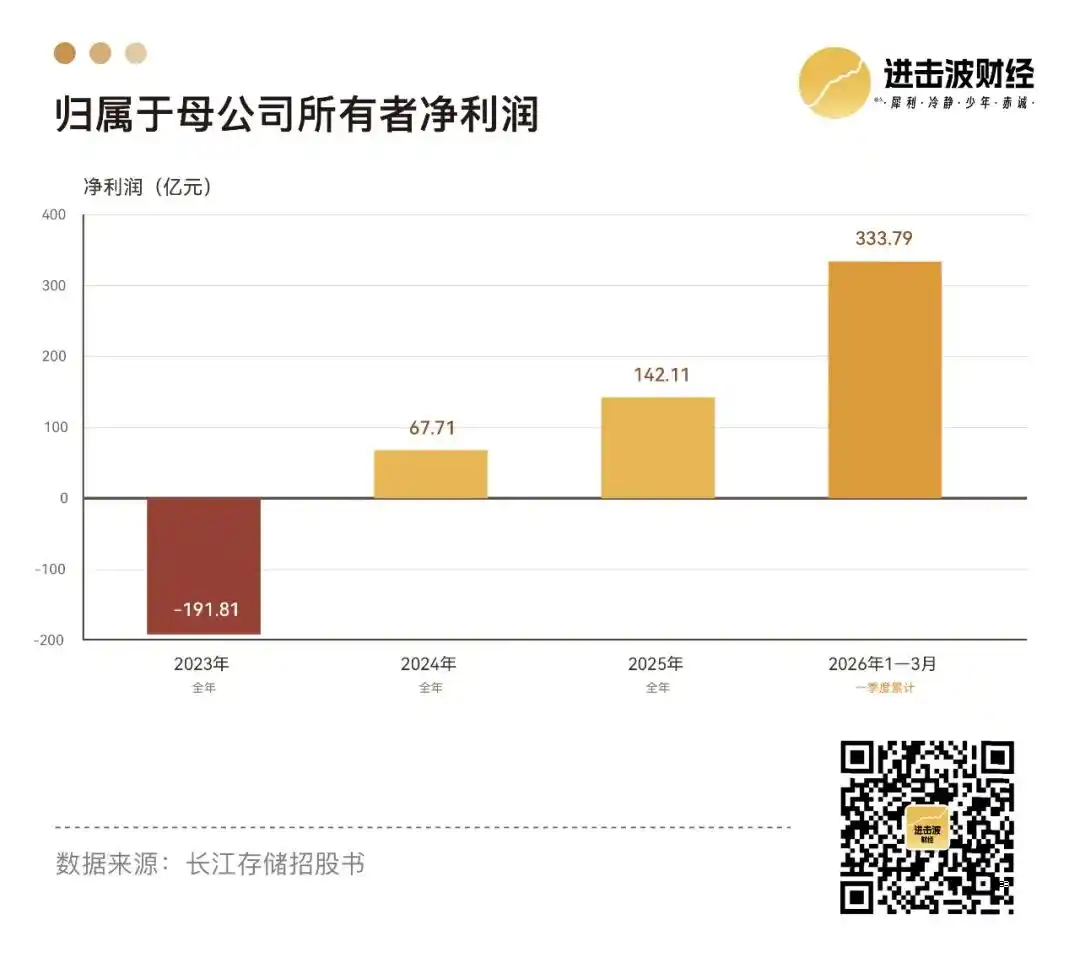
YMTC’s financial picture improved after that low point. The company’s prospectus, as cited in the article, shows that YMTC returned to profitability in 2024. In the first quarter of this year, net profit attributable to shareholders reached 33.379 billion yuan, equal to about 371 million yuan a day. Gross margin stood at 76.77%, the article says, double the 2025 level.
On shipments, the article cites Counterpoint Research’s latest report as saying YMTC has risen into the global top three in NAND shipment share, behind only Samsung and SK hynix.
That places the company back among the world’s major NAND vendors after a period shaped by sanctions, ownership restructuring and an industry downturn.
Global memory giants are now following the Xtacking path, the article says
The source article says another major shift came in 2025, when Samsung reached a patent cooperation agreement with YMTC and adopted YMTC’s Xtacking hybrid bonding technology to produce next-generation 10nm flash chips.
A year later, at the 2026 Wuxi Semiconductor Expo, YMTC Deputy General Manager of R&D Feng Yaobin said Samsung, SK hynix, Kioxia and Micron had all shifted to the Xtacking architecture for 3D NAND. In the article’s interpretation, that means the four major global NAND makers have moved toward a technical route pioneered by YMTC.
The reason given in the report is tied to physics and manufacturing economics. Once 3D NAND stacking goes beyond 400 layers, yields and costs become much harder to control on the traditional architecture. YMTC’s hybrid bonding route has emerged as a more workable option. The company has spent six years preparing for that transition and has already accumulated more than 2,000 invention patents in the area, according to the article.
The Apple story resurfaced in June 2026. The article says there were reports that Apple again sought approval from Donald Trump to source memory chips from China in order to ease supply pressure. The sequence then repeated itself: a bipartisan group of U.S. senators sent Apple another joint letter urging it to abandon plans to buy chips from both CXMT and YMTC.
IPO progress does not remove the next set of challenges
Even with shipment share in the global top three, YMTC is still up against much larger rivals. The article says Samsung and SK hynix together still account for nearly half the overall market.
It also draws a line between consumer and enterprise demand. YMTC has become competitive in consumer-facing products such as smartphones and PCs, according to the report, but enterprise storage remains a tougher field. In segments tied to AI servers and large data centers, established vendors still hold stronger influence and capture the most profitable part of the value chain.
The article adds one more unresolved question. For now, the market has rewarded YMTC and CXMT for loosening a highly concentrated industry structure. But if memory eventually becomes more like a conventional manufacturing business after that concentration breaks, whether the two companies can keep today’s high margins and profit levels remains uncertain.
From its 2016 launch to its 2026 STAR Market listing bid, YMTC has moved from having little room in a closed industry to becoming one of the world’s top three NAND shippers. The company has already solved the immediate question of survival, but the harder work in enterprise storage and in catching the incumbents at the top end of the market is still ahead.
The original article was published by the WeChat account Jinjibo Caijing and credited to author Guan Shanyue and editor Zheng Jingmin.