
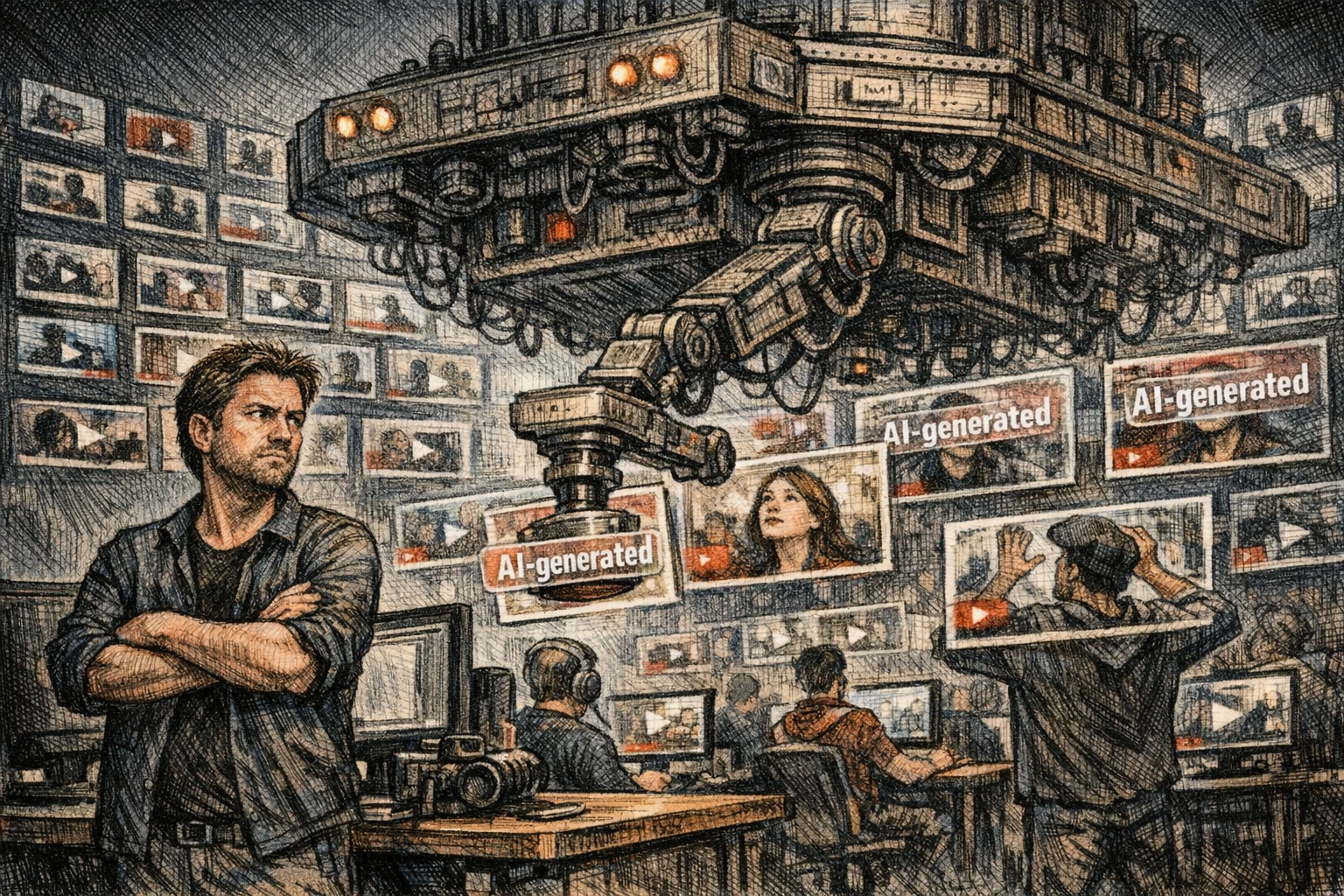
YouTube says it is rolling out an internal detection system that can automatically label videos containing significant amounts of realistic AI-generated material. The change means the platform will no longer rely only on creator self-disclosure. If YouTube determines that a video uses highly lifelike AI content, a label can be added even if the uploader did not flag it.
The company said the decision is based on internal detection signals, with visual analysis of video content among the known inputs, though the full technical method has not been disclosed. Creators who believe a label was applied in error can appeal and update disclosure settings through YouTube Studio. Still, there are firm exceptions. In two cases, the label will remain permanently and cannot be changed.
Two categories will keep permanent AI labels
The first covers content made with YouTube’s own generative AI tools, including Veo and Dream Screen. The second applies to videos carrying C2PA metadata that identifies the work as fully AI-generated.
C2PA, short for Coalition for Content Provenance and Authenticity, is an industry standard backed by organizations including Microsoft, Adobe, and BBC. Its purpose is to attach verifiable provenance information to digital media. Once a video’s metadata already states that it was generated by AI, YouTube will not leave room for edits to that disclosure.
Label placement is moving into clear view
A major part of the update is where viewers will actually see the notice. Previously, YouTube’s AI disclosure labels were tucked into the expandable description area, a section many users never open. Under the new policy, labels on long-form videos will move to a more visible position below the player and above the description.
For Shorts, YouTube is taking a more aggressive approach. The AI label will appear as an overlay on the video itself. Rene Ritchie, YouTube’s Head of Editorial & Creator Liaison, said in an official explainer that viewers should be able to understand the context at a glance. If something looks real but was actually made with AI, viewers should know that immediately.
Visible labels are aimed at lifelike content
YouTube also said the presence of an AI label will not affect recommendation rankings or monetization eligibility. The company’s position is that this is a transparency measure, not a punishment system.
The policy is not being applied to every kind of AI-assisted video in the same way. Content judged by YouTube to be clearly unreal, animated, or only lightly modified will keep its disclosure in the description panel rather than in the more prominent placement. The visible warning is being reserved for AI material that looks convincingly real.
Broader AI controls now include likeness detection
The update fits into a wider set of AI governance moves from YouTube. Earlier this month, the company expanded its likeness detection program to all creators aged 18 and older. The system is designed to help creators identify how AI is depicting them on YouTube. If someone uses a creator’s face to generate a fake video, that creator can request removal through YouTube Studio.
Taken together, the policy direction is clear. YouTube is not banning AI-made content, but it is demanding more visible disclosure around it. The platform is also drawing a line between ordinary AI assistance and realistic synthetic media that could be mistaken for real footage.