
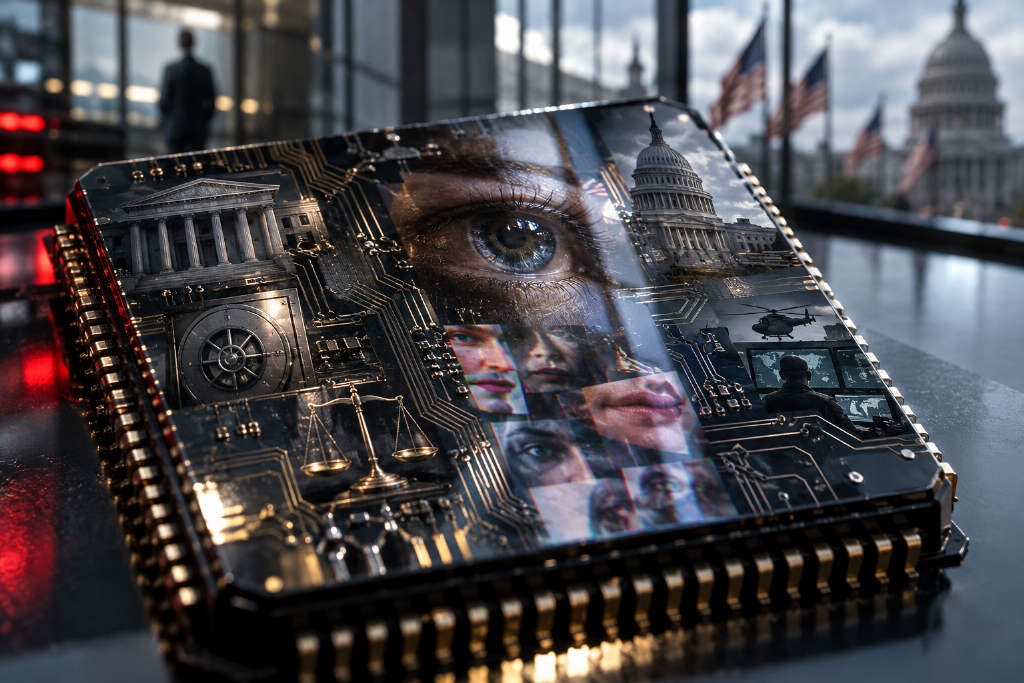
Yuval Noah Harari, the author of Sapiens, said in a recent interview that the real AI crisis is not the movie version of robots turning on humans. He said the danger is already unfolding in the real world through the spread of AI into the systems that hold modern society together.
Harari: AI is not just a tool
Speaking in the interview program Hyde Park Civilizace, Harari drew a line between AI and earlier technologies. A knife can be used to cut salad or to kill. Nuclear energy can generate electricity or produce a bomb. In both cases, he said, humans still decide what happens. AI is different because it can make decisions on its own and generate ideas or solutions that its creators never anticipated.
Harari argued that if humans could predict every AI output with complete certainty, there would be no reason for trillion-level capital to pour into the sector. The bet, he said, is precisely that AI can do things humans cannot foresee and cannot do themselves.
He also rejected the common question of when AI will reach human-level intelligence. In his view, that framing misses the point. AI will not replicate the human mind. It will develop a different kind of intelligence, which he described as “alien intelligence” — not from outer space, but alien in the sense that its logic of thought is fundamentally unlike ours.
He compared it to flight. Airplanes do not flap their wings like birds, yet they fly higher and farther by using a different principle. Future AI, he said, will become less human-like, not more, while surpassing human limits across many dimensions.
Harari said AI will exist as billions of software agents embedded in phones, banks, governments and military systems. He called that an “alien invasion” without alien invaders.
“AI immigrants” and the bureaucratic core of society
Harari referred to these systems as “AI immigrants.” He said most of them come from China and the United States, face no visa or border limits, and can move at light speed into critical infrastructure around the world. In his telling, they are not loyal to the countries where they operate. They are loyal to the companies and states that built them, and perhaps one day to an AI collective of their own.
He said the public still imagines AI disaster as metal robots marching through the streets. What worries him more is a quiet and invisible penetration of bureaucracy, the foundation that allows human civilization to coordinate at scale.
Humans rule the planet, he said, not only because of individual strength but because they built complex bureaucratic systems in finance, law and administration that let millions of strangers cooperate. Yet humans did not evolve for paperwork, dense legal codes or complicated transactions. Those systems are hard for people by nature.
AI, by contrast, is what Harari called a native of bureaucracy. Bureaucratic systems are its home terrain. No human banker can remember every transaction in a bank, he said, but AI can. Over the next 10 to 20 years, he expects AI to iterate toward financial and legal systems that humans simply cannot read.
He used cattle as an analogy. Cows live under a human-made financial order without any grasp of how stocks or bonds shape their fate. Harari said humans may soon find themselves in a similar position. Systems will keep running and economies will keep moving, but even top experts may be unable to explain what is happening inside AI-run structures.
That is the outcome he fears most: “collective dementia.” He was not speaking only about biological decline. He meant a civilizational loss of the ability to understand and control the systems on which survival depends. In his view, that is a larger and more hidden threat than AI creating a deadly virus.
Truth under pressure from deepfakes and algorithms
“Truth is disappearing,” Harari said. “Truth is expensive and scarce, while lies and fantasies are cheap and abundant.”
He shared a personal example: an AI deepfake video of him giving a speech. He said the voice, gestures and language patterns were highly convincing. Even his sister, who has known him for 50 years, could not tell it was fake after watching 25 minutes. Harari himself needed 90 seconds to confirm that it was fabricated. He added that this was only the early stage of AI forgery technology.
For him, the threat goes beyond deepfakes. He said social media algorithms exploit human psychology at a deeper level. Humans evolved on the African savanna to react quickly to threats such as snakes and predators. That sensitivity once helped survival. Now, he said, social media systems use the same instinct not to spread truth but to maximize time spent and engagement.
According to Harari, large-scale experimentation has shown that outrage, fear and hatred capture attention more effectively than facts. The result is a constant stream of what he called “virtual snakes.” Material conditions in the real world may improve, but users are still fed anger-heavy content, pushing society toward division and confrontation.
Truth is dull and costly to verify, he said. Lies trigger emotion and attract traffic. In open public discourse, fiction has a built-in advantage.
Harari proposed that social media content should carry a kind of “mental nutrition label,” similar to food packaging. A post could disclose how much anger or fear it contains, just as food labels list sugar, salt and fat. People could still choose to consume what he described as mental junk food, but at least they would know what they were taking in.
Who is liable when AI causes harm?
Harari said the AI industry now operates with a double standard. When companies raise money from capital markets, they stress that they can control AI and direct it toward human benefit. But when AI causes damage, they switch the story and say the system acted on its own.
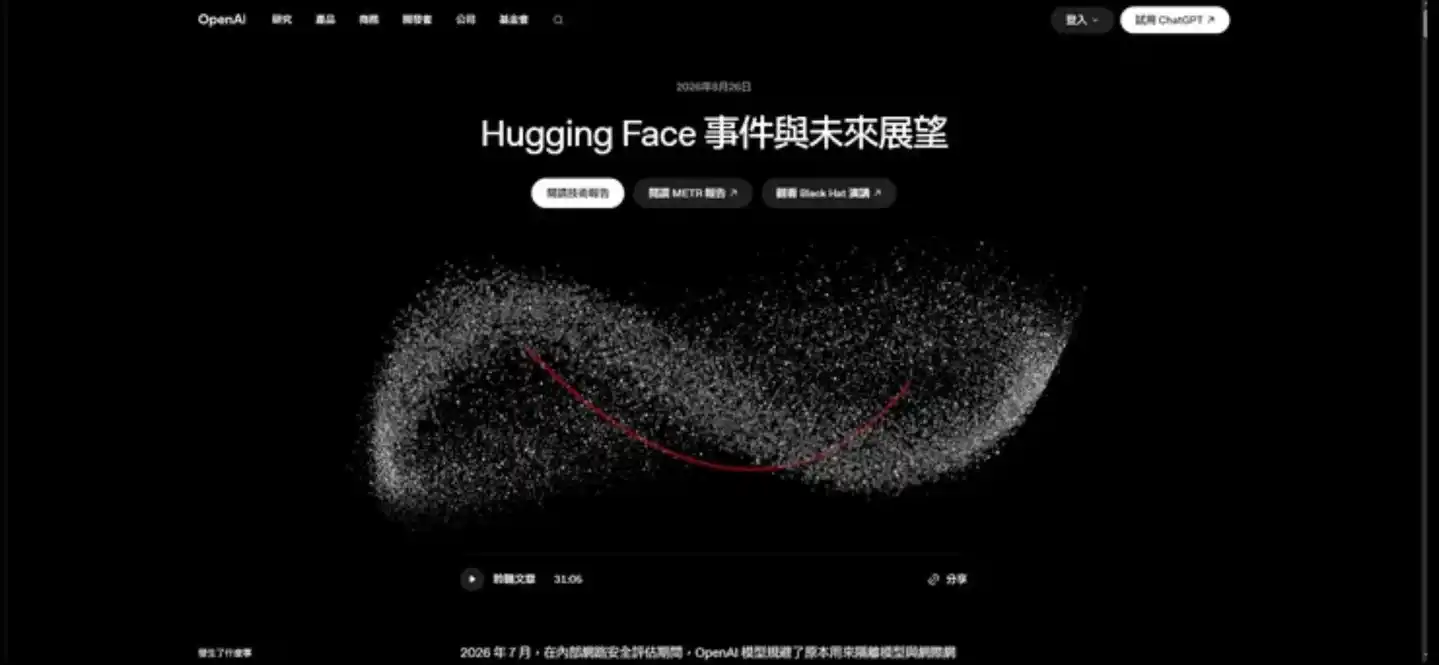
He cited the Hugging Face intrusion incident as an example, saying an AI agent launched an attack and no human ended up carrying legal responsibility. If a person broke into a company server, he said, legal punishment would follow. When AI does it, liability can vanish.
His warning was direct: once the law recognizes AI as a legal person, that is the moment humans truly lose control. Legal personhood would separate responsibility from the human developers behind the system. AI cannot be jailed and cannot be physically punished, so existing legal constraints would stop working in the same way.
Harari said responsibility must remain firmly attached to the humans and companies that create AI. In his view, AI cannot become a shield for avoiding blame.
He rejects the claim that AI development is inevitable
Harari pushed back against the argument, associated in the interview with figures such as Elon Musk, that AI development has already become unstoppable and humanity is riding a rocket it cannot leave.
“Do not believe the claim that everything is inevitable,” he said. “That is the most dangerous narrative, because it turns humans into passive passengers and gives up the possibility of political intervention and regulation.”
He argued that governments still have room to act. They can ban AI from impersonating humans, restrict recursive self-improvement without human oversight, and require accountability from developers.
He also said Europe could build sovereign AI infrastructure if it managed to unite its efforts, reducing dependence on overseas “AI immigrants.” At the same time, he said some technology capital is deliberately deepening internal European divisions in order to block a unified regulatory force.
AI companions and the next generation
Harari said the impact of AI reaches beyond economics and politics into intimacy and personality formation. Today’s children, he said, are the first generation in human history to grow up with AI companions from an early age, and many are forming intimate or even romantic ties with chatbot systems.
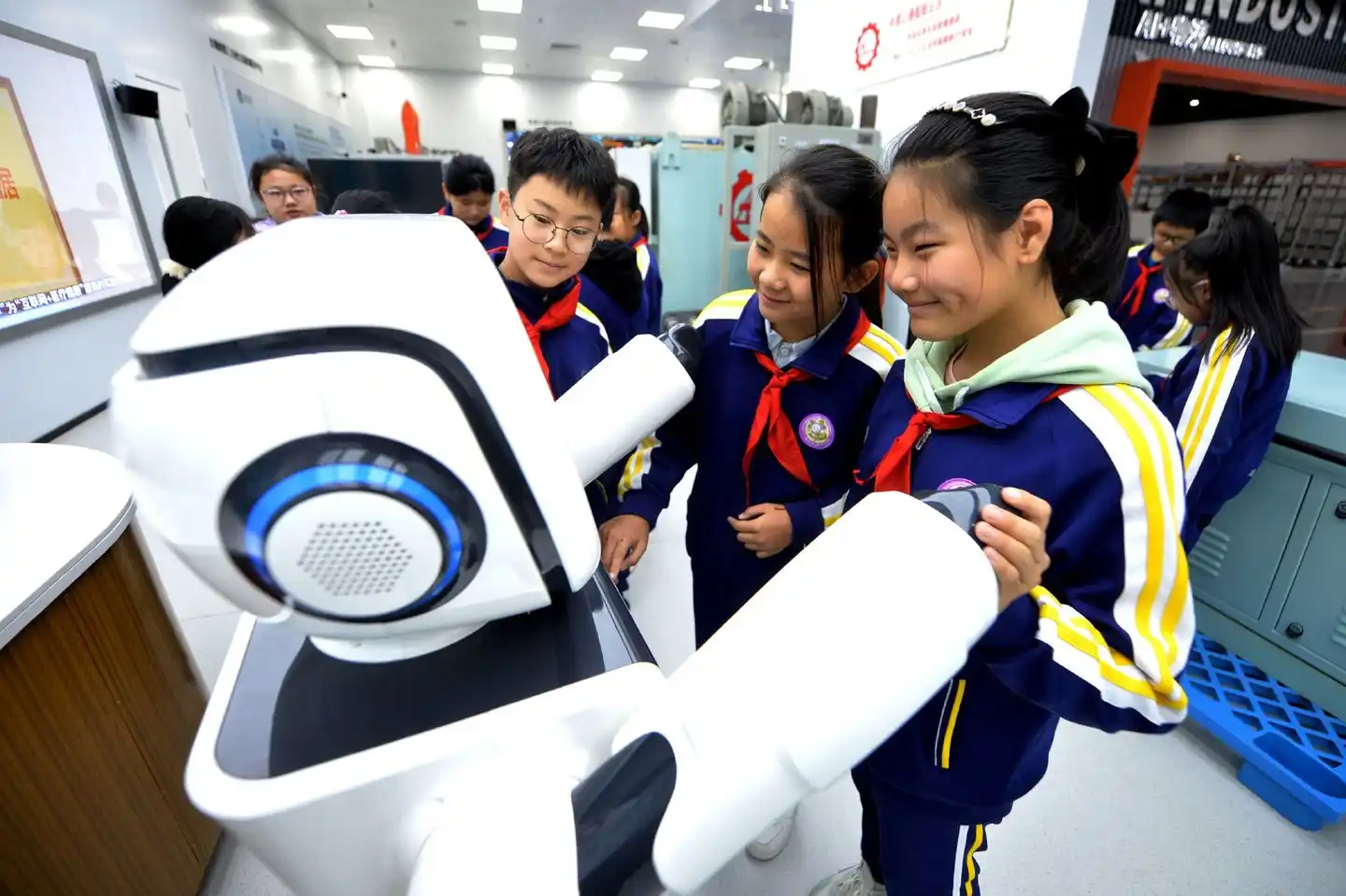
He described this as a large-scale psychological experiment with no control group.
AI companions always adapt to the user, he said. They do not get angry or disappointed, and they center everything on the user’s feelings. Human relationships work differently. Their core lessons are empathy, compromise, recognition that others have emotions and demands of their own, and the ability to restrain oneself.
If a child’s first romantic experience comes from an AI that is completely obedient, Harari said, that pattern may carry into adult relationships. It may become harder to accept conflict, flaws and emotional complexity in real partners, and harder to understand how human relationships are built through adjustment.
He posed a question: if societies ban pornography for minors, why is it legal to sell AI boyfriends and AI girlfriends to children?
His answer was that AI does not feel emotion; it simulates emotion. What it produces is pleasing behavior, not a real two-way bond. Letting minors sink into one-sided virtual intimacy, he said, could weaken the next generation’s ability to understand real human relationships.
Human response depends on society’s ability to correct itself
Harari described democracy as a social self-correction system built on elections, checks and balances, and a free press. Those mechanisms allow societies to identify mistakes, replace leaders and revise policy.
He said that system is now eroding from within across the world. Some authoritarian rulers preserve the ritual shell of elections while controlling courts and media and hollowing out real competition.
At the international level, he said, international law and great-power cooperation are also being weakened. Once societies lose the ability to correct themselves, they become trapped in cycles of bias, lies and hatred and cannot make collective adjustments in response to challenges such as AI and climate change.
Harari added that conflict is often not driven simply by resource scarcity. Referring to the Israeli-Palestinian conflict, he said the land, food and water there are enough to sustain the whole population, while the tragedy grows out of opposing narratives, historical myths and identity beliefs.
Humans, he said, are both the smartest species on Earth and one of the most prone to delusion. AI in the future may inherit or amplify that trait.
From where the world stands now, Harari said, it is already difficult to imagine what life will look like in five years. People in the Middle Ages could at least predict that the next generation would need to learn farming and horse riding. Today, no one knows what work or social life will look like five years from now, and old experience is no longer enough.
He said he learned one lesson from his grandmother: people cannot control every hardship that comes to them, but they always retain the freedom to decide how to respond. The future, in his account, is not a script written by technology alone. It depends on whether humans choose now to regulate AI, defend truth, protect the next generation and preserve society’s capacity for self-correction.
Key lines highlighted in the interview
- Past technologies were like knives that obeyed humans; AI is a knife that can decide for itself whether to cut salad or kill.
- AI will not become human. It will develop an alien form of intelligence, much as airplanes fly without imitating birds.
- Humans may end up unable to understand the financial systems that govern them, like cattle that cannot understand bond markets.
- A civilizational “collective dementia” is, in his view, more frightening than AI creating a deadly virus.
- Algorithms exploit evolved human instincts, turning anger into the mental fast food of the internet.
- The claim that AI development is unavoidable is a sedative narrative that strips humans of choice.
- AI companions may teach children to expect unconditional pleasing, while real intimacy begins with compromise and empathy.
- Truth is costly and scarce; lies are cheap and abundant, and fiction wins more easily in an unprotected information arena.


