
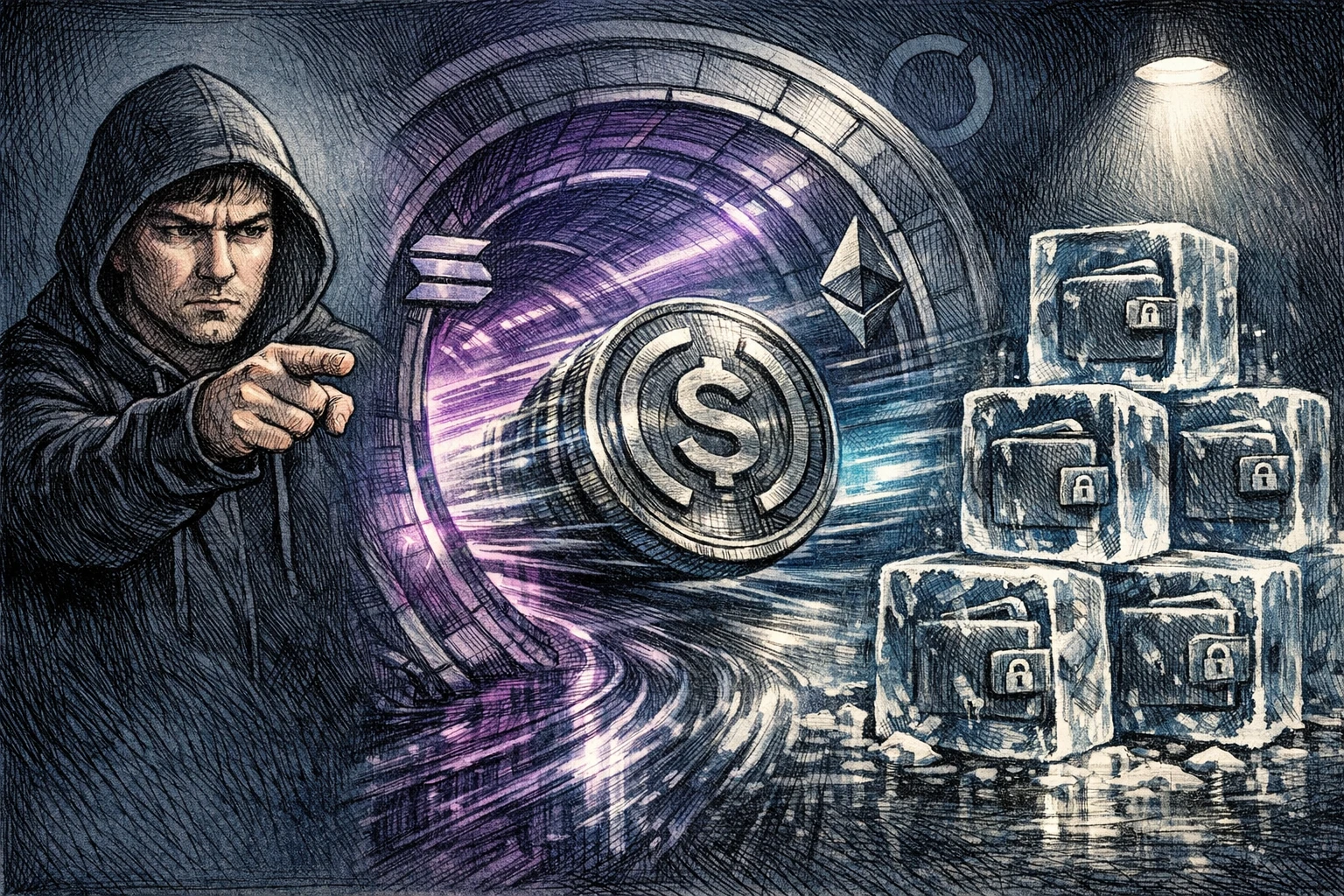
On-chain detective ZachXBT has publicly slammed stablecoin issuer Circle for its inaction during the multi-million dollar Drift Protocol hack, allowing stolen USDC to move from Solana to Ethereum via Circle's own Cross-Chain Transfer Protocol (CCTP).
The aftermath of the $270 million Drift exploit continues to ripple, with Circle now in the crosshairs. ZachXBT posted on social media that after the attack, the hacker transferred large amounts of stolen USDC through CCTP, which operates under Circle's infrastructure. The transfers took several hours during U.S. trading hours, yet Circle never intervened.
ZachXBT bluntly accused Circle of "sleeping" through a nine-figure hack.
Eager to Freeze Legit Wallets, Slow to Stop Stolen Funds
What angered ZachXBT more was Circle's double standard. Days before the Drift attack, on March 23, Circle had frozen over 16 business hot wallets — belonging to exchanges and payment processors — due to a sealed U.S. civil lawsuit, disrupting their daily operations. Those wallets are still being thawed out gradually.
In contrast, when a confirmed nine-figure hack occurred and stolen funds flowed through Circle's own infrastructure, the company did nothing to freeze or intercept.
ZachXBT directly called out Circle CEO Jeremy Allaire, saying the firm's behavior "negatively impacts the entire industry."
Stablecoin Issuer's Dilemma
This isn't the first time Circle has been accused of sluggish response in major hacks. Earlier this year during the Bybit exploit, Circle also faced criticism for not freezing related USDC promptly.
As the issuer of the world's second-largest stablecoin USDC, Circle technically has the power to blacklist addresses and freeze assets. Yet each incident highlights the same issue: when it comes to deciding whether to freeze, Circle always seems a few steps behind.
The Drift hack also revealed underlying risk-management flaws, such as abnormal multi-sig key migration and departing core members, but Circle's role has reignited debate over the centralized governance of stablecoins.