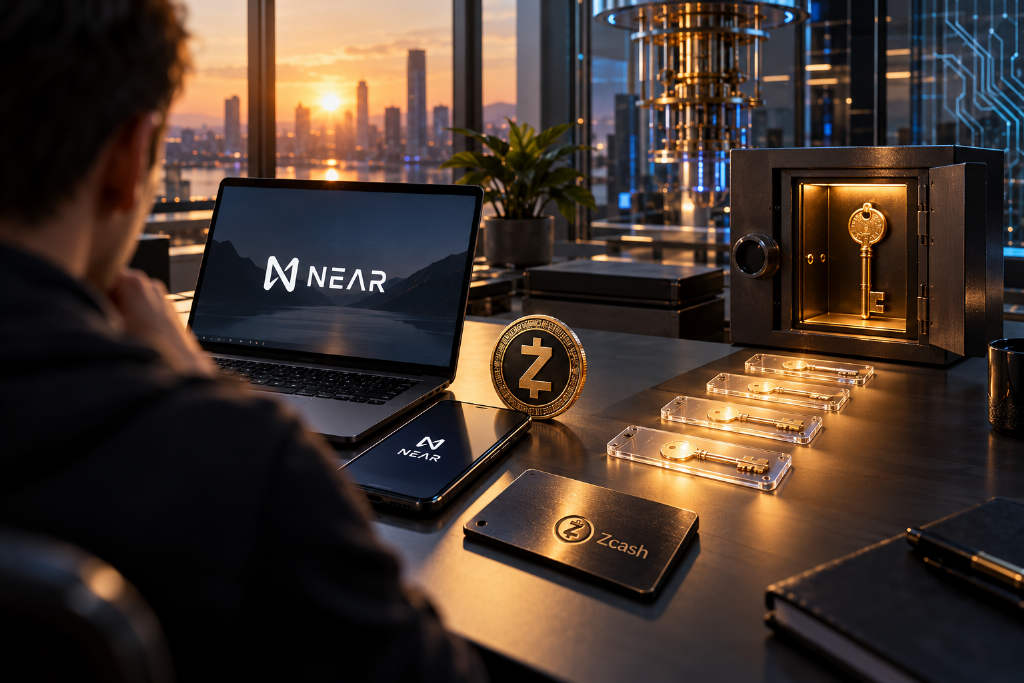
The Zakura team, which is building a new software stack for Zcash, has published an engineering proposal aimed at reducing a potential long-term privacy risk in ZEC swaps routed through NEAR Intents. The proposal would assign a separate viewing key to each individual ZEC exchange rather than reusing one tied to a broader account history.
According to the team, when a user swaps ZEC for USDC through NEAR Intents, one Zcash address is posted on the NEAR public blockchain for refund purposes. That address carries a public key derived from a viewing key. Zakura argues that if future quantum computers become capable of using Shor’s algorithm to reverse that key material, an attacker could link the account’s incoming transaction history and memos.
Under the proposed design, each swap would get its own viewing key, while the spending key would remain in the user’s main account. Refund discovery would be handled through private information retrieval, or PIR. The team said wallets such as Vizor that rely on its open-source library could support the approach within weeks, earlier than the January quantum-resistant payment target set by Zcash developers.
The Zakura team, a developer of new Zcash software, published an engineering post on Oct. 19 proposing a separate viewing key for every ZEC swap completed through NEAR Intents, framing the change as a way to guard against future privacy threats from quantum computers.
In the current flow described by the team, when a user swaps ZEC for USDC, NEAR Intents publishes one of the user’s Zcash addresses on the NEAR public blockchain for refunds. That address includes a public key derived from a viewing key. Zakura said a future quantum computer could potentially use Shor’s algorithm to work backward from that key, then link the account’s full incoming payment history and memos.
Its proposal would give each swap its own viewing key, while keeping the spending key in the user’s main account. Refunds would then be located through private information retrieval, or PIR.
The team said wallets including Vizor, which are built on its open-source library, could support the design within weeks. That would put deployment ahead of the January target for quantum-resistant payments set by Zcash developers.
This article was originally published by Bit.Fan. For more cryptocurrency news and market insights, visit www.bit.fan. Disclaimer:
The market information, project data, and third-party content displayed on this platform are for industry information sharing only and do not constitute any form of investment advice or return commitment.
Cryptocurrency trading carries high risks. Users should fully assess their risk tolerance and make independent decisions. All profits, losses, and legal responsibilities are borne by the users themselves.