
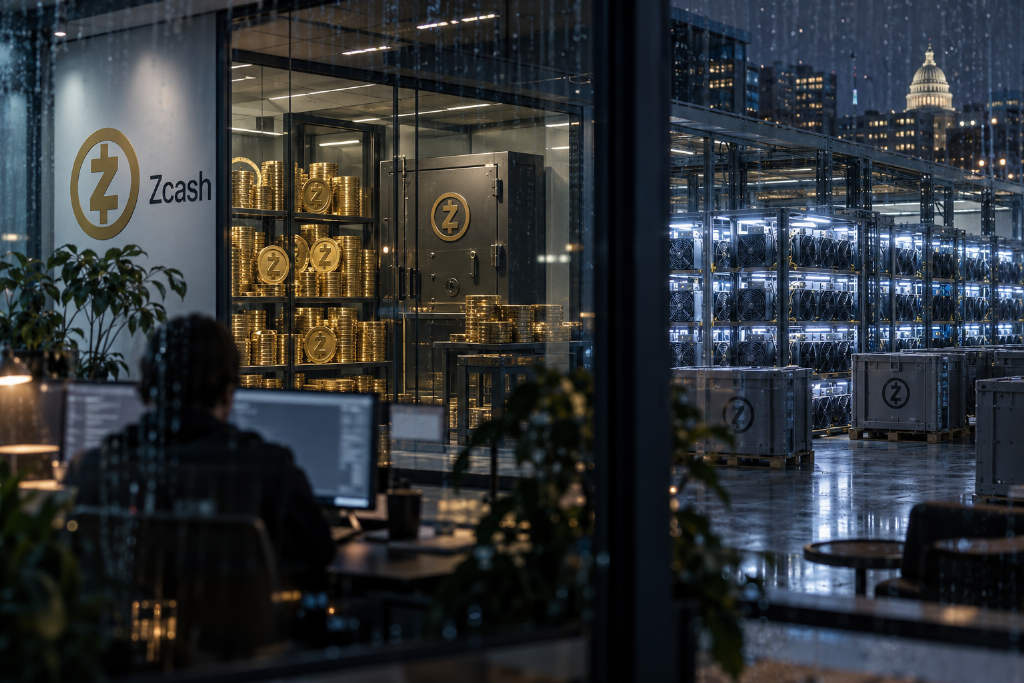
Zcash co-founder Sean Bowe published a draft proposal on GitHub late Monday that would switch off the automatic funding stream for Zcash Community Grants, or ZCG, and redirect that share of newly issued ZEC into a mining sustainability reserve.
His argument is straightforward: the ZCG treasury has grown past $125 million, while actual spending remains far below the pace of incoming funds.
ZCG treasury size versus annual spending
Bowe based his case on data from the ZCG committee’s public dashboard. The treasury currently holds about 91,453 ZEC and $8.8 million in fiat, with $2.4 million already committed to grants that have been approved.
Using a ZEC price of $1,300, he estimated that available assets come to roughly $125.3 million after subtracting the committed portion.
Against that, project spending by the Financial Privacy Foundation, which manages ZCG funds, was only a little over $1.5 million in the first quarter. Annualized, that works out to about $6 million.
Under the current automatic funding setup, around 144 ZEC flows into the program each day based on the network’s target cadence. At $1,300 per coin, that equals about $68 million a year, more than 10 times the annualized spending level. In the draft, Bowe wrote, 「ZCG was never designed to handle funding at this scale.」
He also ran a stress test. Even if ZEC fell to $500, the existing treasury would still last about five years if annual spending reached $10 million.
The proposal changes only the 8% ZCG channel
Zcash block rewards currently include two funding channels. One sends 8% to ZCG, where a five-member committee selects grants without tokenholder voting. Another sends 12% to the Zcash Ecosystem Fund, or ZEF, where tokenholders vote on grants each quarter.
Bowe’s draft touches only the ZCG side. If the automatic stream is shut off, that 8% share of ZEC would be redirected to the Network Sustainability Mechanism, or NSTM, a reserve intended to support future mining rewards, and would remain there until the current funding mechanism reaches its existing end date.
The 12% allocation to ZEF would stay in place, and the quarterly tokenholder voting process would continue unchanged. Bowe said that continuing to pile funds into ZCG’s independent custody and governance structure, despite already having ample reserves, 「adds unnecessary risk.」
Community debate followed a ZCG-backed expo appearance
The timing of the draft was not accidental. Over the weekend, ZECsy, a team funded by ZCG, set up a booth at the Exxxotica adult industry expo in Edison, New Jersey, to showcase privacy payment applications. Photos from the event circulated on X on Sunday and drew discussion in the community.
ZECsy had originally applied for $550,000 to cover adult industry events, crypto conferences, and workshops. One of the project’s selling points was helping businesses facing banking restrictions accept payments without exposing personal financial information. The committee approved startup funding and the first nine milestones, for a total of about $461,500.
Committee member Hanh voted against the proposal during the August review, questioning its cost-effectiveness and the evidence for long-term adoption. Other members said the team appeared capable of reaching new users, so funding was approved for nine months, with a later review to decide whether support should continue.
Bowe’s draft, however, did not cite the ZECsy case as a reason. The proposal is framed around treasury size and the continued inflow of funds.
What changes if the proposal passes
If adopted, the proposal would require a change to Zcash network rules, and no activation date has been set.
ZCG would lose its automatic funding source, but all existing assets would remain in place. The committee could keep making grants from the roughly $125 million treasury. For ZEC holders, that means the automatic money spigot would be turned off, while the existing pool would remain available.
For miners, NSTM would gain an additional inflow worth about $68 million a year at current prices, adding another buffer for the long-term sustainability of mining rewards.
What to watch next
The proposal cannot move overnight because it depends on a revision to Zcash network rules. In the near term, ZCG will continue receiving about 144 ZEC per day.
Two follow-up questions stand out in the source material. One is whether the 12% ZEF channel could face a similar debate over reducing inflows, since ZEF is accumulating even faster than ZCG. The other is whether the extra funds sent to NSTM can be quantified in terms of how much buffer they provide ahead of future halving events, a factor that could matter for long-term mining pool decisions.
The article also notes that the economics of mining are already shifting after the NU7 upgrade, scheduled for Nov. 5, cuts block time to 25 seconds. In that setting, the eventual size of NSTM could become one of the variables shaping whether miners stay or leave.


