
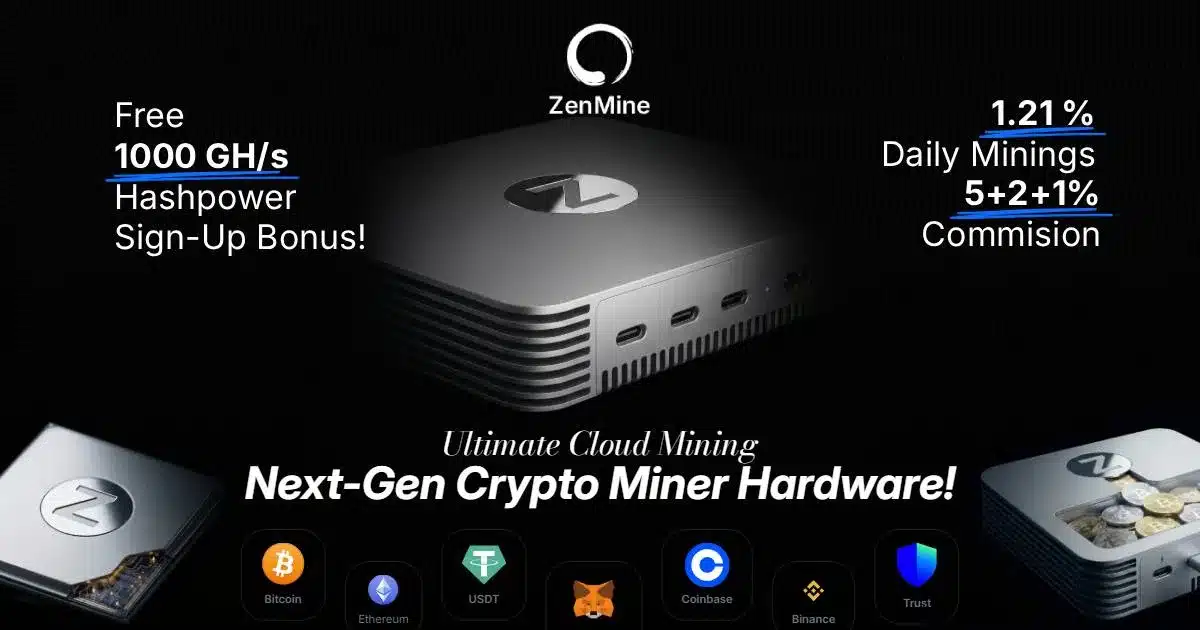
ZenMine says its AI-based mining optimization stack can deliver a 30% performance improvement over traditional unoptimized mining pools, according to a sponsored article published on July 23, 2026. The same piece ties that claim to an FPPS payout model and says users can receive automated daily returns of up to 1.21%. The article also states that the content is promotional and should not be treated as financial advice.
Mining strategy shifts from hardware expansion to operational tuning
The article frames the crypto mining market as entering a much more competitive phase. Its central argument is that the old model—buying as many ASIC machines as possible and connecting them to the cheapest available power source—has become less effective as network difficulty rises and chip limits become harder to ignore. In that context, ZenMine presents software-led optimization as the new lever for extracting more output from installed infrastructure.
AI system deployed across Iceland and Texas facilities
ZenMine says it has integrated proprietary AI optimization tools across two data centers located in Iceland and Texas. The company links that software layer to its ZenCore Z1 mining hardware, described in the article as a 5nm machine with 30 TH/s of output. According to the promotional write-up, the AI monitors millions of micro-level data points around the clock, shifts hashpower in response to changes in global network difficulty, and fine-tunes chip-level power consumption to reduce wasted energy.
The company also says predictive analytics are used to identify maintenance needs weeks before physical failures occur. The article does not provide a third-party validation method or technical benchmarks for the algorithm itself, but it presents the software layer as a core driver of mining efficiency rather than a support feature.
How the 30% claim is linked to user yield
ZenMine explains the +30% performance figure as higher Bitcoin production per terahash. In its telling, the AI keeps the hardware operating closer to maximum efficiency, allowing the platform to produce more BTC from the same nominal hashpower base. The article then connects that output claim with an FPPS model that includes network transaction fees, leading to the statement that users buying hashpower contracts can earn up to 1.21% in automated daily returns.
That figure is presented as a ceiling, not a fixed rate. The article does not specify the contract duration, the exact conditions required to reach that return level, or the measurement period used in the calculation.
Liquid cooling presented as a requirement for AI optimization
The sponsored piece also argues that the AI system depends on industrial liquid cooling. Its reasoning is straightforward: if the ZenCore Z1 chips are pushed harder under AI management, traditional air cooling could lead to overheating and thermal throttling. ZenMine says its cooling setup supports 99.95% uptime across operations.
Alongside those claims, the article describes ZenMine as a New York-registered technology company and says new users can access a free 1000 GH/s trial. A disclaimer at the end states that the post was sponsored, was not written by 36crypto, and does not reflect that outlet’s views.