
ZetaChain’s community approved Proposal 68 on Sept. 20, backing a plan to shut down the ZetaChain L1 and migrate the ZETA token to Solana. The proposal also covers Anuma, ZetaChain’s privacy-focused multi-model AI application, which will move into the Solana ecosystem as well.
Under the proposal, ZETA will convert on a 1:1 basis into a native Solana SPL token. The token will keep the ZETA ticker and its total supply of 2.1 billion. The current unlock schedule will stay in place, while ZETA on Ethereum and BNB Chain is excluded from this migration.
As of publication, the shutdown date for the ZetaChain L1 had not been set. The community is still expected to hold a second vote to determine the balance snapshot block, the shutdown block, the token claim process, and the asset withdrawal plan. Until exchanges confirm swap arrangements, ZETA staking will continue. That means holders and stakers do not need to take any action before the migration method and timeline are formally announced.
After the proposal passed, ZETA rose more than 40% in a single day on Sept. 21 and was trading near $0.05 at the time referenced in the article. The piece argues that the proposal changes ZetaChain’s fundamentals, shifting the project from an omnichain interoperability L1 toward consumer-facing AI and from infrastructure into the Solana application layer.
From cross-chain infrastructure to privacy AI
The proposal to migrate to Solana recorded 58% voter participation, above the 40% quorum threshold. Votes against and abstentions each accounted for 0.3%, and the measure passed with 99.4% support.
ZetaChain was originally positioned as a Layer 1 focused on omnichain interoperability. The project raised more than $27 million in 2023 and launched its mainnet in early 2024. The article says that by 2025, the crypto market had entered a period of fading enthusiasm for technology narratives and VC-backed tokens, with capital and attention shifting toward on-chain memes. In that setting, it says, better cross-chain infrastructure was no longer a primary market demand, pushing ZetaChain to change course.
At the same time, AI applications were expanding quickly. The article points to products such as ChatGPT and Claude and says their growth also brought privacy concerns, as large model providers use user conversations for training or commercial activity. ZetaChain, it says, identified a new opening in that area based on its own technical background.
In February this year, ZetaChain launched Anuma, a private AI application, and provided the technology behind its private memory layer. Anuma combines multiple advanced models into one interface, allowing users to switch models and move their context during use. According to the article, each model only receives the context needed for a request rather than a user’s full chat history, which means AI model companies cannot access the user’s private data.
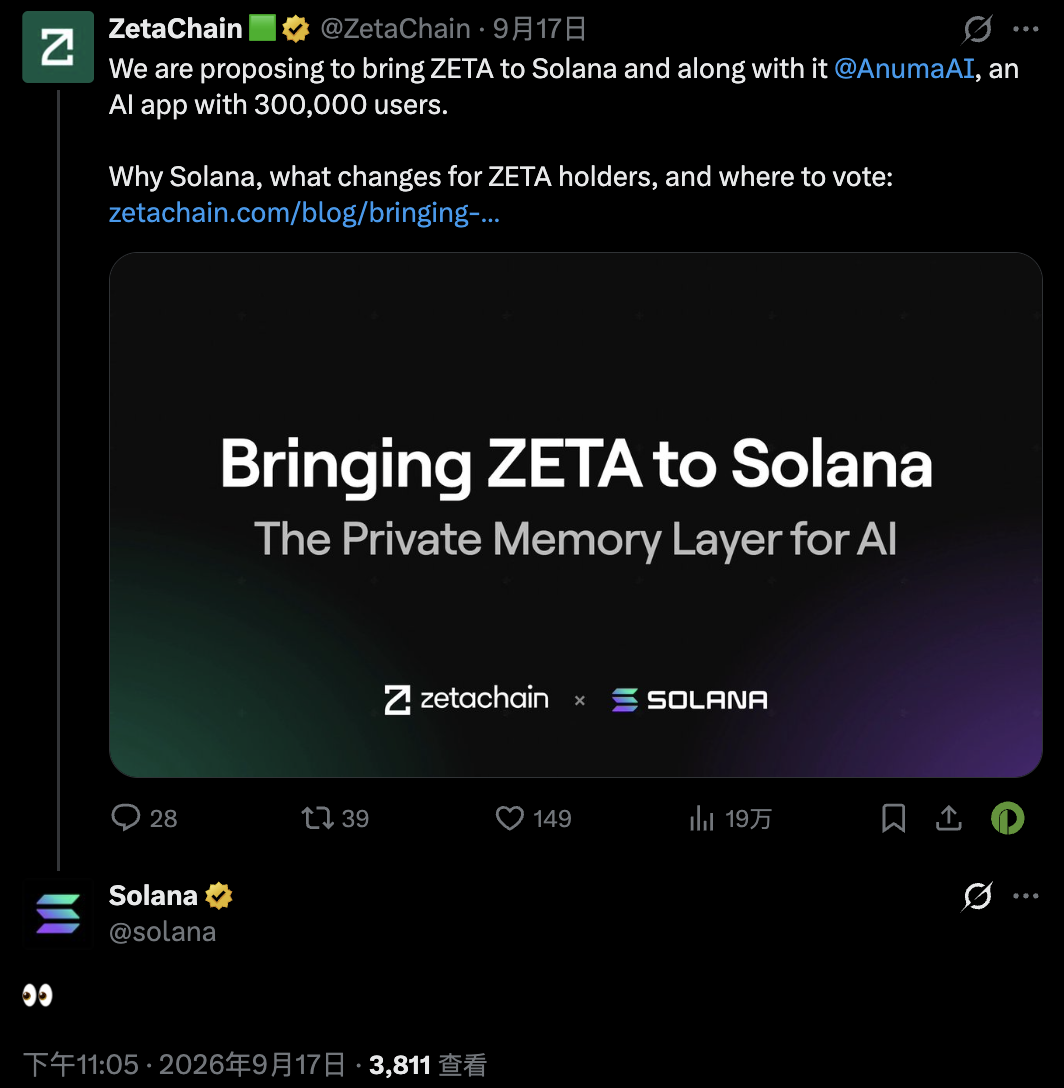
Official figures cited in the article show that Anuma has 305,881 registered users and has processed more than 1.2 million requests across 35 AI models. On that basis, the article says ZetaChain has already moved from cross-chain infrastructure into the privacy AI application layer, with a focus on building AI applications that can run across models while keeping user privacy under user control.
It describes the decision to shut down the ZetaChain L1 and move both ZETA and Anuma to Solana as the final step in abandoning the public-chain narrative and completing the shift into an AI application project.
What ZetaChain and Solana each gain
ZetaChain laid out its reasoning in the proposal, saying that “running our own L1 no longer helps us build private AI.” According to the proposal, Solana offers the stack ZetaChain needs for private AI, including open models and compute, agent identity, and agent payments through the x402 protocol. It also says Solana is designed for agent-scale usage with sub-second and sub-cent settlement, and that Solana supports wallets already registered with Anuma.
For ZetaChain, the article says, moving into an established ecosystem makes more sense than continuing to build infrastructure from zero. ZetaChain has also said it plans to put more of its effort into building the Anuma application going forward.
Solana also stands to benefit. The article’s framing is simple: ZetaChain gets AI infrastructure, while Solana gets users.
Anuma currently has more than 300,000 registered users. If those users migrate smoothly into the Solana ecosystem, the article says, they would directly add to Solana’s user base and on-chain activity. A ZetaChain report cited in the piece says that among the 305,881 wallets created on Anuma, most belonged to people using a crypto product for the first time. In the article’s wording, that makes them largely “AI-native” users.
It argues that bringing in those users would strengthen Solana’s user base and narrative in consumer AI applications. When ZetaChain posted the proposal on X, the Solana official account also interacted with it.
ZETA’s value anchor is changing
For ZETA holders, the article presents the proposal as positive. Its reasoning is that ZetaChain has moved toward AI without dropping its crypto roots, giving ZETA a new role. Instead of functioning as an L1 governance token, it is being repositioned as a utility token backed by an actual product and user base.
Under the proposal, ZETA will become a private AI application-layer token on Solana after the migration is completed. Anuma has already introduced a use case for it: users who lock 100,000 ZETA can unlock Anuma Pro. The article says that amount is worth about $5,000, while the official price of Anuma Pro is $19.99 per month.
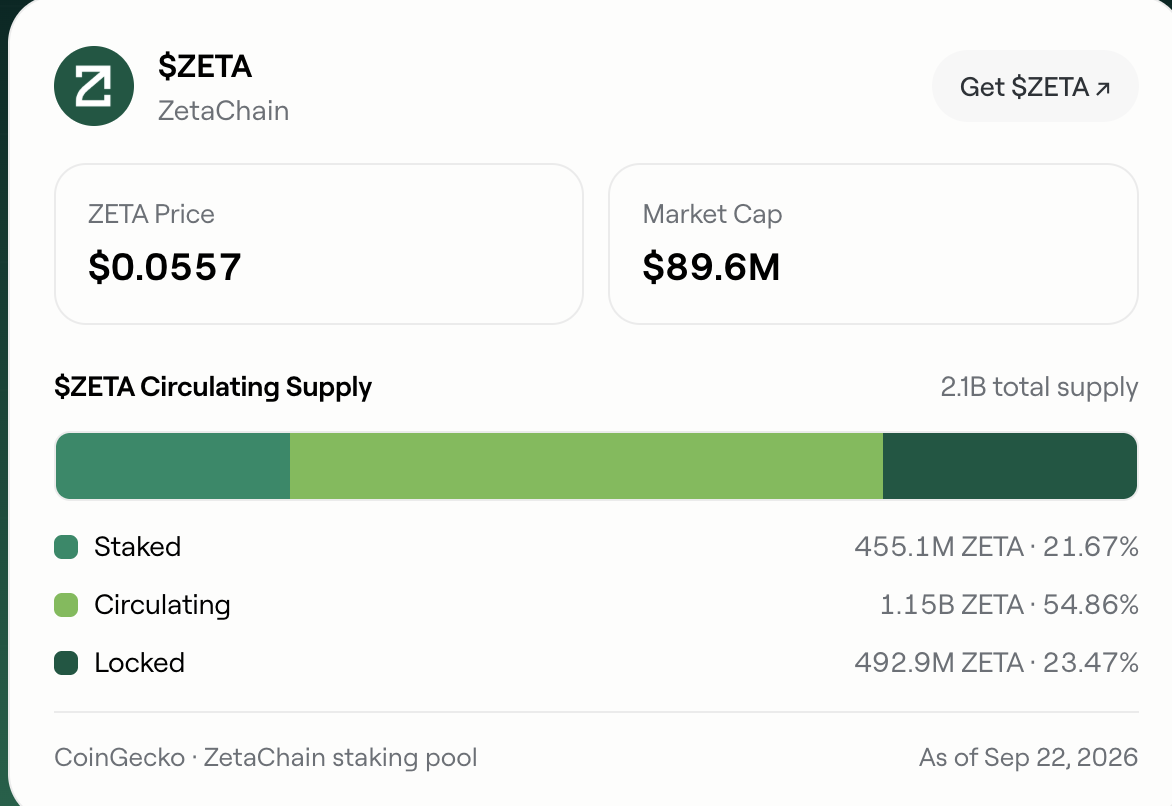
Official data cited in the article says more than 490 million ZETA has already been locked, equal to 23.47% of total supply and worth more than $24 million.
ZetaChain’s plans on Solana go beyond Anuma. The article says the private AI memory layer built by ZetaChain allows users to carry and move their personal context data, and that the team plans to extend that capability to other AI applications and agents in the Solana ecosystem to create a unified private AI experience on Solana.
If that happens, ZETA would become the base token for AI applications and agents built on the same private AI memory layer within Solana. The article links that prospect to ZETA’s gain of more than 40% after the proposal passed, arguing that the token still has room for a broader narrative.
It describes the shift as a full change in value capture. In the past, ZETA captured value from ZetaChain network gas fees and ecosystem growth. Going forward, the article says, it will capture value from Anuma user growth and the development of a privacy AI ecosystem on Solana.
A public chain called ZetaChain may be heading toward shutdown, but the article says the project’s next story is only beginning.