
A 21-foot Hewescraft skiff carrying two women, one child and a dog ran out of fuel on the night of Aug. 3 in waters between Petersburg and Juneau in southeast Alaska, according to the report. The people aboard used the emergency radio frequency that vessels are required to monitor and called the U.S. Coast Guard.
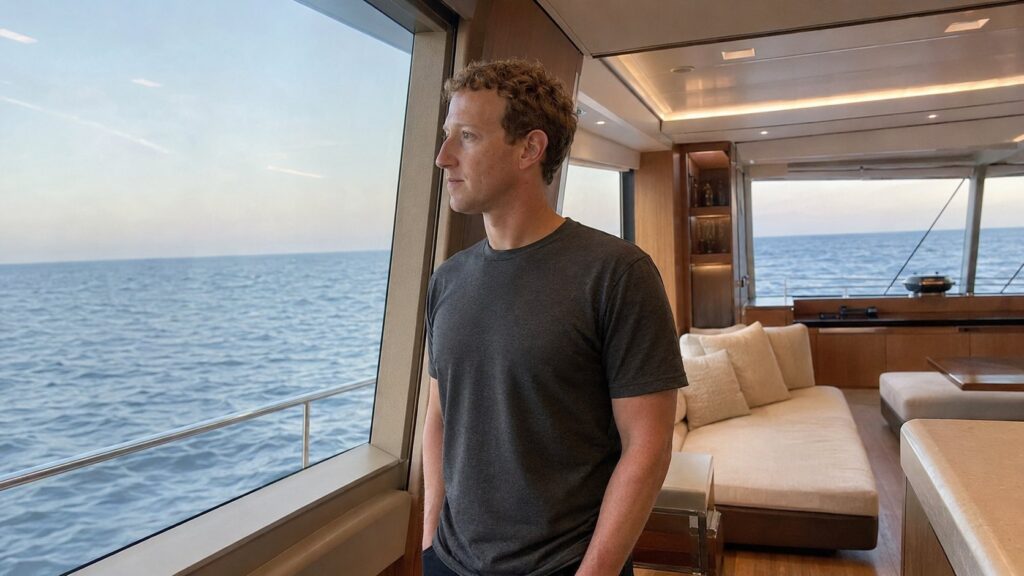
With the skiff left without power, its movement was up to the current. The report says one of the nearest vessels was Launchpad, the superyacht registered to Meta CEO Mark Zuckerberg.
Coast Guard issued an assistance broadcast after assessing the case
The Coast Guard spent about 25 minutes evaluating the situation after receiving the call, the report said. At around 9:56 p.m. Alaska time, it determined the skiff was not in distress. Instead of issuing a distress alert, it sent out a marine assistance broadcast asking nearby vessels to help.
Vessel-tracking data reviewed by multiple media outlets showed that the nearest vessel was Launchpad, a 387-foot Feadship superyacht valued at $300 million and registered to Zuckerberg, according to the article.
The vessel track cited in the report showed Launchpad slowing near the entrance to Farragut Bay and then remaining there. Another ship then passed it and continued toward the disabled skiff.
Wilderness Legacy carried out the tow
That vessel was Wilderness Legacy, a 192-foot ship completed in 1984. The report describes it as a replica modeled after an early 20th-century coastal steamship. It is operated by UnCruise Adventures and can carry up to 90 passengers.
Wilderness Legacy towed the skiff into sheltered water in Farragut Bay and supplied it with fuel, the report said. The next day, the captain was told that the three people had made it back safely to Petersburg.
Passenger account on Bluesky pushed the incident into public view
The article says the episode might have remained little known if a passenger had not posted about it online.
On Aug. 5, Wilderness Legacy passenger Michael Love wrote on Bluesky that he had heard the captain explain the rescue over the ship’s public-address system, including that the Coast Guard had first called Zuckerberg’s yacht because it was closer and did not receive a response. He wrote: 「Our boat rescued a stranded boat last night apparently after the Coast Guard had called Zuckerberg’s yacht because they were closer and they never responded.」
Love also said the ship’s passengers 「almost unanimously booed」 when the captain announced what had happened. As described in the report, he viewed it as a missed chance to help someone in need while also generating positive publicity. The vessel that ultimately stepped in was carrying ordinary paying passengers who had been on board to watch whales and glaciers.
Launchpad specifications and spokesperson response
Launchpad is a 118-meter yacht delivered by Dutch builder Feadship in 2024, flying the Marshall Islands flag, with capacity for 26 guests and a crew of 49, the report said. It was originally known as Feadship 1010. The article says it was completed in 2022 but was not delivered to its original buyer at that time, then was renamed and delivered to Zuckerberg two years later.
The report also says the yacht has a support vessel. It states that in September 2025, Zuckerberg bought the 80-meter support ship Wingman for about $100 million. The vessel can carry another 40 crew members and includes a helipad, gym, sauna and a basketball court on the foredeck.
Brian Baker, a spokesperson for Zuckerberg, told Forbes three things. First, Zuckerberg and his family were not aboard at the time. Second, as the Coast Guard indicated, the skiff was not in distress. Third, by the time the crew saw the Coast Guard’s contact, the rescue was already under way because they were operating on another radio channel.
The original report also noted that no one aboard the yacht, despite its 49-person crew, was listening to the radio frequency vessels are required to monitor that night.
Why the article says no legal duty was triggered
The report cited Title 46, Section 2304 of the U.S. Code, saying the duty to render aid applies when a person is in danger of being lost at sea. Because the Coast Guard determined that the skiff was not in distress and issued an assistance broadcast rather than a distress signal, the legal duty did not attach.
Timing drew added attention
The report also pointed to the timing. On Aug. 10, Zuckerberg published a public letter titled “Personal Superintelligence.” According to the article’s description, the letter said future abundance could be shared by everyone and that putting power in people’s hands so they can pursue their aspirations is how the greatest human progress is made.
That same day, his yacht made headlines around the world for not answering the assistance call off Alaska.