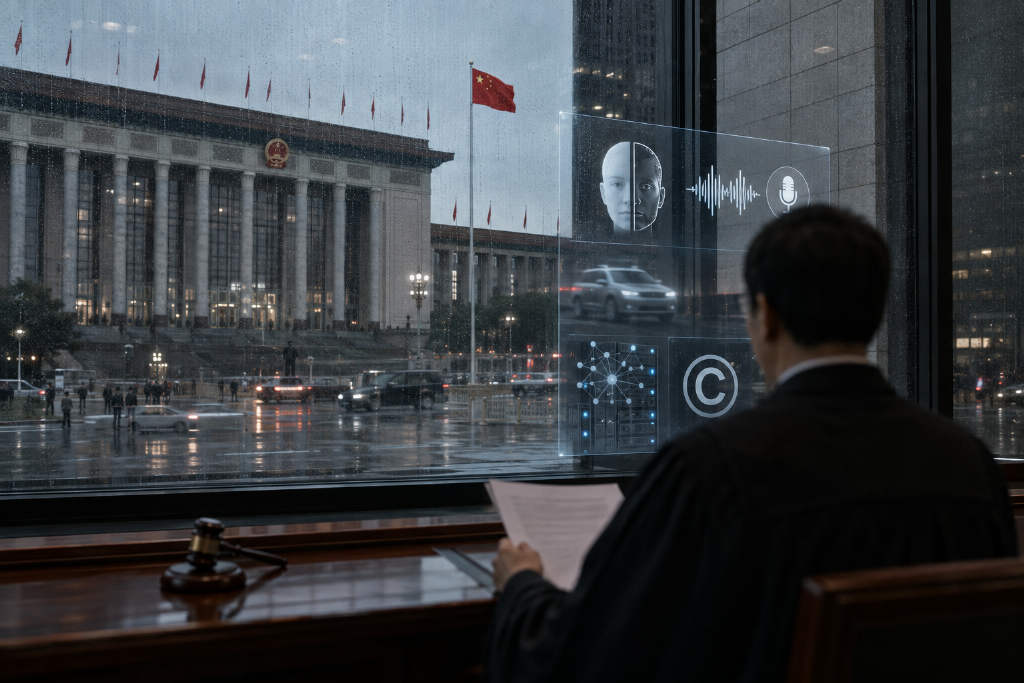
China's Supreme People's Court released a 24-article judicial opinion on September 7 covering AI face-swapping, voice cloning, AI hallucination, doxxing, algorithmic price discrimination, autonomous driving, AI training, open-source software, and IP protection. The rules aim to clarify legal standards for AI-related cases and safeguard civil rights in the digital era.
China's Supreme People's Court on September 7 released a judicial opinion on how to handle disputes tied to artificial intelligence. The document has 24 articles in five sections. It tackles matters including AI-driven face-swapping and voice cloning, AI hallucination infringement, doxxing (known as "network box-opening"), big data-based price discrimination against existing customers, autonomous driving, AI model training, open-source software, and intellectual property protection, according to Xinhua News Agency.
The opinion sets out concrete rules for both substantive adjudication and procedural handling in AI-related cases. The goal is to tighten civil rights protection in the digital age and support the healthy, orderly growth of the AI industry.
This article was originally published by Bit.Fan. For more cryptocurrency news and market insights, visit www.bit.fan. Disclaimer:
The market information, project data, and third-party content displayed on this platform are for industry information sharing only and do not constitute any form of investment advice or return commitment.
Cryptocurrency trading carries high risks. Users should fully assess their risk tolerance and make independent decisions. All profits, losses, and legal responsibilities are borne by the users themselves.