News

Goldman Sachs
2026-07-14 01:06:35

Goldman Sachs data shows hedge funds piling into U.S. semiconductor stocks

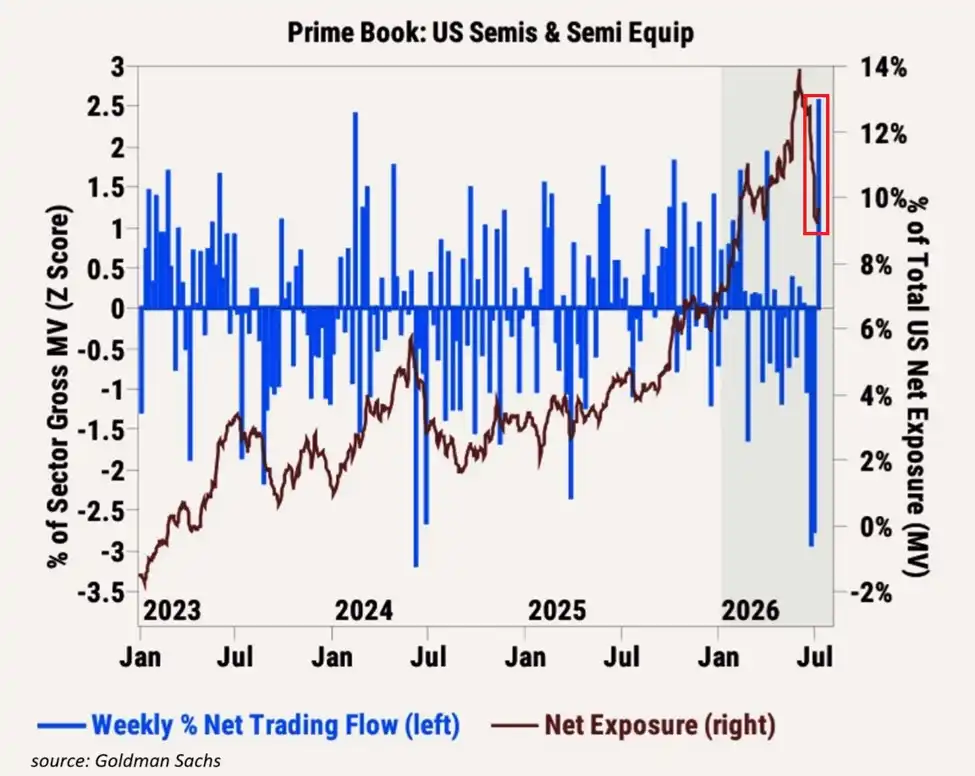
Hedge funds sharply increased purchases of U.S. semiconductor stocks last week, according to data cited by BlockBeats from Goldman Sachs. The buying was the largest in nearly three and a half years and came after the sector had just gone through its biggest two-week sell-off since June 2024. The shift suggests funds have moved from cutting exposure to rebuilding positions in chip names. Semiconductor stocks now account for 10% of total hedge fund exposure, double the level seen at the same time last year. Even so, that share remains below the 14% peak recorded in May. Goldman Sachs’ data was cited as showing that hedge funds are betting the sell-off in semiconductor stocks has run its course.

40
Goldman Sachs data shows hedge funds piling into U.S. semiconductor stocks
Hedge Funds
2026-07-14 01:06:35

Goldman Sachs data shows hedge funds piling into U.S. semiconductor stocks

Hedge funds sharply increased purchases of U.S. semiconductor stocks last week, according to Goldman Sachs data cited by BlockBeats. The buying marked the biggest accumulation in nearly three and a half years, following what the report described as the largest two-week selloff since June 2024. Semiconductor stocks now account for 10% of hedge funds’ total exposure, double the level seen at the same time last year. Even so, that figure remains below the 14% peak recorded in May. The positioning suggests hedge funds are betting that the recent selloff in semiconductor shares has run its course. The update points to a notable shift in sentiment after back-to-back weeks of heavy selling in the sector.

40
Goldman Sachs data shows hedge funds piling into U.S. semiconductor stocks
Goldman Sachs
2026-07-14 01:06:35

Goldman Sachs data shows hedge funds buying U.S. semiconductor stocks in size

Hedge funds sharply increased purchases of U.S. semiconductor stocks last week, according to data cited by BlockBeats from Goldman Sachs. The buying marked the biggest accumulation in nearly three and a half years, following what Goldman described as the largest two-week selloff in the sector since June 2024. The shift pushed semiconductor stocks to 10% of hedge funds’ total exposure, double the level seen a year earlier. Even so, that figure remains below the 14% peak recorded in May. Goldman’s reading of the move is that hedge funds are positioning for the semiconductor selloff to be over. The report points to a notable turn in fund positioning after a recent period of heavy selling pressure in the sector.

60
Goldman Sachs data shows hedge funds buying U.S. semiconductor stocks in size
Goldman Sachs
2026-07-14 01:06:35

Goldman Sachs data shows hedge funds ramping up purchases of U.S. semiconductor stocks

Hedge funds sharply increased their purchases of U.S. semiconductor stocks last week, according to data cited by BlockBeats from Goldman Sachs. The buying marked the biggest accumulation in nearly three and a half years and came right after the sector logged its largest two-week selloff since June 2024. The move pushed semiconductor stocks to 10% of total hedge fund exposure, double the level seen a year earlier. Even so, that figure remains below the 14% peak recorded in May. The positioning suggests hedge funds are betting that the semiconductor selloff has run its course.

380
Goldman Sachs data shows hedge funds ramping up purchases of U.S. semiconductor stocks
Hedge Funds
2026-07-14 01:06:35

Goldman Sachs data shows hedge funds buying U.S. semiconductor stocks heavily

Hedge funds sharply increased purchases of U.S. semiconductor stocks last week, according to data cited by BlockBeats from Goldman Sachs. The buying marked the biggest accumulation in nearly three and a half years and came after the largest two-week selling stretch since June 2024. Semiconductor stocks now account for 10% of hedge funds’ total exposure, double the level seen a year earlier. That said, the share remains below the 14% peak recorded in May. The positioning shift suggests hedge funds are betting that the sell-off in semiconductor shares has run its course. The move is notable because it follows a period of heavy liquidation and points to a rapid reversal in fund flows into the sector.

60
Goldman Sachs data shows hedge funds buying U.S. semiconductor stocks heavily
Strategy
2026-07-14 01:05:52

Strategy’s Bitcoin banking adoption index puts Fidelity first at 71%

Strategy has released a new Bitcoin banking adoption index covering 25 major global institutions and their Bitcoin-related service offerings. Fidelity ranked first with a 71% adoption score, followed by BNY at 46% and Goldman Sachs at 45%. JPMorgan, Morgan Stanley, and Citigroup each scored 43%. The index measures Bitcoin-related adoption across trading, custody, digital asset products, financing, and corporate participation, with an overall adoption rate of 32%. Scores for the remaining institutions ranged from 13% to 38%, including Wells Fargo at 38%, Banco Santander and Société Générale at 35%, and Charles Schwab and TD Bank at 32%.

00
Strategy’s Bitcoin banking adoption index puts Fidelity first at 71%
HYPE
2026-07-14 01:05:34

HYPE Spot ETF Posts $3.93 Million in Daily Net Outflows

SoSoValue data showed that HYPE spot ETFs recorded total net outflows of $3.9304 million on July 13 U.S. Eastern Time. The only fund to post outflows that day was the Bitwise Hyperliquid ETF, trading under the ticker BHYP, with the full $3.9304 million in net redemptions. Despite the one-day withdrawal, BHYP's historical cumulative net inflow stands at $127 million. As of press time, total net assets across HYPE spot ETFs were reported at $328 million, while the HYPE net asset ratio was 2.32%. Historical cumulative net inflows for HYPE spot ETFs reached $305 million, according to the same dataset. The figures were cited by ChainCatcher in a market update based on SoSoValue statistics.

00
HYPE Spot ETF Posts $3.93 Million in Daily Net Outflows
Policy Regula
2026-07-14 01:04:05

Nasdaq Falls 1.55% as Hormuz Blockade Move and Waller’s Hawkish Signal Hit Risk Assets

U.S. equities sold off after two developments hit markets at once: President Donald Trump announced a new maritime blockade tied to the Strait of Hormuz, and Federal Reserve Governor Christopher Waller said the Federal Open Market Committee could consider tightening policy soon if core inflation rises again this week. The Nasdaq dropped 1.55% and closed below its 50-day moving average, while the Philadelphia Semiconductor Index sank 4.78%. WTI crude jumped nearly 10%, spot gold briefly fell below $4,000, and Bitcoin dropped more than 3%, at one point slipping under $62,000. Chip stocks led the decline. Nvidia fell 3.52%, Broadcom lost 3.98%, AMD dropped 4.21%, and SanDisk slid more than 12%. SK Hynix’s U.S.-listed ADR fell more than 9%, while its Seoul-listed shares tumbled 15.37%, the biggest one-day drop on record. Apple stood out in the opposite direction, rising 0.71% to $316.91 and touching an all-time intraday high. The report said markets are now focused on Wednesday’s CPI release. CME data cited in the piece showed the implied probability of a July rate hike had climbed to nearly 50%, while the 10-year real yield rose to 2.34%, the highest level since April last year.

00
Nasdaq Falls 1.55% as Hormuz Blockade Move and Waller’s Hawkish Signal Hit Risk Assets