BackABN AMRO

ABN AMRO

Whale Movemen
2026-08-20 02:22:00

Crypto overnight roundup: whale liquidations, Treasury buybacks, and a heavy CFTC agenda

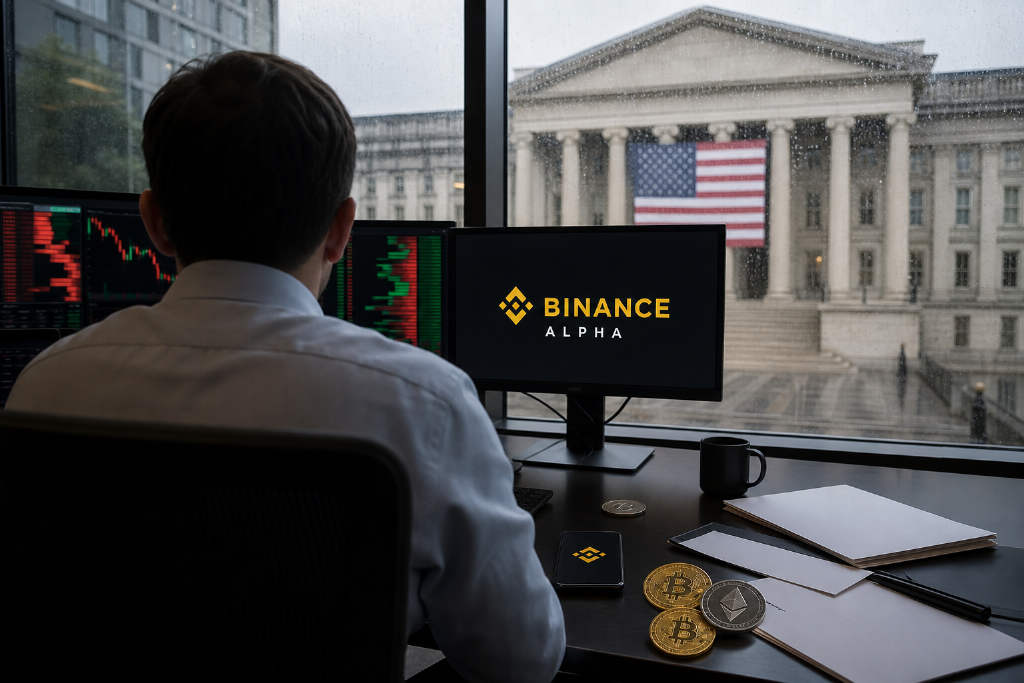
A dense 24-hour stretch across crypto and macro markets brought a mix of token airdrops, policy signals, whale liquidations, and AI-related capital flows. Binance Alpha opened the third round of its STABLE airdrop, while Berachain rebranded its stablecoin HONEY to Bera USD, with no contract change but a required re-signing for some permits because of EIP-712 domain separation. In macro markets, the U.S. Treasury said it will at least double the size of liquidity-support buybacks for long-dated nominal coupon securities, lifting the cap per operation from $2 billion to at least $4 billion starting Sept. 9, 2026. After the announcement, Bitcoin briefly rose to $69,749, its highest level since June 2, even as Bitfinex said the rally still lacks stablecoin support. On the regulatory side, the CFTC secured supplemental consent orders against former Alameda Research CEO Caroline Ellison and FTX co-founder Gary Wang, while also scheduling the first meeting of its Innovation Advisory Committee and seeking public comment on computing-power derivatives contracts. In markets, major leveraged positions were wiped out across BTC and ETH, including a 1,800 BTC short that was fully liquidated. Hyperliquid’s HYPE token climbed more than 20% after President Donald Trump said CFTC Chair Michael S. Selig was working to bring the platform into the U.S. in a fully compliant way, even as FalconX and Multicoin Capital moved large amounts of HYPE to exchanges.

860
Crypto overnight roundup: whale liquidations, Treasury buybacks, and a heavy CFTC agenda
Hong Kong dol
2026-08-16 01:25:00

One Year After Hong Kong’s Stablecoin Licensing, the Market Still Looks Lukewarm

Nearly a year after Hong Kong moved ahead with its first Hong Kong dollar stablecoin licenses, industry sentiment remains cautious rather than enthusiastic. People close to the local stablecoin business told the author that Standard Chartered-backed AnchorPoint Fintech has shown a more proactive stance, while HSBC has been far less eager. Several licensed crypto exchanges in Hong Kong are also testing or participating tactically, but many do not yet see a clear path to profits. The report argues that the current setup has created a mismatch: some institutions that strongly want to explore Hong Kong dollar stablecoin use cases have not been given a leading role, while some institutions that did receive licenses or central positions are seen as lacking strong commercial motivation. That gap, in the view of market participants cited in the piece, has left the sector with licenses in hand but limited momentum. The article also places Hong Kong in a broader global context. Euro, yen and won stablecoin efforts are described as facing their own structural limits, from low market share and slow adoption to restrictive institutional design and unresolved regulatory disputes. Against a global stablecoin market of nearly $308.3 billion, with dollar stablecoins accounting for 98%, non-dollar stablecoins continue to lag.

450
One Year After Hong Kong’s Stablecoin Licensing, the Market Still Looks Lukewarm
HKD stablecoi
2026-08-14 03:10:05

Hong Kong dollar stablecoins lose momentum after licensing debut

Hong Kong’s first licensed HKD stablecoin push has cooled sharply, according to a Foresight News report that cites multiple people close to the business. The article says enthusiasm for stablecoins in general has not translated into confidence in Hong Kong dollar stablecoins specifically, even after the Hong Kong Monetary Authority issued its first two licenses in April 2026. Standard Chartered-backed Anchorpoint Fintech is described as the more proactive player, while HSBC is portrayed as far more cautious and more interested in tokenized deposits than stablecoins. The report says market participants now fall into several camps: firms that want exposure but doubt the business case, firms that joined only because regulation pushed them in, and firms with clear use cases and motivation that remain outside the core structure. Among licensed crypto exchanges, reactions range from outright pessimism to limited testing paired with strategic caution. One exchange source said HKD stablecoins do not offer a visible path to profit, especially as licensed exchanges in Hong Kong are themselves still losing money. Foresight also places Hong Kong in a broader global context, arguing that non-dollar stablecoins are struggling across major financial centers. It points to weak market share for euro stablecoins, restrictive trust-bank rules in Japan, and delayed policymaking in South Korea. With the global stablecoin market nearing $308.3 billion and dollar stablecoins accounting for 98%, the report argues Hong Kong has launched early but without strong market conviction.

350
Hong Kong dollar stablecoins lose momentum after licensing debut
Ondo Finance
2026-07-29 12:30:08

Ondo drops its L1 plan, Europe’s banks launch RL1, and CME sues the CFTC as institutions pull trading infrastructure away from public chains

Three developments that surfaced on July 28 point to the same structural shift in institutional crypto infrastructure. Ondo Finance, a major tokenized real-world asset issuer, moved away from the idea of using a public blockchain as the core venue for institutional trade execution and instead backed a model that splits execution from settlement. In Europe, 10 founding banks launched RL1, a regulated and permissioned DLT network organized as a cooperative in Luxembourg, with equal governance rights for members. In the US, CME Group challenged the Commodity Futures Trading Commission in court over its decision to allow Kalshi and Coinbase to list crypto perpetual futures. Taken together, the cases suggest that institutions are not rejecting blockchain technology. They are narrowing where and how they want to use it. Execution is moving toward private or permissioned systems built for speed, privacy, and control. Governance remains with regulated entities, cooperatives, or incumbent exchange operators. Public blockchains, in this framework, are increasingly treated as settlement infrastructure rather than full-stack financial rails. According to the article, this has consequences for RWA issuers, trading venues, public L1 and L2 networks, and regional competition in Asia. The report, citing EXIO Research, argues that the long-running narrative that institutions would migrate directly onto public chains now faces a serious challenge.

1340
Ondo drops its L1 plan, Europe’s banks launch RL1, and CME sues the CFTC as institutions pull trading infrastructure away from public chains
RL1
2026-07-29 01:27:28

Ten European financial institutions launch RL1 cooperative in Luxembourg after processing more than €700 million

Ten European financial institutions have formally launched RL1, short for Regulated Layer One, as a blockchain cooperative in Luxembourg to build shared infrastructure for regulated financial markets and tokenized assets. According to RL1’s official announcement, the founding members are ABN AMRO, DekaBank, Natixis CIB, Crédit Mutuel Alliance Fédérale, Cecabank, DZ BANK, LBBW, Chartered Investment, SC Ventures and Seturion. The group said each member has equal decision-making rights over network governance and development. The infrastructure originated from German fintech firm Secure Worldwide Interbank Asset Transfer, or SWIAT, which has now transferred ownership of the network to the cooperative. SWIAT said the platform has processed more than 50 transactions in a live production environment over three years, with a total value exceeding €700 million, or about $808 million. RL1 is described as a private, permissioned network built for institutional use cases including digital money, tokenized bonds, collateral and blockchain settlement. The cooperative said the shared model is designed to reduce fragmentation caused by financial institutions operating separate distributed ledger systems, and added that it is in talks with more institutions, including NatWest, about joining the network.

1170
Ten European financial institutions launch RL1 cooperative in Luxembourg after processing more than €700 million
Europe
2026-07-29 00:14:51

Ten European financial institutions launch RL1 network, now operating from Luxembourg

Ten European financial institutions have jointly launched Regulated Layer One, or RL1, a private permissioned blockchain network aimed at regulated financial markets and tokenized assets. The network has been established in Luxembourg as a European cooperative and is already in operation. Founding members are ABN AMRO, Cecabank, Chartered Investment, Crédit Mutuel Alliance Fédérale, DekaBank, DZ BANK, LBBW, Natixis CIB, SC Ventures, and Seturion. RL1 said each member holds equal decision-making rights over governance and development. The network is built on infrastructure developed by German fintech company Secure Worldwide Interbank Asset Transfer, or SWIAT, which has transferred ownership of the network to the cooperative. SWIAT said the platform processed more than 50 transactions worth over 700 million euros during three years of production use. RL1 is intended for digital currencies, tokenized bonds, collateral, and blockchain-based settlement. The initiative will be led by former SWIAT Managing Director Henning Vollbehr. KfW and L-Bank will continue to support the project, while RL1 is also in talks with additional institutions including NatWest about joining the network.

1210
Ten European financial institutions launch RL1 network, now operating from Luxembourg