Anthropic
Nov 7, 2026

METR Says Anthropic Model Development Speed Has Doubled as Internal Model 4 Emerges

A METR assessment has brought Anthropic’s previously undisclosed Model 4 into public view and described a sharp acceleration in the company’s model-development pace. The report says Anthropic models improved on clearly defined tasks at twice the rate recorded across the March 2024 to October 2025 period. Model 4, trained in September and October 2025, scored 178.6 on Anthropic’s internal AECI measure, ahead of the public Opus 5.5 and Mythos 5.1 models. It cleared a 50% accuracy threshold on all 15 listed benchmarks, while removing three problematic benchmarks would raise its score to 179.7. METR estimated that about 80% of the roughly twofold research acceleration came from AI assistance rather than faster training-compute growth. Anthropic employees reported productivity gains rising from 1.3–1.4 times in spring 2025 to about 12 times while using Model 4 in October 2026. The report also said Anthropic’s public version omitted much of a roughly 100-page submission, including a redacted forecast table. METR researcher Ryan Greenblatt described the findings as a major signal for ASI within one to two years, while the report connected the discussion to the AI 2027 scenario.

580
METR Says Anthropic Model Development Speed Has Doubled as Internal Model 4 Emerges
OpenAI
Nov 2, 2026

Altman says OpenAI has undisclosed math findings as AI research moves deeper into science

OpenAI CEO Sam Altman said the company has additional mathematics discoveries that have not been made public, adding a new layer to the debate over how frontier AI research should be released and verified. In a Cheeky Pint interview published on Oct. 29, Altman agreed with the host’s estimate that OpenAI has spent hundreds of millions of dollars on mathematics research, then said that spending also covers findings that remain undisclosed. He argued that major discoveries in basic science should be shared publicly, while also acknowledging the tension between open publication and the incentives that drive researchers’ careers. The issue is already visible in OpenAI’s recent math releases. Independent researchers have launched a GitHub revision effort, oai-math-revised, to clarify arguments, add missing citations, and identify errors in OpenAI manuscripts. OpenAI has also described some newly released papers as “raw research data” and said the results sit at different stages of verification, with some lacking computer-checkable formal proofs. At the same time, AI use in biology is spreading. Epoch AI said that 846 of 4,922 bioRxiv preprints screened in September 2026 disclosed the use of large language models, or 17.19%. Recent collaborations involving OpenAI, PerturbAI, Scripps Research, and Generate Biomedicines show how models are being used to analyze data, propose designs, and iterate with experimental feedback.

860
Altman says OpenAI has undisclosed math findings as AI research moves deeper into science
DeepMind
Nov 2, 2026

DeepMind paper maps AI’s economic path: wages may fall before jobs disappear

Google DeepMind co-founder and chief AGI scientist Shane Legg has co-authored a new essay, The Economics of Intelligence, alongside AGI economics director Alex Imas and research scientist Andrew Koh, with a companion working paper titled Organizing Intelligence. The paper argues that the first broad economic shock from advanced AI may not be mass layoffs, but falling wages. In the model, once AI reaches average human capability, employment can remain unchanged while specialist pay drops sharply because scarcity disappears and labor becomes priced against compute. As AI grows stronger in narrow tasks, top specialists lose pricing power, while coordinators briefly gain value because they can direct highly capable but poorly coordinated AI systems. The paper then shifts to a larger claim: the decisive variable for market structure is not only how capable a single model is, but whether many AI agents can work together efficiently. If coordination remains weak, pure AI firms stay limited in size. If coordination crosses a threshold, the model suggests a rapid move toward highly concentrated, all-AI firms and a much deeper restructuring of labor markets.

660
DeepMind paper maps AI’s economic path: wages may fall before jobs disappear
Elon Musk
Oct 26, 2026

Musk says superintelligence may not rule humans as work and money lose relevance

Tesla CEO Elon Musk said in a recent conversation with Walter Isaacson, the author of Steve Jobs, that artificial superintelligence, or ASI, could eventually reach intelligence levels thousands of times greater than those of humans, but is unlikely to actively seek control over human society. In his view, the bigger risk is not domination by AI, but the possibility that humans are simply ignored by a far more capable system. Musk also said AI development should center on curiosity and the pursuit of truth, warning that conflicting rules could produce unpredictable behavior. On the economic side, Musk estimated that digital superintelligence alone could lift global economic output by 20% to 30%, or roughly $30 trillion in additional annual output. He added that if embodied AI such as humanoid robots reaches large-scale adoption, and if space resources are developed further, the global economy could theoretically expand by a factor of 1 million. Under that scenario, he said, people may no longer need labor to sustain themselves, work could shift toward personal interest, and the importance of traditional money may decline. Musk also predicted that AI could surpass individual human intelligence in 2026 to 2027 and exceed the collective intelligence of all humanity in 2030 to 2031, while the number of humanoid robots could reach at least 100 million within five years and top 1 billion within a decade.

540
Musk says superintelligence may not rule humans as work and money lose relevance
Elon Musk
Oct 26, 2026

Musk says ASI may ignore humans, while money and work could lose their meaning

Elon Musk used a recent interview with Walter Isaacson to sketch a future in which artificial superintelligence does not necessarily seek to rule humanity, but may simply regard people as irrelevant. He compared humans facing ASI to chimpanzees facing humans, arguing that a vastly superior intelligence would have little reason to care about human power structures, ideology, or financial systems. In his view, the larger danger is not enslavement by machines but being systematically ignored by them. Musk also tied that idea to embodied AI and robotics. He said digital superintelligence alone might raise global goods and services output by 20% to 30%, or about $30 trillion a year, but robots capable of manipulating the physical world could push economic output far beyond that. He described a scenario in which machine labor and access to space resources expand the economy by 1,000,000x, making most goods and services easy to provide, turning work from a necessity into a choice, and weakening the role of traditional money. He further argued that future wealth may be measured less by bank balances and more by physical metrics such as watts, tons, and joules. The interview also touched on U.S. debt, OpenAI, Anthropic, simulation theory, and his call for more optimistic “Protopia” narratives in AI development.

760
Musk says ASI may ignore humans, while money and work could lose their meaning
ASI
Oct 20, 2026

ASI CEO says company AI helps FAA and military coordinate complex systems

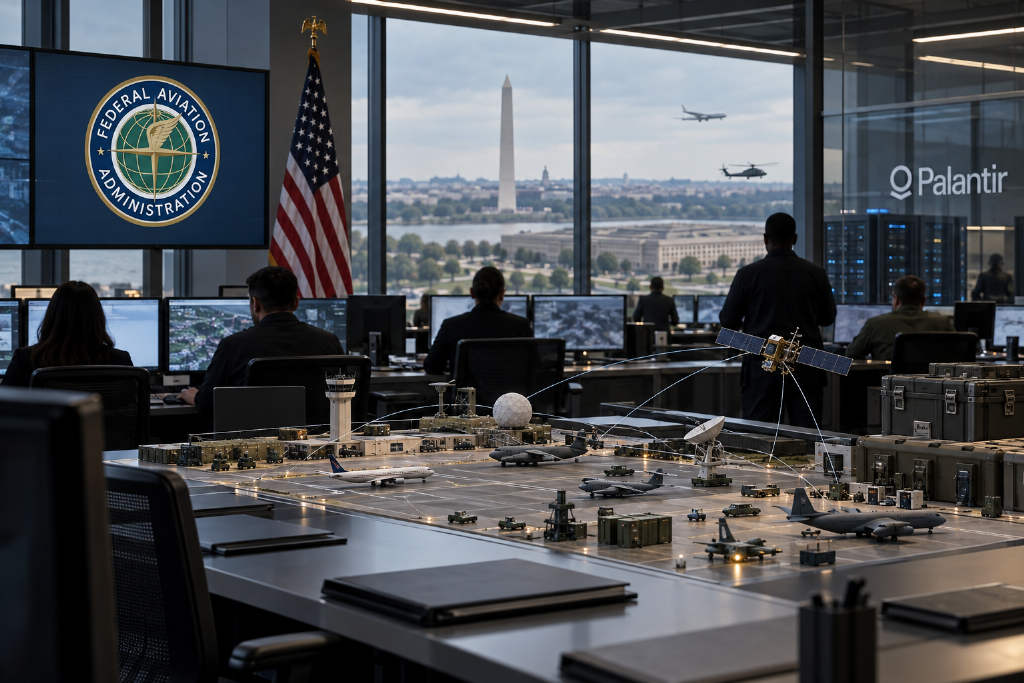
ASI founder and CEO Phillip Buckendorf said the company’s artificial intelligence technology is being used by customers including the U.S. Federal Aviation Administration and the military to coordinate complex systems. He said ASI has also won government contracts while competing against rivals such as Palantir. In the interview, Buckendorf also discussed how the company plans to use the $325 million it recently raised at a $3 billion valuation. Bloomberg was cited as the source of the interview details. The remarks point to ASI’s push into government work as it positions its AI products for operational use cases involving large, complicated systems.

880
ASI CEO says company AI helps FAA and military coordinate complex systems
ASI
Oct 20, 2026

ASI raises $325 million at a $3 billion valuation to expand AI use in real-world assets

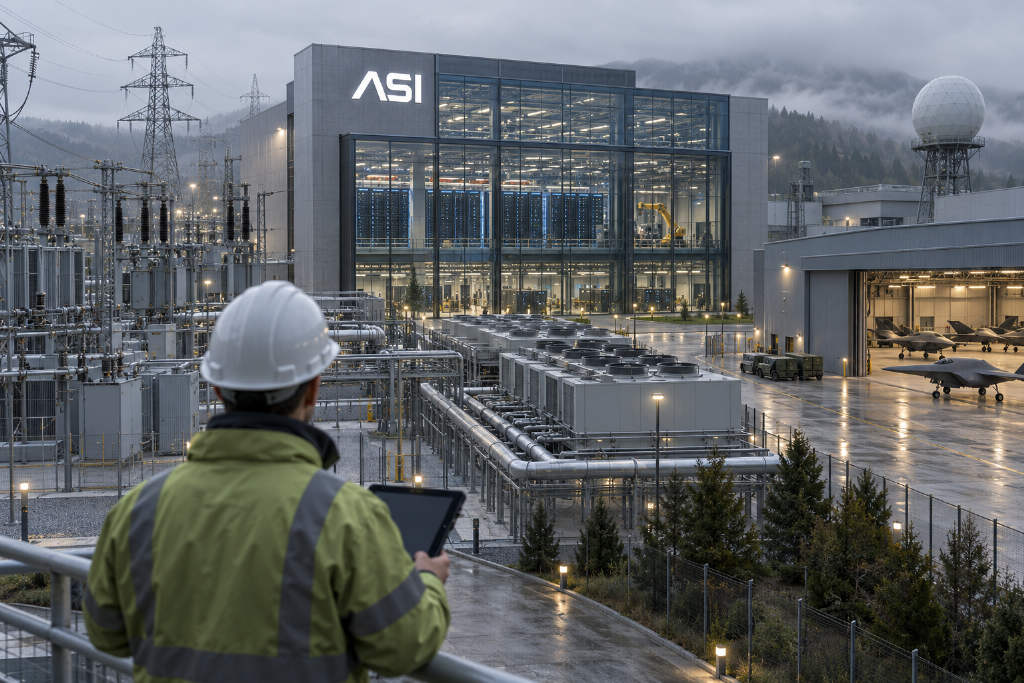
AI infrastructure company ASI has raised $325 million in fresh funding, bringing its valuation to $3 billion, according to a Techub News brief citing Crypto Briefing. The company said it will use the new capital to expand artificial intelligence applications tied to real-world assets. Its stated focus is on improving critical infrastructure in sectors including energy and defense. The update did not disclose investor names or additional deal terms, but it identified the funding size, valuation, and the company’s intended use of proceeds. The announcement places ASI’s next phase around applying AI tools to physical asset settings rather than purely digital environments. Techub carried the item under its technology coverage.

960
ASI raises $325 million at a $3 billion valuation to expand AI use in real-world assets
Sequoia Capital
Sep 28, 2026

Sequoia’s Pat Grady says AI is shifting from delivering software to delivering outcomes

Sequoia Capital global partner Pat Grady used a closed-door presentation to the Boston College Investment Committee to frame the state of artificial intelligence in September 2026 as a structural reset in computing rather than another wave of information distribution. In his view, AI is no longer aimed only at the software market. It is moving into the much larger professional services market, where the addressable opportunity is one to two orders of magnitude bigger. Grady outlined three turning points in the recent cycle: ChatGPT at the end of 2022, which established the viability of pre-training; OpenAI o1 at the end of 2024, which validated reasoning; and the arrival of Claude Code and Opus 4.5, which showed that long-horizon agents could handle complex tasks. He argued that by the third stage, AGI had moved from hypothesis to industrial reality. He also said the most commercially attractive application-layer opportunities are concentrated in high-value knowledge work such as software engineering, cybersecurity, healthcare, finance, investment banking, and audit compliance. On the capital side, Grady described a new two-step financing structure in which strategic co-builders enter first and financial investors follow later, often pushing valuations sharply higher in a short period.

1140
Sequoia’s Pat Grady says AI is shifting from delivering software to delivering outcomes
Total 18 items
Go topage