ASUS
Oct 28, 2026

ASUS winds down smartphone line as Zenfone inventory sells out, shifts focus to AI hardware

ASUS smartphones have largely disappeared from major retail channels, with distributors saying the final batch of inventory has sold out and chain retailers no longer plan to restock. The remaining sell-off covered the Zenfone 11 Ultra and Zenfone 12 Ultra, while ROG Phone inventory had already dried up earlier in the year. ASUS had said at the start of the year that it would gradually step back from the smartphone market and stop launching successor models for both the Zenfone and ROG Phone lines. Chairman Jonney Shih said on Jan. 16 that the company would continue supporting existing smartphone users, but would not add new models and would reallocate resources toward AI, which he described as having greater strategic value. The report also said discounted pricing had attracted attention, with the Zenfone 11 Ultra falling to NT$16,990 after another NT$2,000 cut in September, marking a cumulative decline of 43%. HTC is moving in a similar direction. Senior Vice President Huang Chao-ying said in September that the smartphone business would "temporarily take a back seat," though the company could revisit the category if a new technological breakthrough emerges. HTC’s U24 pro, launched in June 2024, is now nearing the end of its sales cycle, with only double-digit inventory left in retail channels. Meanwhile, VIVE Eagle AI glasses, launched in 2025, have generated more revenue this year than HTC’s smartphone business, according to the report.
340
ASUS winds down smartphone line as Zenfone inventory sells out, shifts focus to AI hardware
ASUS
Oct 22, 2026

ASUS, GIGABYTE and MSI plan another motherboard price hike in Q4

ABMedia, citing Commercial Times, reported that ASUS, GIGABYTE and MSI have told channel partners they will raise motherboard prices by another 5% to 10% starting in the fourth quarter. The report said the PC DIY motherboard market began to recover after the third quarter as supply constraints on some mainstream CPU models eased. By the end of the third quarter, motherboard ASP had already risen by a double-digit percentage from the start of the year. Shipment momentum improved from the previous quarter, with ASUS and GIGABYTE estimated to post nearly double-digit sequential growth in third-quarter motherboard shipments, while MSI saw single-digit growth. Even so, all three companies were still down from a year earlier. Higher ASP helped keep sales revenue flat or better. The report also said second-tier motherboard makers and Chinese brands have started following the latest round of price increases. Institutional investors remain constructive on ASUS, GIGABYTE and ASRock, pointing to AI server businesses as a key driver. Still, supply-chain estimates suggest full-year consumer motherboard shipments may fall about 30%, leaving questions over whether price hikes alone can sustain stronger profit performance in the second half.

410
ASUS, GIGABYTE and MSI plan another motherboard price hike in Q4
AI data centers
Oct 11, 2026

AI-driven memory costs hit PC shipments as global Q3 volumes fall more than 20%

Global PC shipments fell sharply in the third quarter of 2026, with IDC estimating 62.7 million units shipped, down 20.1% from 78.5 million a year earlier and 9.1% below the second quarter’s 69 million units. Omdia’s estimate was even lower at 58.1 million units, a 21.2% annual decline, though both firms pointed to the same pressures: aggressive pull-ins earlier in the year and higher component costs tied to AI data center expansion. IDC said vendors and channels stocked up ahead of expected price increases, which pulled demand forward and disrupted the usual seasonal pattern in which Q3 outperforms Q2. At the same time, tighter supply and AI server buildouts pushed up DRAM and SSD prices. TrendForce said advanced DRAM capacity continues to be prioritized for high-performance server products, while NAND Flash prices are also rising. The impact was uneven across brands. IDC said ASUS and Apple posted the smallest declines among the top five PC vendors, while their market share rose. HP recorded the steepest drop. Omdia argued that premium positioning helped Apple absorb pricing pressure, while ASUS cited a product mix tilted toward gaming, premium, Copilot+ PC, and commercial systems. Both research firms expect pricing pressure to persist into the fourth quarter.

590
AI-driven memory costs hit PC shipments as global Q3 volumes fall more than 20%
NVIDIA
Oct 4, 2026

NVIDIA expands DGX Spark line with 64GB model as Taiwan hardware suppliers eye launch demand

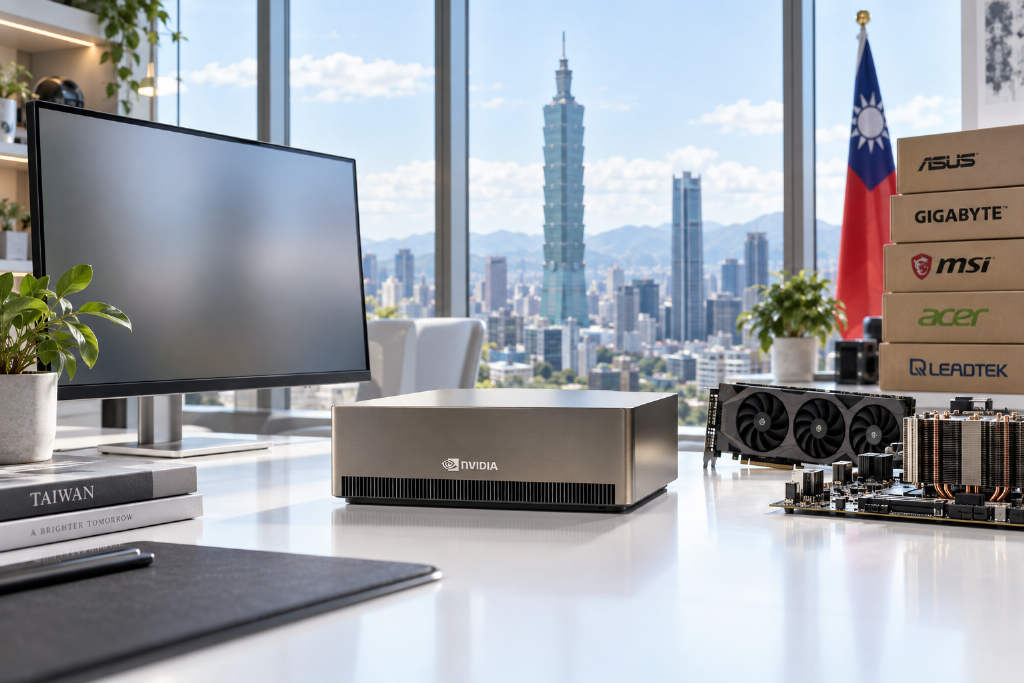
NVIDIA has introduced a new 64GB unified-memory version of its desktop AI supercomputer, DGX Spark, widening the product line with a lower entry price than the previously announced 128GB model. According to ABMedia, the new configuration is scheduled for global release on Oct. 23, 2026, with an official starting price of $4,999. The report said Taiwan is included in the first wave of launch and supply markets. Leadtek will exclusively bring in the original Founders Edition, targeting universities, national research institutions and enterprise projects, while also supplying major consumer channels including PChome 24h and Original House. Taiwanese OEM brands such as ASUS and GIGABYTE are preparing their own versions under the names Ascent GX10 and AI TOP ATOM, while MSI and Acer are also offering related edge workstation products. ABMedia also outlined the supply chain tied to the product, naming TSMC for GB10 chip production and advanced packaging, cooling suppliers AVC and Auras, and power-related firms Delta Electronics and Lite-On. Still, the report noted that any real revenue impact will depend on shipment volume after launch and on whether enterprises adopt the systems at scale.

2400
NVIDIA expands DGX Spark line with 64GB model as Taiwan hardware suppliers eye launch demand
Asus
Sep 13, 2026

Asus prices $1.5 billion offshore convertible bonds at 40% premium; shares fall more than 8% intraday

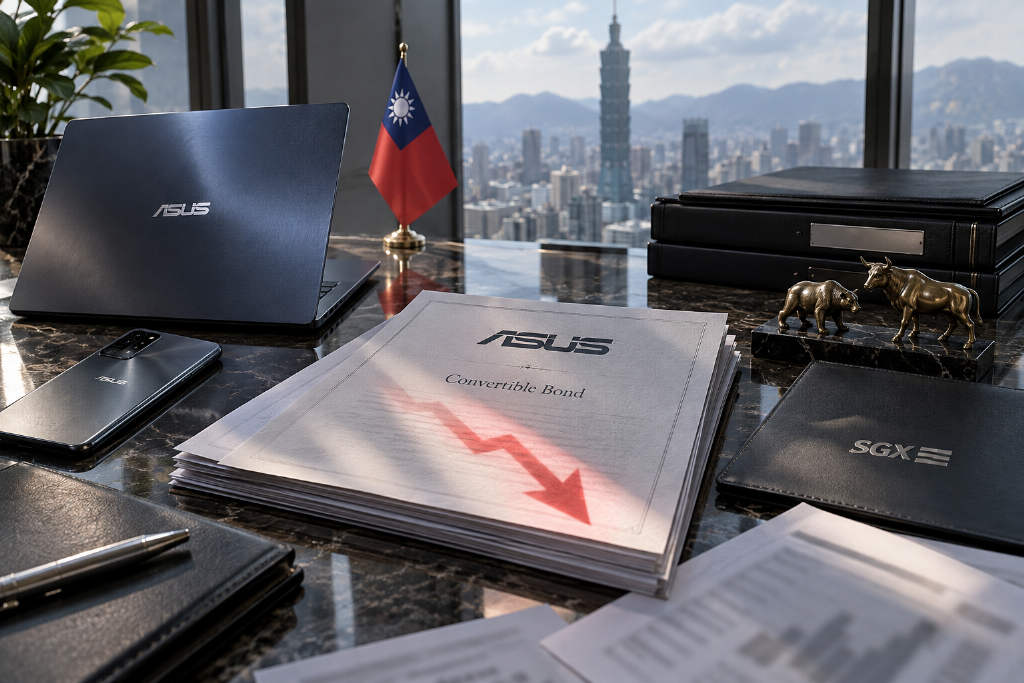
Asus said late on Sept. 10 that it had priced its second overseas unsecured exchangeable convertible bond, raising $1.5 billion, or about NT$48 billion. The five-year notes carry a 0% coupon, with redemption at maturity set at par plus a 1.7% annual yield calculated semiannually. The conversion price was set at NT$1,384.6, equal to 140% of Asus’ Sept. 10 closing price of NT$989, implying a 40% premium. The company said the proceeds will be used to fund foreign-currency raw material purchases, and if the bonds are fully converted into common shares, the dilution to existing shareholders would be about 4.40%. Trading turned sharply lower on Sept. 11. Against a broader market drop of 755 points, Asus shares opened lower and at one point fell by more than 8% to NT$912. The report said the pressure came in part from hedging activity after overseas hedge funds and institutional investors subscribed to the deal. Such investors often run delta-neutral strategies, taking the embedded call option in the bonds while shorting the underlying shares in the spot market to hedge exposure and lock in returns. Asus also said the bonds are scheduled to be issued on Sept. 17, year 115 on the ROC calendar, and listed on the Singapore Exchange.

1010
Asus prices $1.5 billion offshore convertible bonds at 40% premium; shares fall more than 8% intraday
GPU price hike
Sep 7, 2026

Asus, Gigabyte and Other GPU Makers to Hike Prices Again in September, Up to RMB 500

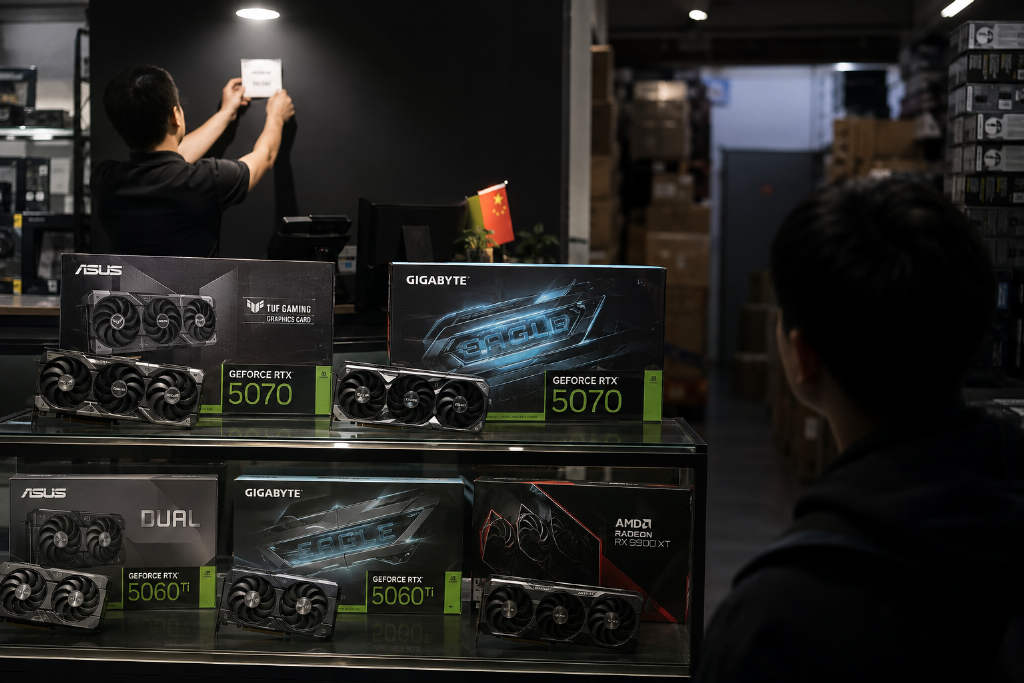
Asus, Gigabyte and other graphics card manufacturers plan to raise prices again in September for the Chinese mainland market, with increases of up to RMB 500. Asus' RTX 5070 series sees a price hike of RMB 150-300, while Gigabyte's RTX 5060TI 16G gets a RMB 200 bump. AMD's RX 9000 series also sees adjustments. The price hikes are driven by memory shortages and capacity shift toward AI GPUs. Nvidia has cut consumer GPU shipments by 15-20% in Q3, prolonging supply tightness.

2160
Asus, Gigabyte and Other GPU Makers to Hike Prices Again in September, Up to RMB 500
RTX Spark
Aug 31, 2026

Nvidia RTX Spark PCs Launch This Fall; Asus and MSI First Batches Sold Out

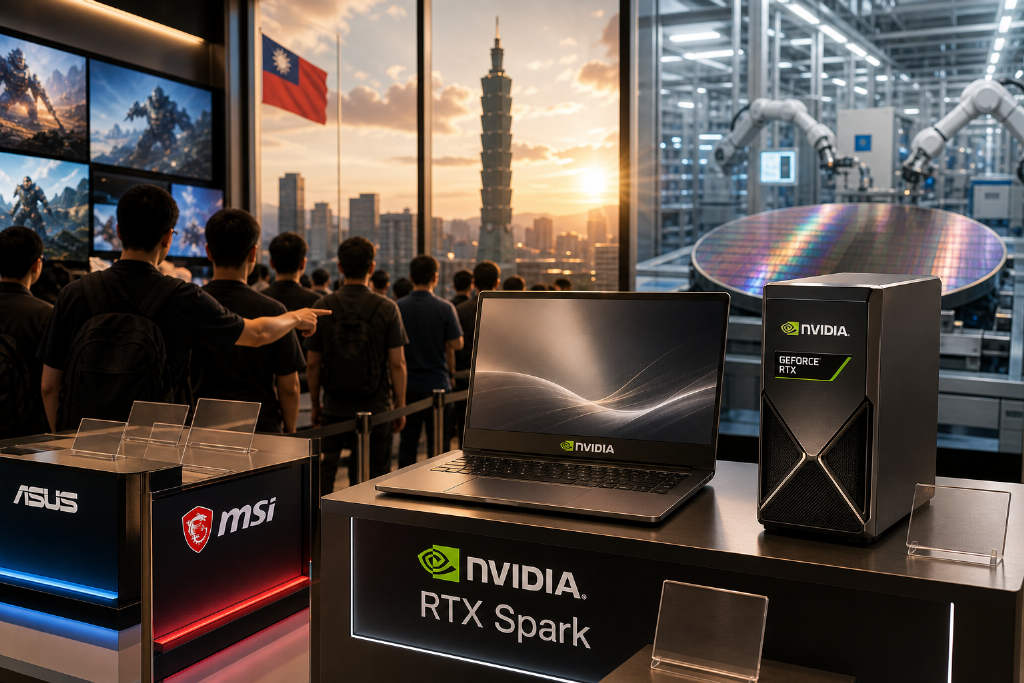
Nvidia's RTX Spark PCs, developed with MediaTek, are set to arrive this fall, with Microsoft and additional game developers announcing updates and support for the Windows on Arm platform. Demand is already outrunning supply: Asus and MSI say their first allocations are fully booked or nearly so, and both are asking Nvidia for more units. Asus co-CEO Hu Shu-pin said channel bookings had exceeded expectations, and he is highly optimistic about next-year sales. MSI's product chief Peng Jen-fang said buyers in mainland China, Taiwan and the U.S. have been actively reserving laptops powered by the high-end N1X chip. Built on TSMC's 3nm process, the RTX Spark superchip pairs a Blackwell RTX GPU with a 20-core Grace CPU. Nvidia CEO Jensen Huang called it a "personal AI computer" that unifies CUDA, RTX and AI for local agents, front-end models, creative workflows and RTX games. Pricing for N1X models hasn't been announced and is widely expected to start from 110,000 yuan. First-wave partners include Asus, MSI, Dell, HP, Lenovo and Microsoft, followed by Acer and Gigabyte; more games are joining the lineup after Gamescom 2026.

1630
Nvidia RTX Spark PCs Launch This Fall; Asus and MSI First Batches Sold Out