Premier League agreement to arbitrate disputes
League membership is itself a written arbitration agreement binding the league, clubs and club directors to final, binding arbitration for covered disputes.
1260

League membership is itself a written arbitration agreement binding the league, clubs and club directors to final, binding arbitration for covered disputes.
A Premier League manager employment-contract dispute goes to the Managers' Arbitration Tribunal, seated in England and Wales and applying English law.
Sony has argued in federal court that consumers do not reasonably believe they own digital games purchased through the PlayStation Store, pushing back against a proposed class action filed by four California users in the Northern District of California. The lawsuit claims the store’s "Buy Now" and "Confirm Purchase" buttons suggest ownership, while the actual transaction grants only a revocable license. Sony says its checkout flow already gives adequate notice through links to its Terms of Service and Software Product License Agreement, which state that users do not own the product and that software is licensed rather than sold. The company also argued that ownership is not a plausible expectation for digital game buyers, citing two separate purchases of the same title, Resident Evil Requiem, by different customers in February. Sony’s main procedural request is for the dispute to be moved into private arbitration under PlayStation’s terms, which also include a class action waiver. The judge has not yet ruled on that request.
Gemini Space Station won an arbitration case in August, with an arbitrator finding that the crypto exchange did not mislead users and was not responsible for the collapse of its Earn lending program, according to CNBC. The claim was filed by an Earn user in late 2024. The ruling said there was not enough evidence to show Gemini lied to customers or acted negligently in its due diligence on Genesis Global Capital, its main lending partner in the program. Gemini launched Earn in 2021, offering users up to 7.4% annual yield for lending out crypto. Under the structure, assets were lent to institutional borrowers through Genesis. Gemini halted withdrawals from Earn in November 2022, shortly after Genesis stopped new loan originations and redemptions because of a liquidity crisis tied to the 2022 crypto market downturn. The freeze triggered legal complaints from multiple customers. New York’s attorney general also sued Gemini over Earn and reached a $50 million settlement with the company in 2024. In February 2024, Gemini said it had reached an agreement in principle with Genesis and other creditors in the Genesis bankruptcy case. Three months later, Earn users received $2.18 billion in digital assets in kind, equal to 97% of the digital assets owed to them and $1 billion more than the value at the time withdrawals were halted in 2022.
Gemini Space Station won a legal ruling in August, with an arbitrator finding that the crypto exchange did not mislead users and was not responsible for the collapse of its Earn lending program, CNBC reported. The claim was brought in late 2024 by a user of the digital-asset lending product. The ruling said there was not enough evidence to show Gemini lied to customers or was negligent in its due diligence on Genesis Global Capital, its main lending partner in the program. Launched in 2021, Earn offered users annual yields of up to 7.4% by lending out crypto assets. Gemini suspended withdrawals from the program in November 2022, shortly after Genesis halted new loan originations and redemptions during a liquidity crisis tied to that year’s crypto market downturn. After the freeze, multiple customers filed legal complaints against Gemini. The New York attorney general also sued the company over Earn and reached a $50 million settlement in 2024. In February 2024, Gemini said it had reached an agreement in principle with Genesis and other creditors in the Genesis bankruptcy case. Three months later, Earn users received $2.18 billion in digital assets in kind, equal to 97% of the digital assets owed to them and $1 billion more than when Genesis froze withdrawals in 2022.
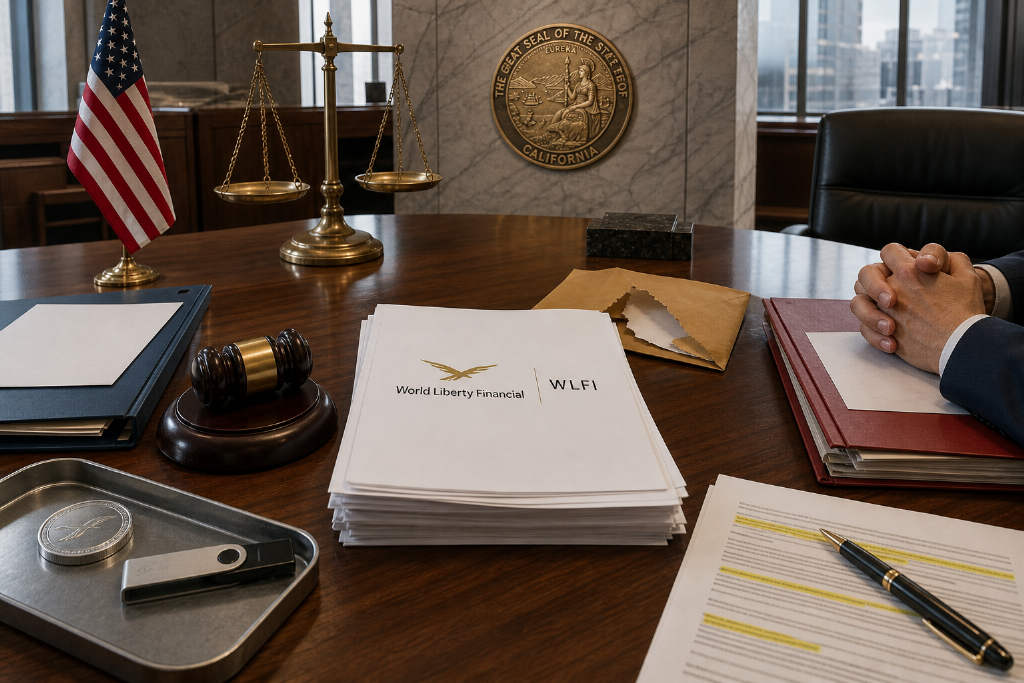
Justin Sun and World Liberty Financial are publicly disputing what happened at a California federal court hearing tied to Sun’s lawsuit against the company. Sun said the judge ruled that his case and his individual claims would proceed in court, calling the development a major win and saying the court rejected WLFI’s effort to push all company-related claims into arbitration. He also said WLFI was trying to move the dispute into secret arbitration and keep documents out of public view. WLFI CEO Zach Witkoff offered a sharply different version hours later. He said the court made no ruling on Sun’s claims, that WLFI never sought arbitration for Sun’s individual claims, and that the company instead wanted those claims dismissed. Witkoff added that the court agreed with WLFI that many claims brought by Sun’s companies must go to arbitration, and said even Sun’s lawyers conceded that point in court. The hearing stems from Sun’s April lawsuit accusing WLFI of fraud and breach of contract after it froze his tokens using what he described as undisclosed blacklisting powers. Court documents from the hearing have not yet been posted online, leaving the public dispute unresolved for now.
WLFI co-founder Zach Witkoff said Justin Sun made several false statements about the latest court hearing. According to Witkoff, Sun had claimed that the court backed his position and framed the outcome as a “major victory.” Witkoff said that was not what happened, stating that the court had made no ruling at all. He also disputed Sun’s characterization of the procedural status of his personal claims. Witkoff said Sun was presenting the fact that his personal claims remained in court as if it were a win, while WLFI had never asked for those personal claims to be sent to arbitration. He added that WLFI’s motion to dismiss those claims is still pending before the court. In Witkoff’s account, there was no court support for Sun’s position and no “major victory” in the proceeding.
Justin Sun said a U.S. federal court in California backed his position and rejected World Liberty Financial’s attempt to move the dispute into a private arbitration process and seal the filings from public view. He said his personal claims will continue to be heard in open court, while the judge also denied WLFI’s request to send all company-related claims to arbitration and told both sides to work out which claims stay in court and which go to arbitration. Sun called the ruling a “major victory” and said token holders have the right to know how a project handles investor interests. He said he was one of World Liberty’s earliest and largest investors, having put in $45 million to buy WLFI tokens. He also accused the project of embedding a backdoor in the WLFI smart contract after the project raised about $550 million, and said the same kind of functionality may exist in USD1 as well. Sun further questioned World Liberty’s treasury and business arrangements, citing public information that he said showed about 5 billion WLFI tokens were pledged on Dolomite and at least $75 million in stablecoins, including USD1, were borrowed against them.