Elon Musk
Oct 3, 2026

Musk says Terafab-TSMC tie-up remains at discussion stage, with possible outcome

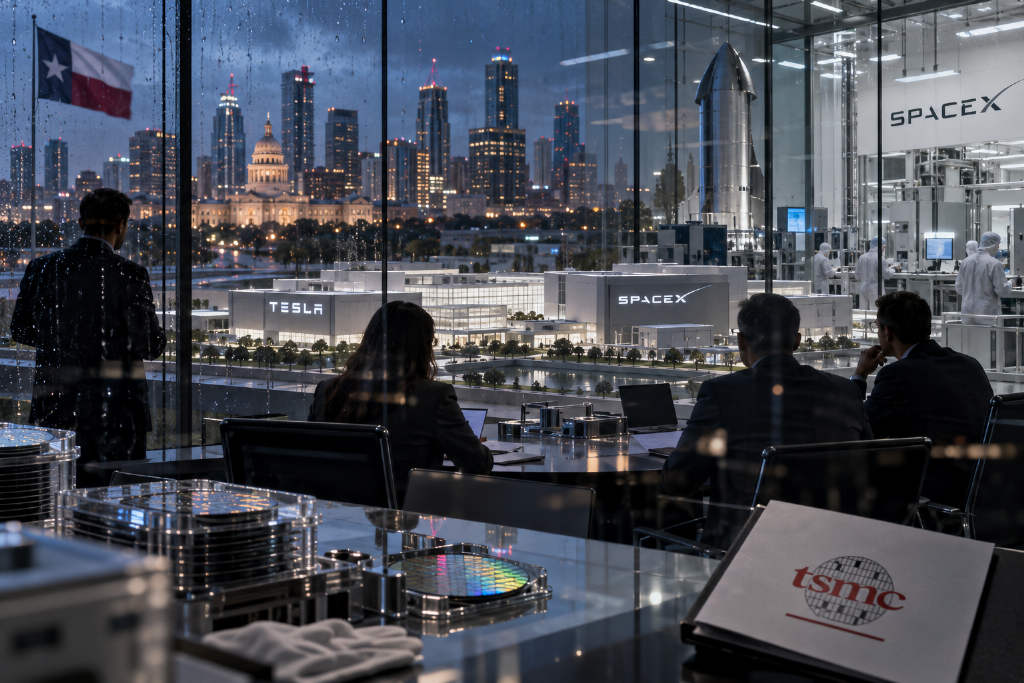
Elon Musk said on X that reports about a partnership between his chip company Terafab and Taiwan Semiconductor Manufacturing Co. are still at an early stage. According to Musk, the two sides have only held discussions so far, though he added that those talks may yet lead to something. Musk had earlier said the Terafab project would be jointly operated by Tesla and SpaceX and based in Austin. He described the project as targeting 1 terawatt of computing capacity per year, with most of that capacity required for space-related use. The project’s initial investment was put at $16.8 billion. His latest comments stop short of confirming any formal agreement with TSMC, but they do indicate that contact between the parties has taken place.

1070
Musk says Terafab-TSMC tie-up remains at discussion stage, with possible outcome
Elon Musk
Sep 20, 2026

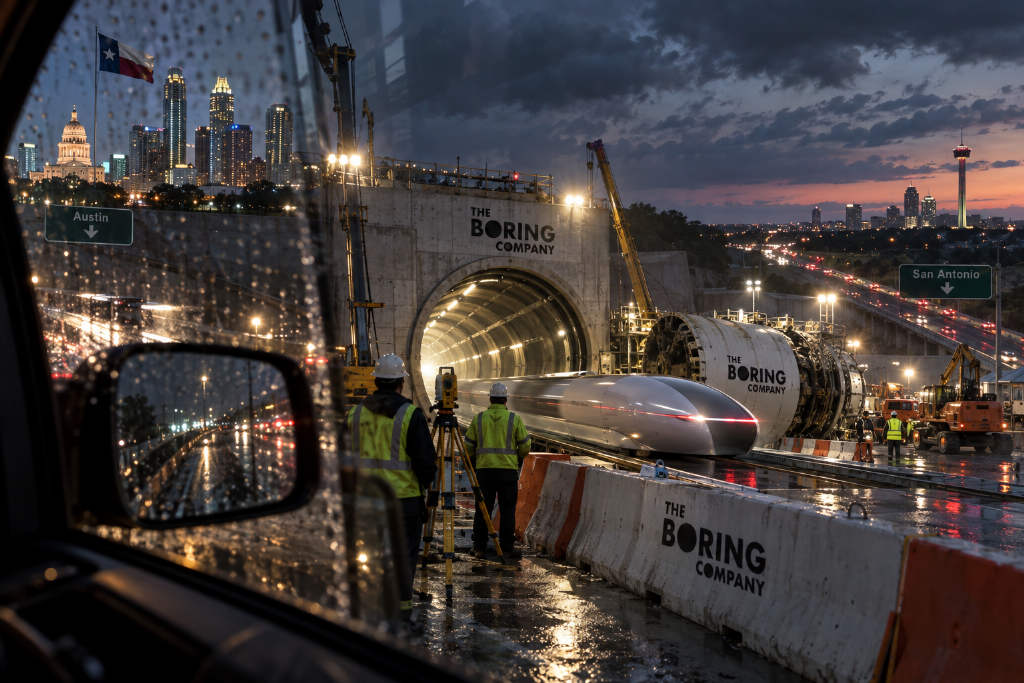
Musk says The Boring Company is building a hyperloop tunnel between Austin and San Antonio

According to ChainCatcher, Elon Musk said The Boring Company is building a hyperloop tunnel between Austin and San Antonio. He said the system is expected to run at speeds above 200 miles per hour. Musk also said the trip, which can currently take as long as 2.5 hours, would be cut to under 30 minutes once the tunnel is in use. The update was published as a 7x24 news flash by ChainCatcher, and no additional project details were provided in the brief.

790
Musk says The Boring Company is building a hyperloop tunnel between Austin and San Antonio
Tesla
Sep 4, 2026

Tesla Unveils Production Cybercab in Austin: No Steering Wheel, Autonomous Only

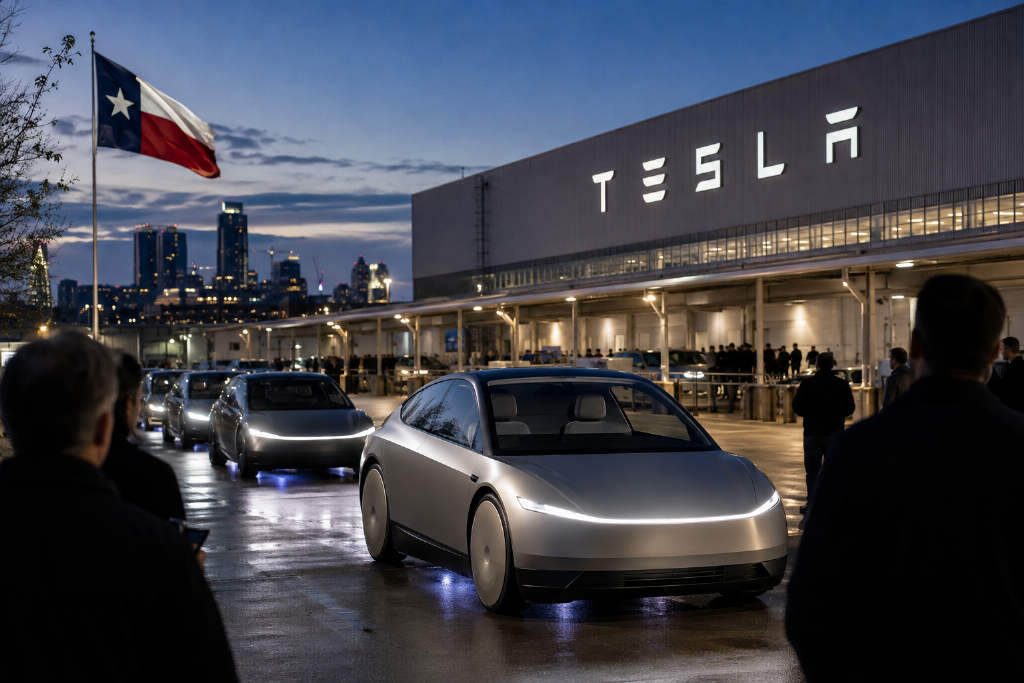
On September 3, Tesla held a Cybercab launch event in Austin, Texas, unveiling the production version of its autonomous vehicle. The Cybercab has no steering wheel, pedals, or traditional rearview mirrors, features a two-seat layout, and is fully controlled by Tesla's self-driving software. First shown as a concept at the "We, Robot" event in October 2024, the first production unit rolled off the line at Tesla's Gigafactory Texas in February 2026, with mass production beginning in April 2026. The vehicle relies on eight high-definition cameras and an end-to-end neural network, without lidar or high-definition maps. Tesla says its global fleet had accumulated over 22.5 billion kilometers of assisted driving as of September 2026. Efficiency: 9.8 km/kWh, 10.2 kWh/100 km, 673 km range, 1,412 kg curb weight, 47.6 kWh battery, 163 kW motor. Robotaxi operating cost is estimated at $0.20 per mile (0.84 yuan/km). The Cybercab will be displayed in Beijing and Shanghai from mid-September, but Tesla says no sales or commercial robotaxi operations in China are planned.

1820
Tesla Unveils Production Cybercab in Austin: No Steering Wheel, Autonomous Only
Tesla
Sep 4, 2026

Tesla launches Cybercab robotaxi in Austin as TSLA jumps more than 5%

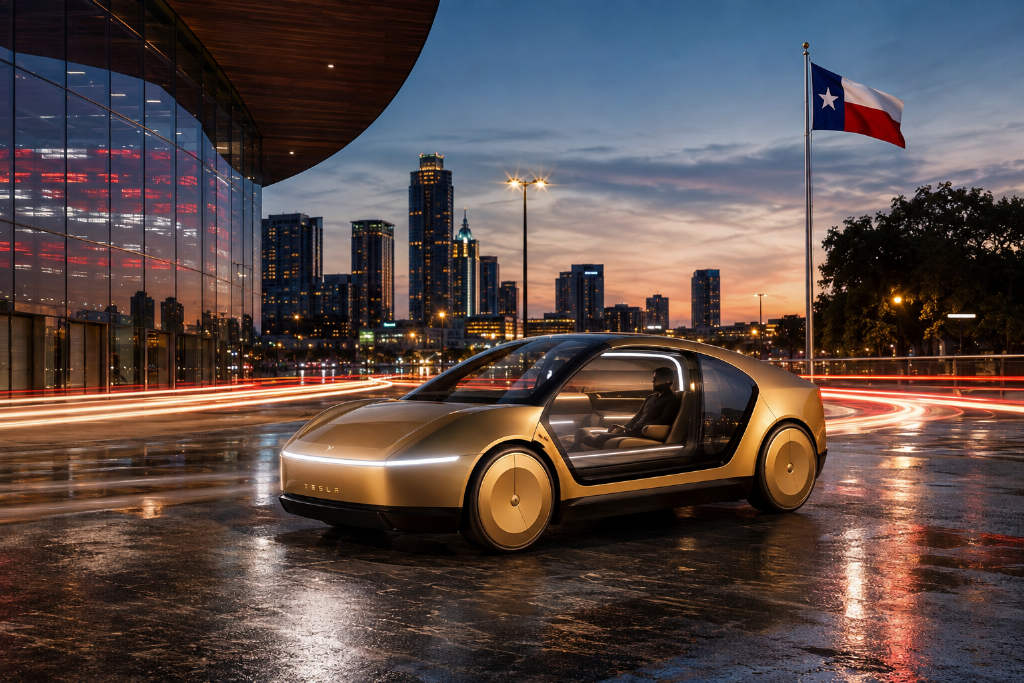
Tesla formally introduced its Cybercab robotaxi at an invitation-only event held on Sept. 3, 2026, at ACL Live in Austin, Texas, and opened limited public service in the city a day later. The gold-colored two-seat vehicle was built specifically for fully autonomous driving and removes both the steering wheel and pedals, making it Tesla’s first purpose-built self-driving passenger car rather than a conventional electric vehicle adapted for autonomy. According to the report, invited guests were the first passengers to ride in a fully driverless Cybercab. Tesla described the vehicle as both "the safest car on the road" and a "super comfortable mobile lounge," with an interior centered on a 22-inch touchscreen for entertainment, gaming and productivity. The company also highlighted planned Starlink V5 connectivity, automatic doors, self-tightening seat belts, wireless inductive charging, and an in-cabin camera to check cleanliness and forgotten items. The report said Tesla has registered about 45 Cybercab vehicles in Texas, with operations currently limited to a defined area in Austin. Tesla’s Robotaxi service had already been running since 2025 using Model Y vehicles and has expanded to Dallas, Houston and several cities in Florida. The article added that more than 200 unsupervised vehicles are now in service and have logged hundreds of thousands of miles. Tesla shares, trading under TSLA, rose more than 5% following the launch event.

1740
Tesla launches Cybercab robotaxi in Austin as TSLA jumps more than 5%
Tesla
Sep 3, 2026

Tesla shares rise as Cybercab debut in Austin sharpens focus on robotaxi rollout

Tesla shares climbed on Sept. 3, rising as much as 4% intraday, after the company held its Cybercab robotaxi launch event in Austin, Texas. According to Yahoo Finance and other reports cited in the source material, investors treated the event as a key step toward the commercial rollout of self-driving transport. Cybercab is described as Tesla’s first vehicle built purely for autonomous driving: a two-seat car with no steering wheel or pedals, powered by the company’s AI4 onboard computer and paired with its Full Self-Driving, or FSD, software. The model is set to join Tesla’s robotaxi fleet in Austin, which began last year with modified Model Y vehicles. Production started in the first half of 2026 at Gigafactory Texas. Reported specifications include a 48 kWh battery pack, a single 219-horsepower front motor, and an unadjusted range figure of 418 miles. The Sept. 3 event was a product reveal rather than approval from the U.S. National Highway Traffic Safety Administration. Public participation remained limited. Tesla has secured a regulatory quota of about 5,000 robotaxis, though Cybercab’s chief engineer told regulators the company expects to deploy about 2,500 vehicles within a year.

1670
Tesla shares rise as Cybercab debut in Austin sharpens focus on robotaxi rollout
Polygon
Aug 30, 2026

Polygon Discloses Security Flaws Patched in Austin and Kyoto Hard Forks

Polygon has disclosed several previously undisclosed security vulnerabilities that were recently fixed through two hard forks named Austin and Kyoto. The flaws could affect the company's proof-of-stake network. The vulnerabilities were found across the Bor and Heimdall clients, with issues ranging from denial-of-service risks to exhaustion of validator resources. There were also defects affecting checkpoint and milestone processing. Polygon said that all fixes were tested privately before they were deployed to mainnet and before the company went public with the details. The most severe problem concerned Heimdall. Specially crafted transactions could force validators to perform excessive processing work, which in turn could disrupt network operations. The Austin hard fork separately fixed two denial-of-service risks in the Bor client, both of which could slow down block processing or lead to node crashes. Polygon also stated that none of these flaws had been exploited on mainnet, and that the patches were completed proactively before any vulnerability details were publicly disclosed.

1860
Polygon Discloses Security Flaws Patched in Austin and Kyoto Hard Forks
AI data centers
Aug 28, 2026

U.S. Cities Move to Limit AI Data Centers as Water Study Draws Scrutiny

Cities across the United States are tightening oversight of AI data center construction as concerns build over water supplies, electricity costs, and land use. Austin, Texas, became the latest to act after its City Council voted unanimously on Thursday to begin drafting rules that could restrict or exclude new data centers. The move came after Ceres released a study on power plants serving data centers in seven states—Virginia, Texas, California, Illinois, Georgia, Ohio, and Arizona—which together host about half of the country’s data centers. According to the study, those plants withdraw roughly 3.4 trillion gallons of freshwater each year, or 10.4 million acre-feet, a volume that exceeds California’s average annual urban water demand and is about 12 times the combined annual water use of Los Angeles, Phoenix, and Washington, D.C. The debate is spreading beyond city halls. San Marcos, Durham, Cave City, and Jersey City have all taken steps to block or pause data center development, while Maine and Pennsylvania have also weighed in through state-level policy actions.

1480
U.S. Cities Move to Limit AI Data Centers as Water Study Draws Scrutiny