Bitcoin
Nov 3, 2026

Bitcoin Trades Above 200-Day Average Ahead of 2026 U.S. Midterms, Breaking Prior Pattern

Bitcoin’s price action ahead of the 2026 U.S. midterm elections is diverging from the pattern seen in the previous three election cycles, according to CoinDesk. As of Nov. 3, BTC was trading at about $76,990, roughly 5.2% above its 200-day simple moving average of $73,169, a sign that the long-term trend remains above a key technical level. That stands in contrast to the 2014, 2018 and 2022 midterm periods, when bitcoin traded about 35%, 9% and 22% below the 200-day average, respectively, during bear-market conditions. CoinDesk said bitcoin had previously climbed above $126,000 in October 2025, while the current bear-market decline has been relatively shallow and concentrated mainly in January and February this year. Martin Lee, head of research at DWF Labs, said historical data shows bitcoin often trades sideways or slightly weaker in the first few months after midterm elections, but has posted gains over the following 12 months in each case. He added that near-term moves may still be shaped by election results, ETF flows, U.S. employment data and geopolitical risks. Bitcoin’s 30-day implied volatility index, BVIV, has also broken above a descending triangle pattern, pointing to rising expectations for short-term volatility.

460
Bitcoin Trades Above 200-Day Average Ahead of 2026 U.S. Midterms, Breaking Prior Pattern
Volmex
Oct 1, 2026

Volmex lists Bitcoin implied volatility index perpetual on Hyperliquid

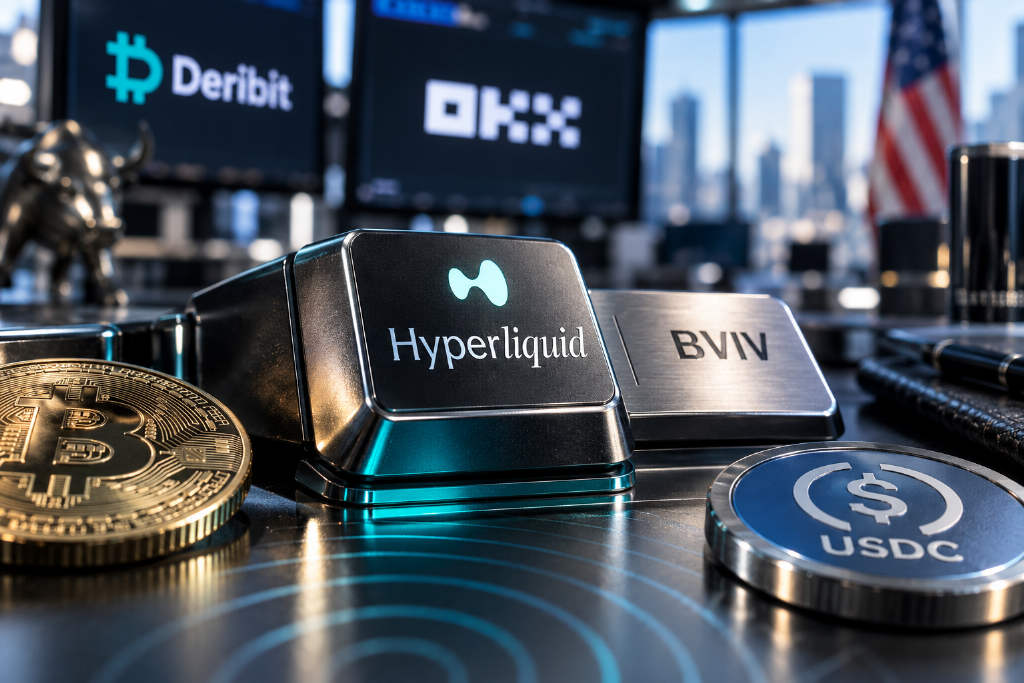
Volmex has launched a perpetual contract tied to its Bitcoin implied volatility index, BVIV, on Hyperliquid, according to a post from Bitcoin News on X. The product is built from options data on Deribit and OKX and is designed to track traders’ expectations for Bitcoin’s price swings over the next 30 days, rather than the direction of the spot market itself. Recent BVIV readings were described as sitting in the mid-to-upper 30s range. The contract settles at 1 USDC per index point, uses isolated margin, and offers leverage of up to 5x. It also includes an hourly funding rate and an open interest cap during the initial listing period. The launch adds a volatility-linked derivatives product to Hyperliquid’s lineup, giving traders a way to take positions on expected Bitcoin volatility instead of betting directly on spot price movement.

1450
Volmex lists Bitcoin implied volatility index perpetual on Hyperliquid
U.S. Treasuries
Sep 25, 2026

Treasury volatility climbs while Bitcoin and U.S. stocks stay subdued

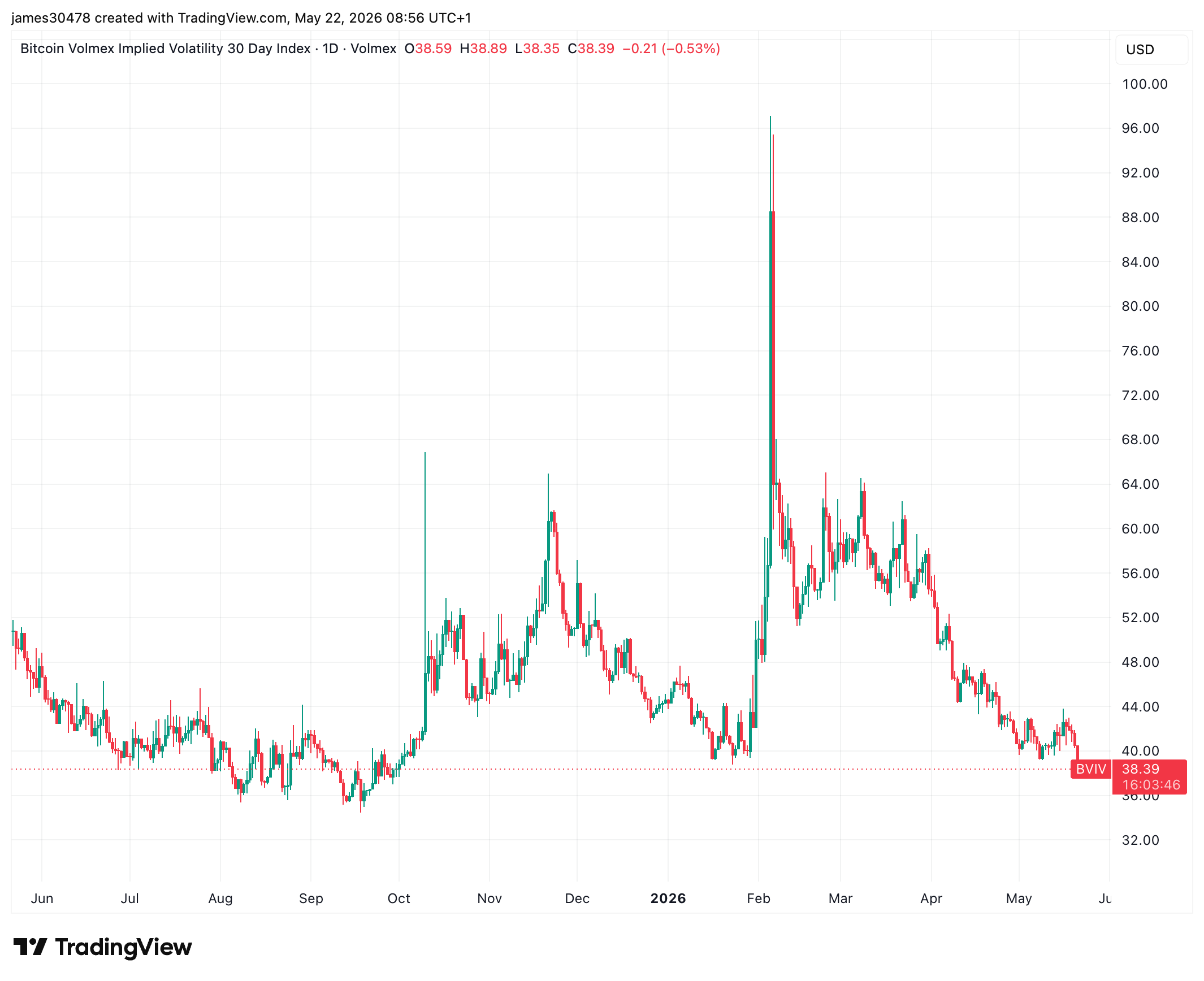
Volatility in the U.S. Treasury market has risen sharply even as Bitcoin and U.S. equities remain relatively calm, according to a ChainCatcher report. The MOVE Index, which tracks expected Treasury volatility, climbed from about 80 on Tuesday to 104 on Thursday, its highest level since March. At that time, the index had briefly reached 199. In contrast, the Volmex 30-day Bitcoin implied volatility index, or BVIV, was around 37, close to its yearly low of 35, while the Cboe VIX, which measures expected volatility for the S&P 500, was also near its yearly low at 14. U.S. 10-year Treasury yields touched 5.2% on Thursday before easing back to 5.163%. Over the past 20 trading days, the correlation between the VIX and MOVE fell to -0.06, turning negative for the first time since April 2024. The correlation between BVIV and MOVE stood at -0.37, a relatively low level compared with recent years. The report said rising Treasury volatility often points to tighter financial conditions, but BTC and U.S. stocks have not yet reflected the same degree of risk seen in the bond market.

990
Treasury volatility climbs while Bitcoin and U.S. stocks stay subdued
Bitcoin
Aug 11, 2026

Rising Treasury yields revive an old warning for bitcoin and stocks, CoinDesk says

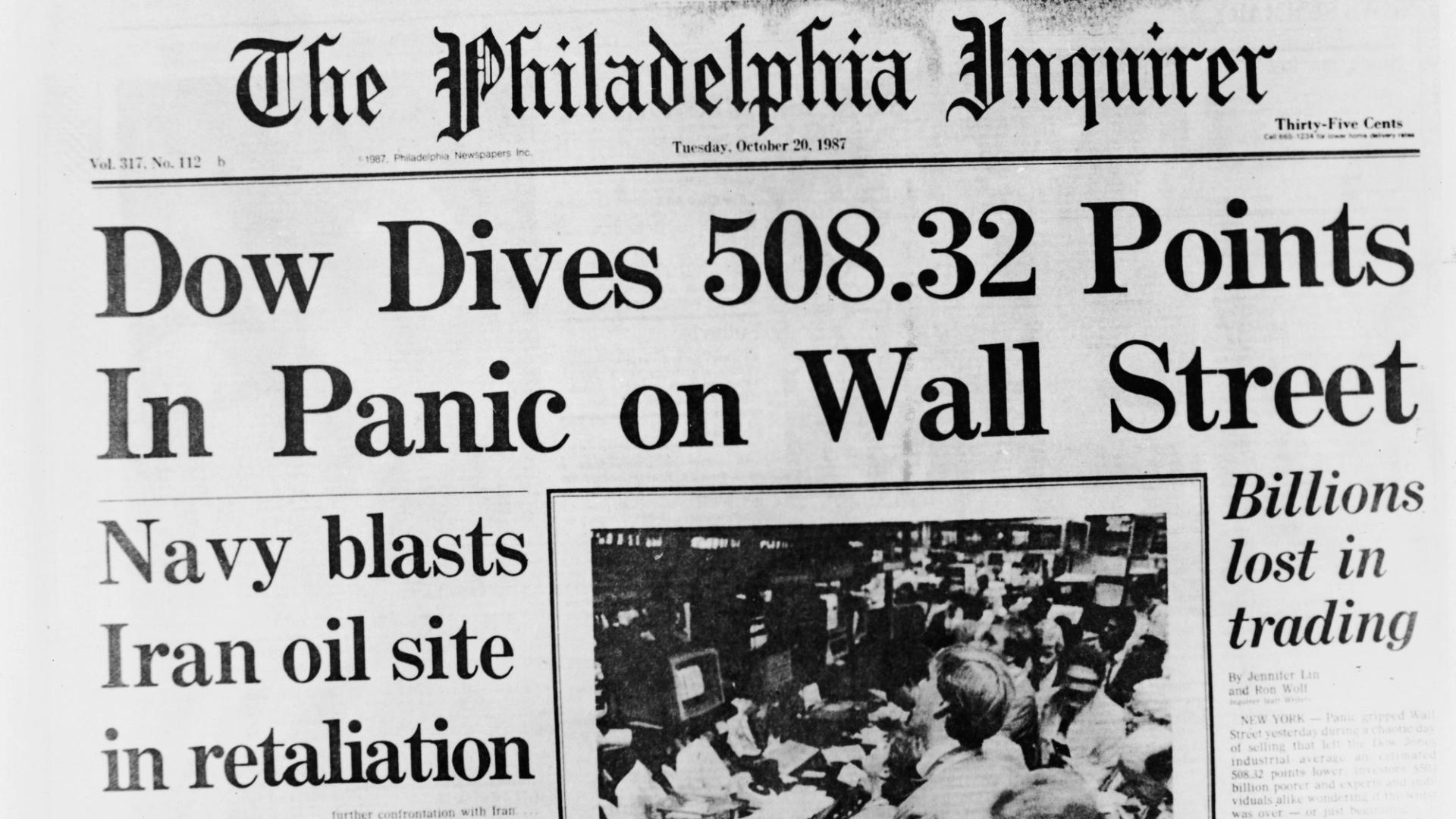
CoinDesk’s Aug. 11 Daybook argues that the recent rise in U.S. Treasury yields is not just macro background noise for crypto markets. The piece says that when the risk-free rate climbs sharply, government bonds begin competing more directly with stocks and other assets for capital, and history shows those adjustments can be painful. Fidelity Investments global macro director Jurrien Timmer pointed to the period from the 1960s through the mid-1990s, when rising Treasury yields made bonds more competitive with equities, and CoinDesk linked that reminder to the 1987 Black Monday crash, when the Dow Jones Industrial Average fell 508.32 points, or 22.6%, in a single day. The article says the comparison matters now because yields have generally moved higher since the 2020 Covid market crash. CoinDesk notes that the 30-year U.S. Treasury yield is hovering near its highest level since 2007 and could climb further if Wednesday’s U.S. CPI comes in above estimates, reinforcing expectations that the Federal Reserve will keep rates higher for longer. In that setting, stocks and bitcoin would both face a tougher valuation test. CoinDesk adds that bitcoin is in a more complicated position than equities because it has no earnings or cash flow, leaving its value tied to its appeal as digital gold and as a hedge against fiat-currency depreciation. The piece stops short of predicting a repeat of history, but says the return of a safer alternative for capital makes forecasts of $500,000 or $1 million bitcoin look stretched.

2260
Rising Treasury yields revive an old warning for bitcoin and stocks, CoinDesk says
Bitcoin
Aug 4, 2026

Bitcoin volatility sinks even as hacks, ETF outflows and macro pressure keep piling up

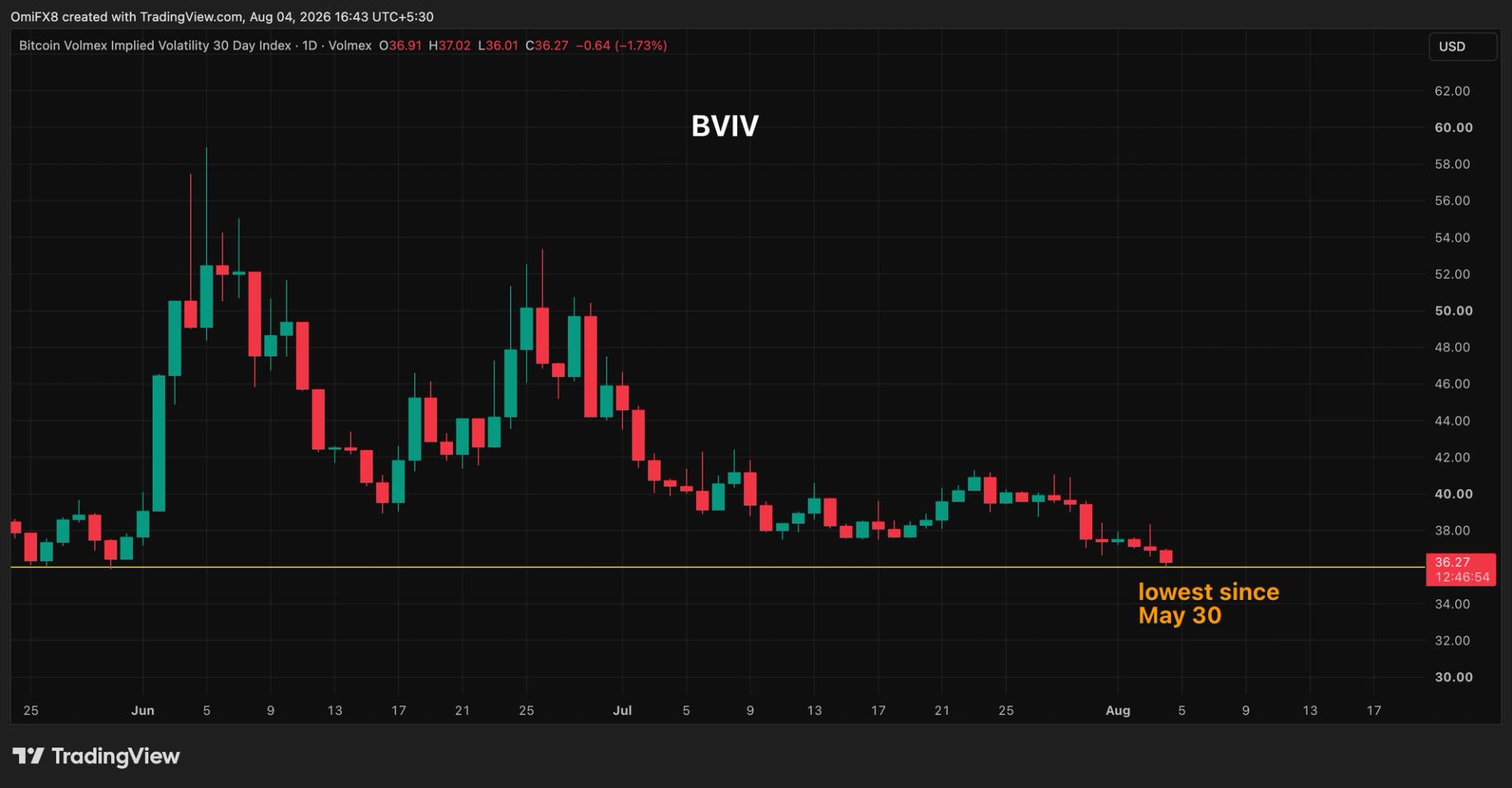
CoinDesk’s Aug. 4 Daybook excerpt says bitcoin is facing no shortage of pressure points: a multimillion-dollar Coldcard hack, weak institutional demand, regulatory uncertainty and a tougher macro backdrop. Even so, the market is not showing signs of panic. Bitcoin’s 30-day implied volatility index, BVIV, has fallen to 36%, its lowest reading since May 31, after being near 60% in early June. That drop suggests traders are not aggressively paying up for protection, even with negative headlines still in play. The report notes that low volatility can sometimes be read as constructive, but it also warns that volatility tends to mean-revert. BVIV is now hovering around levels that have previously acted as a floor, which means a pickup in volatility could follow. If that happens, the move may come with a sharp directional swing in bitcoin, either higher or lower. For now, several indicators still lean bearish. U.S.-listed spot bitcoin ETFs saw $61.53 million in outflows last week, ending a three-week run of modest inflows. USDT’s market cap has slipped to its lowest since October, while USDC remains in a downtrend. Against that backdrop, Bitfinex analysts pointed to roughly 155,000 BTC accumulated in the $62,000 to $65,000 cost-basis range, a cluster they said could help keep BTC range-bound until a stronger catalyst appears.

2330
Bitcoin volatility sinks even as hacks, ETF outflows and macro pressure keep piling up
Bitcoin
Aug 4, 2026

Bitcoin implied volatility drops to 36% as traders stay calm despite a string of negative headlines

Bitcoin’s options market is signaling a far calmer backdrop than the headline flow might suggest. According to CoinDesk, the market has absorbed several sources of pressure without showing obvious signs of panic, including a Coldcard wallet attack involving tens of millions of dollars, softer institutional demand, and lingering uncertainty around regulation and the macro environment. At the same time, the 30-day Bitcoin Volatility Index, or BVIV, has continued to fall and now stands at 36%, its lowest level since May 31 and well below the nearly 60% level seen in early June. BVIV tracks expectations for future price swings in the Bitcoin options market and typically rises when traders seek protection or hedge risk. Analysts cited in the report said the market’s ability to remain composed during a run of bad news is often read as a constructive sign, suggesting Bitcoin may still have room to move higher. Even so, volatility tends to mean-revert. With BVIV now near levels that have previously acted as support, a sharp rebound in volatility could coincide with a larger directional move in Bitcoin, whether up or down.

2260
Bitcoin implied volatility drops to 36% as traders stay calm despite a string of negative headlines
Total 9 items
Go topage