Coinbase
Sep 25, 2026

More Than One-Third of the World’s Top 20 Banks by Assets Use Coinbase Infrastructure

Techub News, citing Crypto Briefing, reported that more than one-third of the world’s 20 largest banks by assets are already using Coinbase’s cryptocurrency infrastructure services. The brief did not name the banks or specify which Coinbase products they are using, but it framed the figure as a sign that crypto infrastructure is gaining traction among major global financial institutions. According to the report, partnerships of this kind could speed up mainstream adoption of digital assets and reshape the global financial system. The item was published as a short news update, and no additional operational details, timelines, or deal terms were disclosed in the source provided.

690
More Than One-Third of the World’s Top 20 Banks by Assets Use Coinbase Infrastructure
Russia Central Bank
Sep 21, 2026

Bank Crypto Exposure in Russia Could Be Capped at 1% of Capital Under Central Bank Draft

Russia’s central bank has released a draft proposal that would place prudential limits on banks entering the country’s newly regulated crypto market, according to Techub News, citing Crypto.news. Under the proposal, a bank’s total exposure to cryptocurrencies and foreign digital instruments would be capped at 1% of its capital. The measure is framed as a risk-control requirement for financial institutions operating in the crypto asset space. The draft focuses on limiting aggregate risk rather than outlining a broader market expansion plan in the information provided. No additional implementation timeline or affected institutions were disclosed in the source summary. The report identifies the proposal as part of Russia’s new regulated crypto market framework for banks seeking entry.

810
Bank Crypto Exposure in Russia Could Be Capped at 1% of Capital Under Central Bank Draft
Policy Regulation
Sep 21, 2026

Fed and Bank of England step up scrutiny of banks and trading firms’ risk exposure

The U.S. Federal Reserve and the Bank of England are increasing scrutiny of risk exposure at banks and trading firms, according to the Financial Times, in a brief report cited by ChainCatcher. The item was categorized under policy and regulation. The source text did not provide additional detail on the scope of the review, the institutions involved, or any timeline tied to the scrutiny. No comments from the central banks or affected firms were included in the source material. Given the brevity of the original report, only the confirmed facts have been retained here without added background or interpretation.

830
Fed and Bank of England step up scrutiny of banks and trading firms’ risk exposure
MiCA
Sep 18, 2026

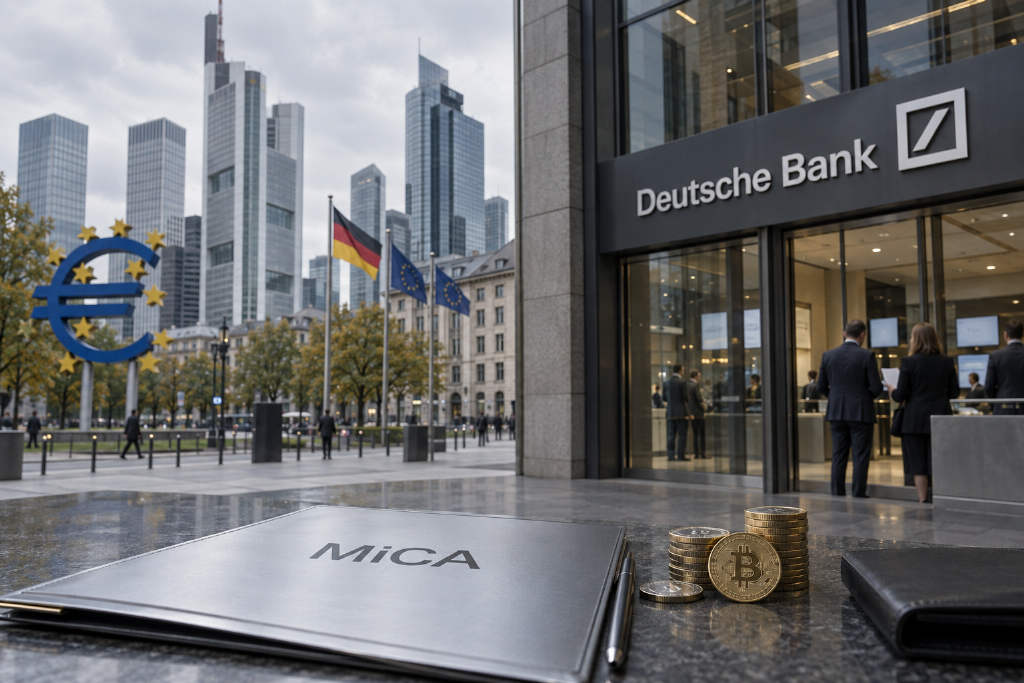
Banks take nearly 23% of EU MiCA crypto provider list as German lenders lead growth

Banks are gaining ground quickly in Europe’s regulated crypto market under the European Union’s Markets in Crypto-Assets framework, or MiCA. A Cointelegraph analysis of European Securities and Markets Authority register data found that the number of banks on the MiCA crypto provider list rose to about 80 from roughly 40 between June 26 and Sept. 16. Over the same period, the total number of listed crypto-asset service providers increased from 243 to 349. Non-bank firms still make up the majority of the register and also grew in absolute terms, but their share slipped from about 84% to 77% as banks expanded faster. Bank representation on the list climbed from around 17% in late June to nearly 23% by September. Germany accounted for much of that increase. New entries include Deutsche Bank, which said on Wednesday that it plans to launch digital asset custody services for institutional and corporate clients in Europe. A spokesperson told Cointelegraph the bank expects to receive MiCA approval for the offering in October. The expansion also includes many Volksbank, Raiffeisenbank and VR Bank institutions, pointing to broader participation from Germany’s regional cooperative banking network. Under MiCA, banks can enter the market through a notification process rather than the standard CASP authorization route required for crypto firms.

1060
Banks take nearly 23% of EU MiCA crypto provider list as German lenders lead growth
stablecoins
Sep 18, 2026

Consortium of 21 global banks targets 2027 launch for U.S. dollar stablecoin

A group of 21 financial institutions, including Bank of America, Citigroup, Goldman Sachs and Deutsche Bank, has committed to form a new company in the second half of 2026 to issue a stablecoin, according to Techub, citing BeInCrypto. The alliance plans to roll out a U.S. dollar stablecoin in the first half of 2027, followed by a euro-denominated version. It said the products will be structured to comply with the GENIUS Act and the Markets in Crypto-Assets framework, or MiCA. The report also points to broader bank activity in the sector: SoFi opened its SoFiUSD stablecoin to nearly 15 million in-app members in May, JPMorgan is running its JPMD deposit token on Base, and HSBC plans to launch a Hong Kong dollar stablecoin in the second half of 2026. StraitsX CEO Liu Tianwei said stablecoin issuance gives banks a way to stay relevant as financial infrastructure changes, while faster and cheaper settlement could pressure traditional banking revenue, especially in cross-border payments.

1100
Consortium of 21 global banks targets 2027 launch for U.S. dollar stablecoin
Chainlink
Sep 18, 2026

Bottomline launches Global Pay Connect with Chainlink support for onchain payment access

Payment service provider Bottomline has launched Global Pay Connect, an onchain payment connectivity platform supported by Chainlink, according to an announcement from Chainlink. The platform is aimed at more than 600 banks and is designed to link existing banking payment infrastructure with blockchain networks. Chainlink said its Cross-Chain Interoperability Protocol, or CCIP, connects Bottomline’s payment infrastructure to blockchain networks, while CRE coordinates end-to-end payment flows across onchain and offchain environments. The setup is intended to let financial institutions access onchain payment rails without rebuilding their systems or carrying out separate integrations for each network. Instead, banks can connect through their existing Swift network infrastructure and payment messaging standards. Chainlink also said Bottomline is one of the top three Swift service providers and processes more than $16 trillion in payments annually.

1430
Bottomline launches Global Pay Connect with Chainlink support for onchain payment access
Velocity
Sep 15, 2026

Velocity raises $10 million in Series A extension with backing from Visa Ventures and others

Velocity has closed a $10 million Series A extension round, according to Odaily. Investors in the round include Visa Ventures, Circle Ventures, Haun Ventures, Ripple, Translink Capital, and Mirana Ventures. The company provides backend infrastructure for payment firms and banks, focused on stablecoin-based settlement, liquidity management, and treasury operations. Velocity says its system can be deployed without requiring customers to replace their existing infrastructure. The update frames the company as building financial plumbing for institutions looking to add stablecoin capabilities while keeping current systems in place.

1070
Velocity raises $10 million in Series A extension with backing from Visa Ventures and others
ETF Store
Sep 15, 2026

ETF Store president says crypto’s challenge to banking is the main reason the CLARITY Act remains stalled

ETF Store President Nate Geraci said in a post on X that the CLARITY Act has still not passed because cryptocurrency is challenging the traditional banking model. In his view, the main obstacle is not limited to current disputes around ethics provisions or BRCA. He argued that the deeper issue is that crypto reduces the need for banks to act as financial intermediaries. Geraci added that this pressure also hits the business model banks rely on for net interest income, along with the political forces that support that structure. His remarks framed the debate around the bill as a clash with the existing banking system rather than a matter of legislative controversy alone.

1330
ETF Store president says crypto’s challenge to banking is the main reason the CLARITY Act remains stalled
Total 109 items
Go topage