Bitdeer Sells 282 BTC, Maintains Zero Bitcoin Holdings
Nasdaq-listed Bitcoin miner Bitdeer reported that for the week ending September 4, it mined 282 BTC and sold all 282 BTC, resulting in zero net addition and maintaining zero Bitcoin holdings.
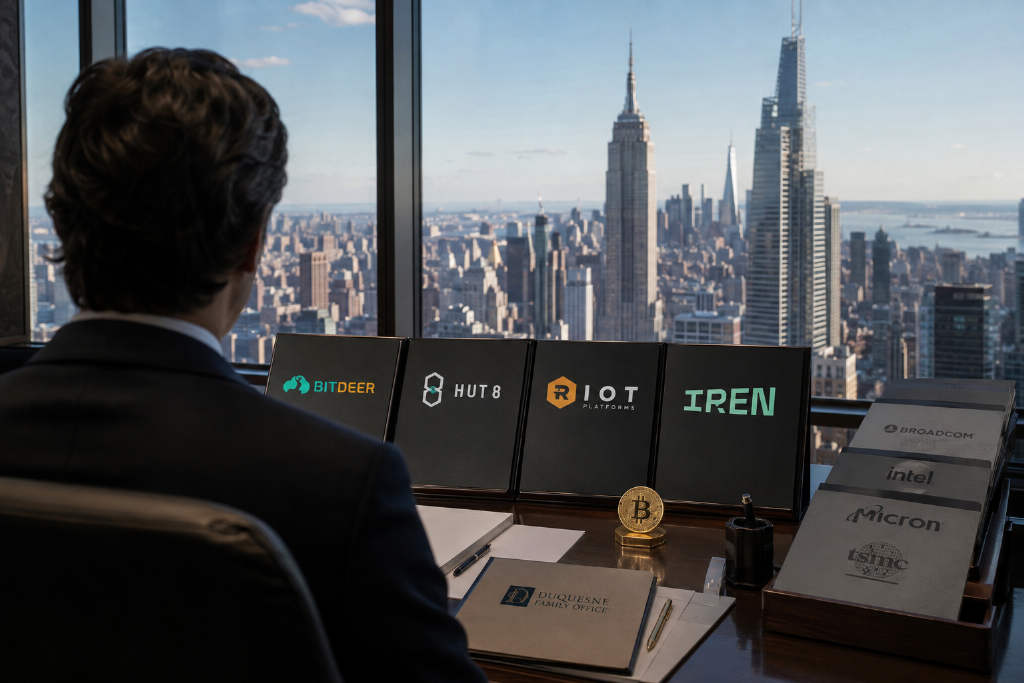
Stanley Druckenmiller’s family office, Duquesne Family Office, invested about $125.6 million in Bitcoin mining stocks in the quarter ended June 30, according to a Techub News item citing BeInCrypto. The firm’s largest position was in Bitdeer Technologies at $64.67 million, followed by Hut 8 at $36.3 million, Riot Platforms at $20.7 million, and IREN at $4 million. To make room for those positions, the office reduced holdings in major U.S. AI chip names including Broadcom, Intel, and Micron Technology. Even so, it still increased exposure to other AI-related stocks such as Taiwan Semiconductor Manufacturing Co. Druckenmiller had said in October 2023 that he did not hold Bitcoin, but the new portfolio changes show indirect exposure through mining equities. Since June 30, all four mining stocks have fallen: Bitdeer by 25.5%, Hut 8 by 24.4%, Riot by 24.3%, and IREN by 10%. The report said the positions were showing an unrealized loss of about $30.7 million. Over the same period, Bitcoin rose from about $58,600 to above $81,000, a gain of roughly 33%.
Bitcoin mining in August was defined by two parallel shifts. Public miners kept redirecting capital, power and data center capacity toward AI and high-performance computing, while the economics of core mining operations stayed under pressure. Data cited across the report showed falling tracked hashrate, a lower network difficulty, fee revenue near multi-year lows, weaker miner balances, and rising shutdown prices for several machine models. Capital spending by listed miners and AI data center peers in the first half of 2026 already surpassed the total for all of 2025, with AI-native cloud companies accounting for most of the spending. Corporate disclosures reinforced the same trend. Riot Platforms signed a long-term cloud deal with Anthropic, IREN delivered the first phase of its Horizon AI cloud project to Microsoft, and companies including Bitdeer, Soluna, TeraWulf, Ionic Digital, Cipher Digital, CleanSpark, Hut 8, Cango and BitFuFu reported results that showed different mixes of mining, hosting, AI cloud and infrastructure revenue. At the same time, MARA added debt backed by BTC collateral, Tether’s Uruguay mining sites stopped operating, and tax disputes in Sweden pushed some miners to rethink local deployments. On the protocol and industry governance side, BIP-54 moved forward as a proposed soft fork cleanup package, while BIP-110 failed to gain broad miner support. Michael Saylor said the proposal had only about 2.6% signaling support and would not reach its voluntary activation threshold in the current cycle. Separately, Poolin creditors formed a committee after the company’s Chapter 11 filing, SBI Crypto shut down its pool service, and new regulatory and enforcement developments emerged in Russia, Kazakhstan, Uzbekistan, Brazil and China.

Bitdeer, the Nasdaq-listed bitcoin miner, disclosed that it mined 273.5 BTC in the week through August 28 and sold the same amount during that period. The net addition stands at zero, and the company maintains no bitcoin holdings.
Crypto mining company Bitdeer produced 1,190 Bitcoin in July, a 322% increase from a year earlier, according to a Techub News brief citing Cointelegraph. The update also said the company secured major AI infrastructure deals in Norway and Malaysia. The brief said Bitdeer is building out its AI infrastructure business to diversify revenue and reduce reliance on a single line of business in cryptocurrency mining. Alongside that shift, the newly disclosed production figures show the company’s mining operation is still expanding. The report did not provide additional financial details, contract values, or a more detailed breakdown of the July output. It focused on two points: stronger Bitcoin production and Bitdeer’s push into AI infrastructure in multiple markets.
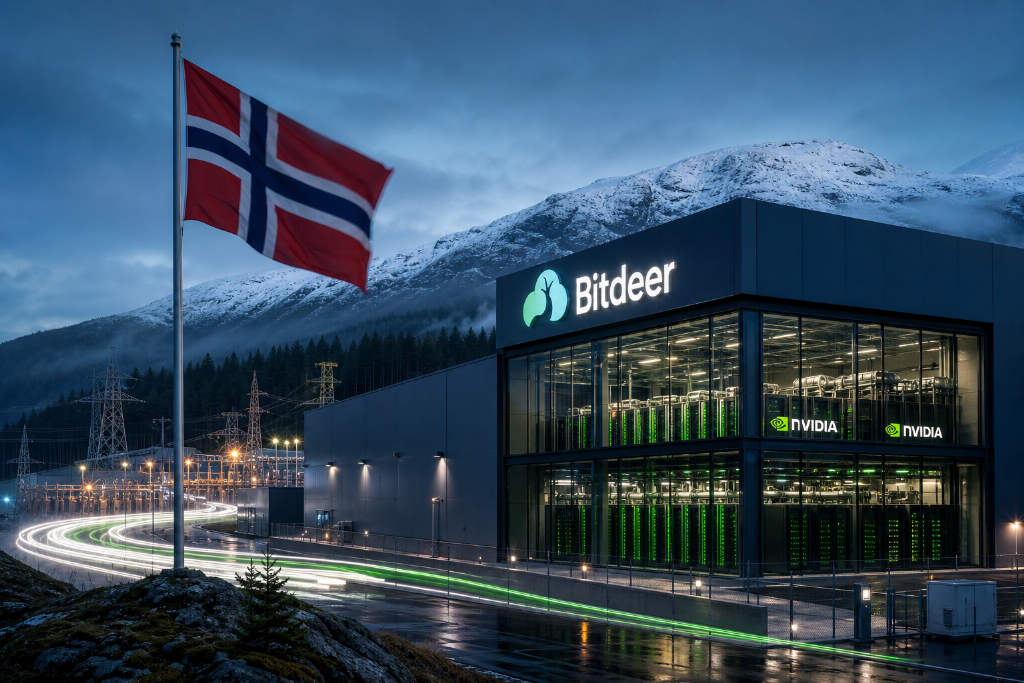
Bitdeer said in its July 2026 production and operations update that it mined 1,190 BTC during the month, up 322% from a year earlier. The company reported about 76.7 EH/s of self-mining hash rate, 5.0 EH/s of other proprietary hash rate, and 18.7 EH/s tied to joint mining through third-party data center operations, bringing total proprietary hash rate to 81.7 EH/s. As of the end of July, it held 257 BTC, excluding customer deposits. On the AI side, Bitdeer disclosed a 16-year hosting lease valued at $4.7 billion with a Volta subsidiary for an AI/HPC data center at the Tydal site in Norway. If a one-time eight-year extension option is exercised, the total contract value could reach $8 billion. The company said 121 IT MW at the site will be fully equipped with NVIDIA GPUs for a leading AI lab, with a PUE of about 1.1 and 100% renewable energy use. It also said about $1.3 billion in letters of credit support is expected to be arranged by affiliates of two international financial institutions, subject to customary conditions.
Bitdeer said in its July 2026 production and operations update that it has signed a colocation lease agreement for an artificial intelligence data center, or AIDC. The deal has a total value of $4.7 billion and runs for 16 years. According to the company’s disclosure, the agreement is tied to its Tydal campus in Norway and includes 121 megawatts of IT capacity. That capacity is set to run Nvidia GPUs. The update frames the agreement as part of Bitdeer’s production and operational progress for the month. No additional commercial terms or deployment timeline were disclosed in the brief announcement provided by ChainCatcher.
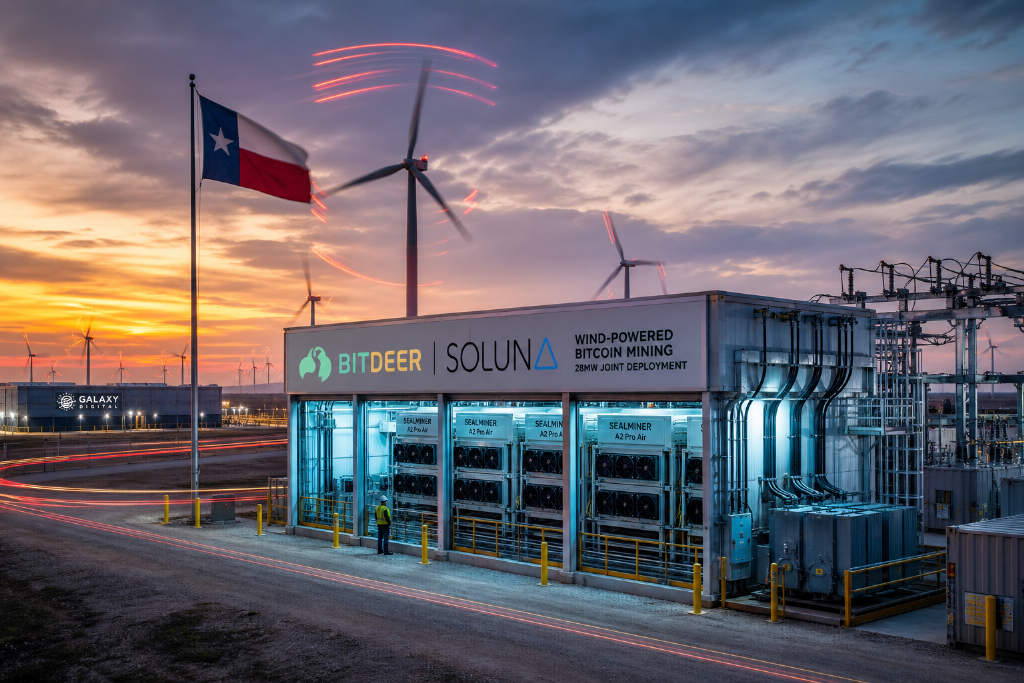
Bitdeer subsidiary Dory Creek will deploy its own Sealminer A2 Pro Air mining machines at Soluna’s Project Kati 1 wind-powered data center in Willacy County, Texas, starting in September 2026. The deployment is expected to bring 28 MW of power online and add about 1.93 EH/s of Bitcoin mining hashrate. Under the revenue-sharing structure, Soluna will handle the site, power supply, and day-to-day operations, while Bitdeer will provide and retain ownership of the mining machines. The two companies will split the Bitcoin revenue generated by that portion of the fleet. Project Kati 1 has a total capacity of 83 MW, and Galaxy Digital is already using 48 MW of the site for Bitcoin mining.