ESP32
Oct 16, 2026

ESP32 iPhone Agent goes open-source, turning a low-cost ESP32 board into an AI controller for iPhone

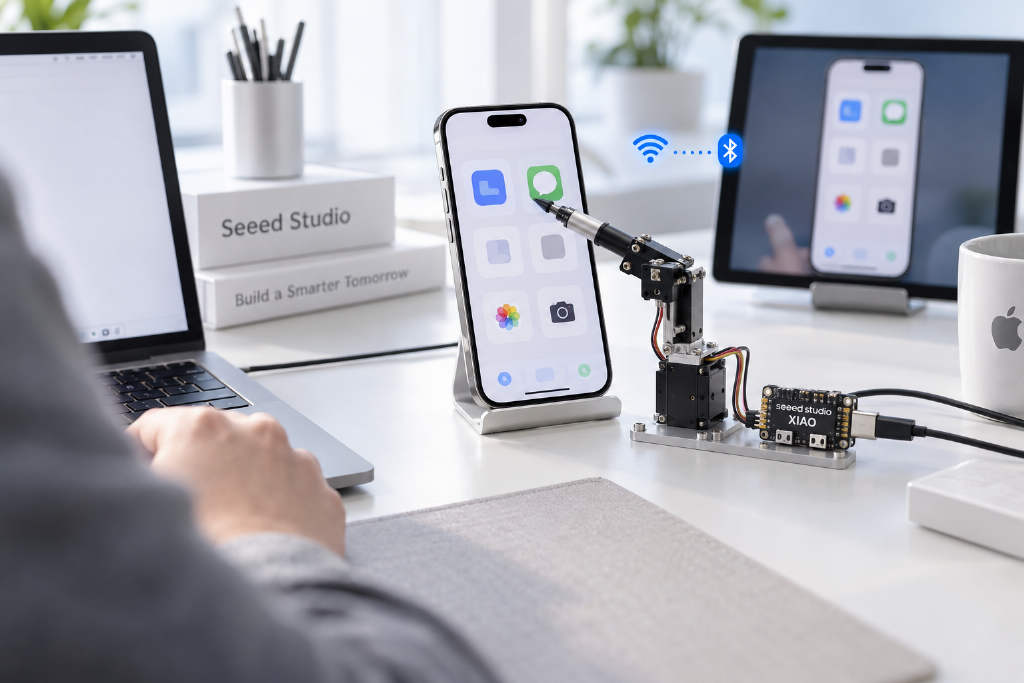
Developer Henry has open-sourced ESP32 iPhone Agent, a project that uses a XIAO ESP32S3 development board priced at roughly RMB 40 to 50 together with a mobile app to let AI operate a real iPhone. The setup can open apps, tap buttons, and swipe the screen without requiring a jailbreak or Apple XCTest testing privileges. Instead, the ESP32 creates its own Wi-Fi hotspot and acts as an AirPlay receiver. The iPhone mirrors its display to the board, which then sends compressed video back to an Agent app on the same phone over Bluetooth rather than decoding the stream itself. The app uses a vision model to read the interface, decides the next action, and sends commands back over Bluetooth so the ESP32 can emulate a USB mouse and keyboard. The system also calibrates the mouse pointer to reduce tap-position drift. The project runs on a standard ESP32-S3 and does not require dedicated video capture hardware such as NanoKVM Go, though it still has setup requirements and several technical limits.

920
ESP32 iPhone Agent goes open-source, turning a low-cost ESP32 board into an AI controller for iPhone
Apple Find My
Oct 1, 2026

Developer Uses Apple Find My Network to Send Bitcoin Cashu Tokens Offline

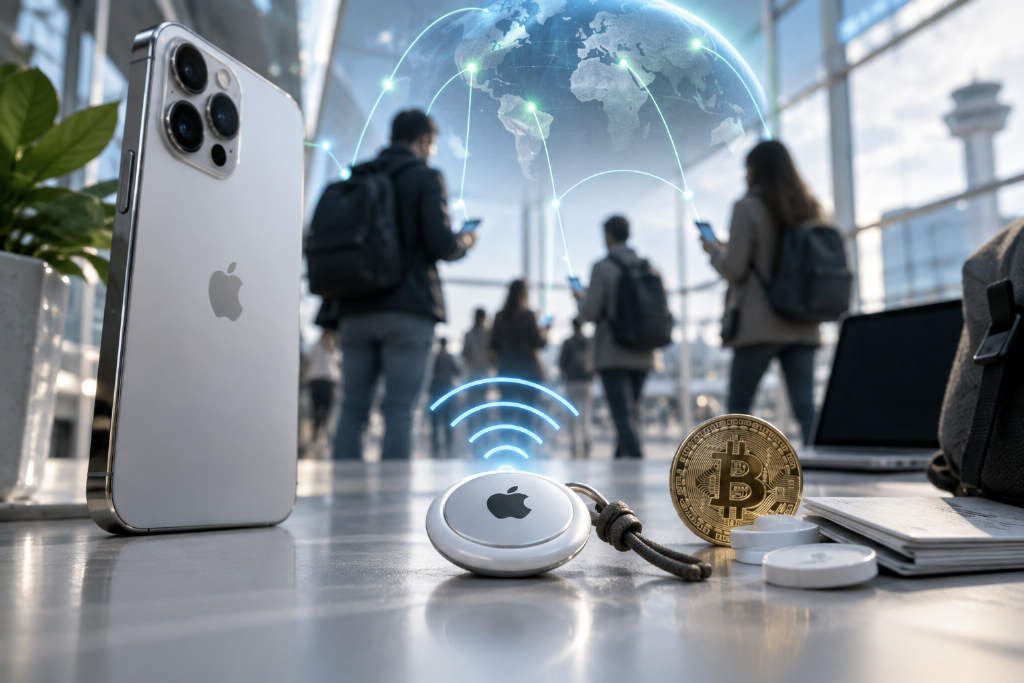
A developer has tested a way to send Bitcoin-denominated Cashu tokens over Apple’s Find My network without putting the sending device online. The setup uses a small device that imitates the beacon of a lost AirTag and embeds Cashu token data into Bluetooth signals. Passing iPhones pick up those signals and relay them through Apple’s Find My network, allowing the data to move without a direct internet connection on the sender’s side. On the receiving end, the recipient retrieves the relay reports through an Apple account and reconstructs the token step by step. The method is extremely low-bandwidth: each signal carries only two bits of data, so sending one typical token requires more than 1,000 broadcasts. The developer said the broadcast token is public and the transmission itself is not encrypted, which means the system should only be used for very small amounts. The project is currently a proof of concept rather than a finished payment product. Its code has been open-sourced on GitHub and runs on a low-cost ESP32 development board, according to Techub, citing BeInCrypto.

1060
Developer Uses Apple Find My Network to Send Bitcoin Cashu Tokens Offline
Trezor
Sep 28, 2026

Bitcoin Magazine Review Says Trezor Safe 7 Sits Between Open-Source Self-Custody and Mainstream Hardware Design

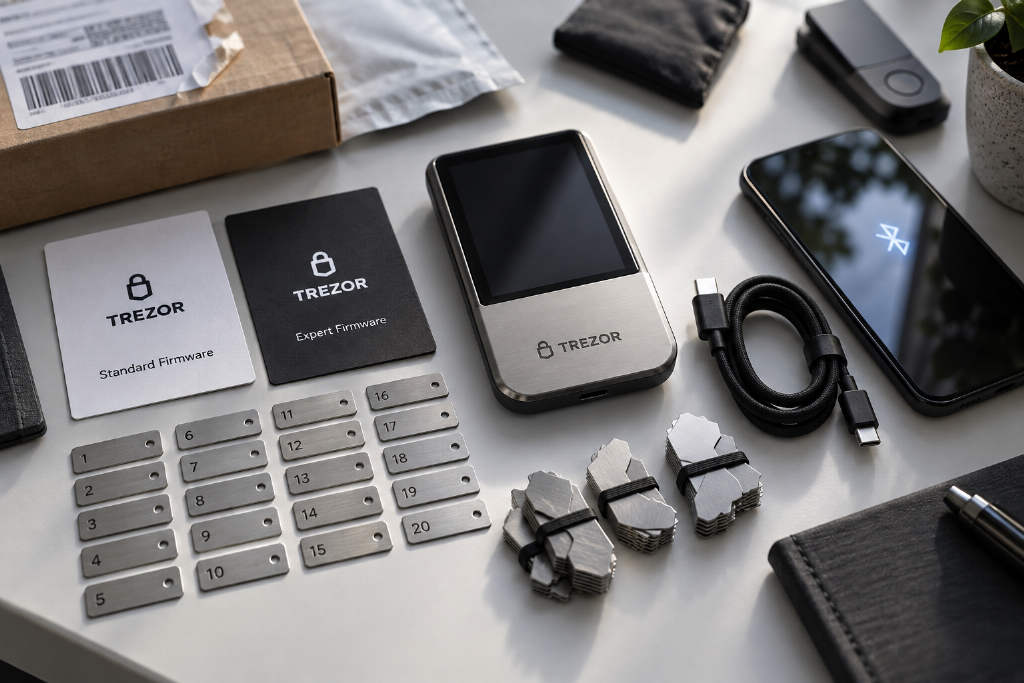
Bitcoin Magazine has published an extensive review of the Trezor Safe 7, describing the device as a middle-ground option between fully open-source, self-custody-first hardware wallets and more consumer-oriented products built around polished design and user guardrails. The review highlights the wallet’s metal body, large edge-to-edge screen, tactile approval flow, and dual firmware approach, with separate multi-coin and Bitcoin-only stacks that users can switch between regardless of the device color they bought. A major focus of the piece is Trezor’s use of 20-word SLIP-39 backups and the company’s Shamir backup system. According to the review, the extra words do not increase entropy beyond the 128 bits users would expect from a 12-word seed, but they enable migration from a single-seed setup to Shamir shares without moving funds on-chain. The article also covers Safe 7’s Bluetooth support, Qi2 wireless charging, LiFePO₄ battery choice, and the security trade-offs that come with moving away from a stricter air-gapped model. The review further examines Safe 7’s four entropy sources, the absence of direct user-supplied entropy at wallet creation, and Trezor’s comments on why that design remains under discussion. It also points to the recent ShipMonk data breach affecting 67,000 U.S. customer records and notes Trezor’s plan to roll out an anonymous delivery option in the EU within weeks, followed by the U.S. soon after.

2060
Bitcoin Magazine Review Says Trezor Safe 7 Sits Between Open-Source Self-Custody and Mainstream Hardware Design