Bithumb
Oct 30, 2026

Bithumb to end trading support for BLUR and CORE on Nov. 30, 2026

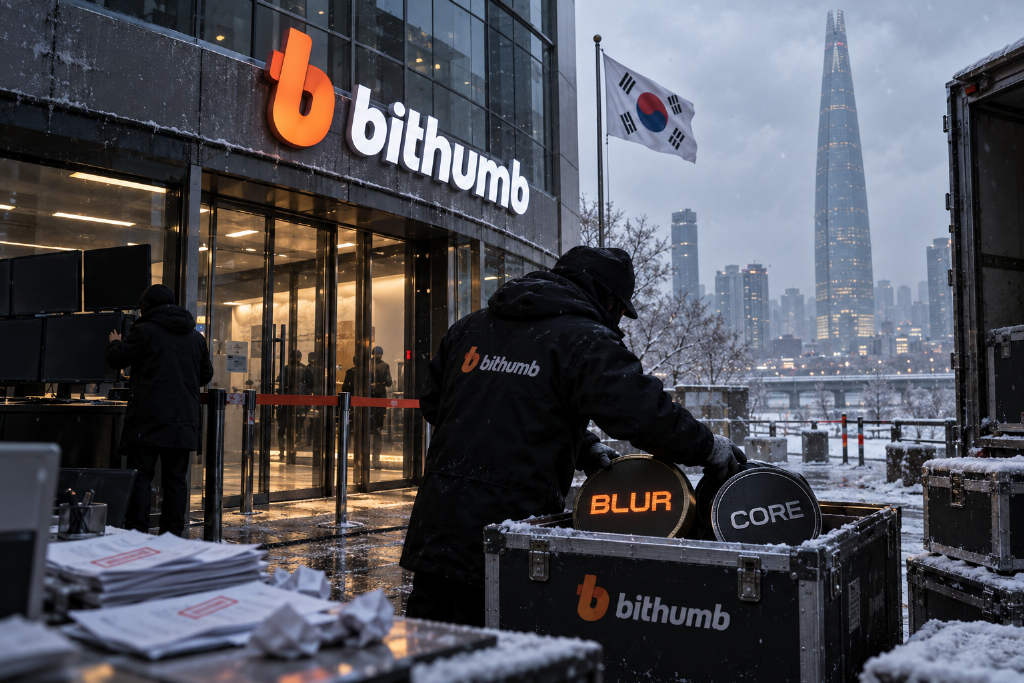
Bithumb said it will delist Blur (BLUR) and Core (CORE), ending trading support for both tokens at 15:00 Korea time on Nov. 30, 2026. Withdrawal support will remain available until 15:00 Korea time on Dec. 30, 2026. According to the exchange, materials submitted by the BLUR project team did not sufficiently address issues tied to its designation as a trading warning asset. After reviewing changes to the project’s business plan, execution status, and token use case, Bithumb said BLUR no longer met its standards for continued trading support. CORE was also slated for delisting because the reasons behind its trading warning designation had not been resolved. After the delisting takes effect, API trading support for the two assets will stop and all open orders will be canceled. Bithumb also urged users to withdraw in advance and register whitelist addresses for overseas virtual asset service providers or personal wallets as early as possible. The exchange added that the schedule could change depending on internal circumstances.
1130
Bithumb to end trading support for BLUR and CORE on Nov. 30, 2026
UPBIT
Oct 30, 2026

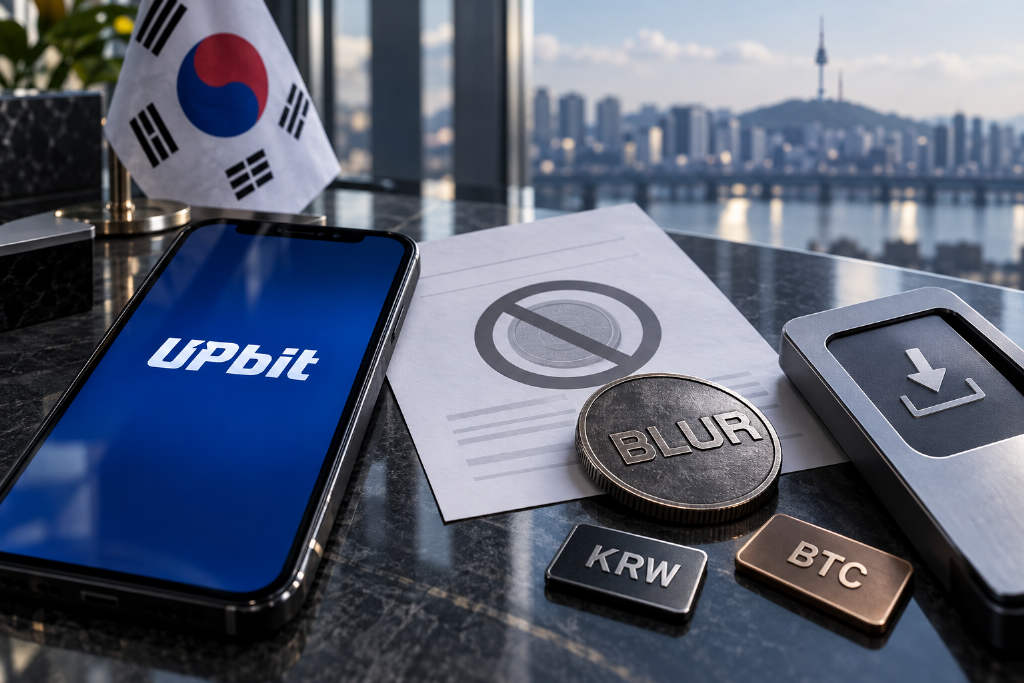
UPBIT to End Trading Support for BLUR on Nov. 30, 2026

UPBIT will stop supporting trading for Blur (BLUR) at 15:00 on Nov. 30, 2026, according to ChainCatcher. The move will affect two trading pairs on the platform: BLUR/KRW and BLUR/BTC. In addition to ending trading support, the exchange has set a withdrawal deadline for users holding the token. Users are required to complete BLUR withdrawals by Dec. 30, 2026. No other details were provided in the brief update. The notice focuses on the trading suspension time, the affected markets, and the final date for withdrawals.

1150
UPBIT to End Trading Support for BLUR on Nov. 30, 2026
OpenSea
Oct 21, 2026

OpenSea launches mobile app with support for 25 blockchains and social trade tracking

OpenSea has rolled out OpenSea Mobile, a new app that brings wallets, traders, and digital assets into one interface. The app supports multiple wallets and 25 blockchains, while aggregating trading activity from major crypto platforms in real time. Users can import existing wallets with a QR code or private key, monitor tokens, collectibles, and artwork, and follow friends or top traders to keep up with market activity. OpenSea also introduced OpenSea Signals, a feature that lets buyers attach notes to purchases so followers can see not only what was bought, but why. The launch includes a referral system with rewards on both sides: new users who sign up with an invite code receive a permanent 10% trading fee discount, while inviters continue to receive 25% of the trading fees generated by those users. The report also highlighted pressure across the NFT marketplace sector, including Blur’s planned frontend shutdown on Nov. 12, a steep drop in NFT platform survival rates, shrinking market sales, and OpenSea’s own fee revenue decline from 2022 to 2025.

1490
OpenSea launches mobile app with support for 25 blockchains and social trade tracking
Pacman
Oct 20, 2026

Pacman’s Blur and Blast shut down within 10 days as the airdrop playbook runs out of road

Blast said on Oct. 2 that it would shut down because operating costs had outpaced the revenue the layer-2 network could capture. Ten days later, NFT marketplace Blur said its site would go offline on Nov. 12. Both projects were built by Pacman, whose real name is Tieshun Roquerre, and both became known for pushing points and token airdrops to an extreme. The report traces how Blur used zero fees and points-based rewards to overtake OpenSea in 2023, at one point reaching a monthly trading volume of $1.43 billion and a market share peak of 80%, according to Galaxy Research. Yet DefiLlama recorded just $2.26 in cumulative protocol revenue for Blur because fees were routed back to sellers and creators. Blast followed with a similar formula, adding yield and invite codes before the network was even live, drawing in more than $510 million in deposits by Nov. 26, 2023. The article argues that the model succeeded in buying liquidity and user activity, but not durable revenue. Across Blur’s first two seasons and Blast’s first season, airdrops totaled about $850 million. As token incentives faded, trading volume, total value locked and token prices all fell sharply, leaving both projects unable to support their operating costs.

1500
Pacman’s Blur and Blast shut down within 10 days as the airdrop playbook runs out of road
ZKsync
Oct 18, 2026

Weekly crypto project updates: ZKsync unveils Airbender Prime, ENSv2 draft heads to mainnet, Blur sets frontend shutdown

A busy week across crypto infrastructure, governance, and product development brought a wide range of updates from major protocols and platforms. Robinhood Chain published operating data roughly 100 days after launch, reporting more than $99 billion in cumulative DEX volume, over $1 billion in TVL, and more than 190 tokenized stocks. ZKsync introduced its Ethereum zero-knowledge prover Airbender Prime, saying tests on a single NVIDIA RTX PRO 6000 Blackwell GPU showed 99% of 7,200 consecutive Ethereum mainnet blocks were proven in under 10 seconds. Vitalik Buterin responded by saying the race on proving speed has reached a decisive point and that zkEVM efforts should now shift toward security. Elsewhere, Starknet rolled out Shadow Accounts for privacy-preserving DeFi activity, while Aptos launched Encrypted Mempool on mainnet to reduce frontrunning and other MEV risks. ENS DAO submitted a draft executable proposal to activate ENSv2 on Ethereum mainnet without forcing existing .eth names to migrate. PancakeSwap proposed raising LP fee sharing to 88% and cutting daily CAKE emissions by about 69%, and Osmosis community members proposed ending OSMO inflation. Lido added native ETH staking access from Arbitrum, Base, Linea, and Optimism. In NFTs, Blur said it will shut down its frontend on Nov. 12, 2026, while Blend will stop matching new loans the same day. Network School also said it will acquire Farcaster, with most of the Neynar team joining to continue development.

1940
Weekly crypto project updates: ZKsync unveils Airbender Prime, ENSv2 draft heads to mainnet, Blur sets frontend shutdown
PANews
Oct 17, 2026

PANews weekly selection highlights Blur and StandX exits, Story’s pivot, and pressure in Korea

PANews’ weekly roundup pulled together a broad set of stories spanning AI safety, macro pressure, crypto market structure, project shutdowns, and selected industry headlines. Among the most notable items, Blur said it will shut down its front end in November 2026, while its NFT lending protocol Blend will also stop matching new loans. StandX, meanwhile, chose to cancel its token generation event and wind down operations, using a DUSD airdrop to compensate its community instead of issuing a token. Story Protocol was also featured after DATA Network received a $30 million investment from the Sui Foundation and moved toward becoming a Sui-native protocol, with its original public chain set to retire. PANews said Story, once valued at $2.25 billion, has now gone through two pivots in three years. The roundup also pointed to stress in Korea, where the stock market has dropped 32% in four months, foreign capital reportedly pulled out 156 billion yuan in one month, and concerns have resurfaced over leverage among retail investors as the memory and semiconductor trade weakens. Other featured topics included calls from 420 AI scientists to physically isolate high-risk models, Base-based x402 payments for AI agents, MSCI rule changes affecting 14 crypto-related companies, Zcash network upgrades, and a slate of market and policy headlines.

4100
PANews weekly selection highlights Blur and StandX exits, Story’s pivot, and pressure in Korea
ChainFeeds
Oct 14, 2026

ChainFeeds research roundup: Haseeb on agents, old altcoins rebound, and Blur’s frontend shutdown

ChainFeeds’ Oct. 14 research roundup pulled together five separate threads shaping the crypto market. WhiteForest argued that the next generation of exchanges may stop forcing users to think in terms of DEX versus CEX, with software agents handling routing across venues based on user intent. In a separate interview, Dragonfly managing partner Haseeb Qureshi said the market misread how AI agents would pay: instead of waiting for crypto rails, many are already using card networks through providers such as Visa, Mastercard, Rain, Ramp, and Stripe. Route 2 FI, meanwhile, said the rebound in older tokens such as ZEC and STRK should not be confused with a broad altcoin season, which requires sustained outperformance versus Bitcoin across a wide share of the market. Foresight News reported that Blur will shut down the blur.io frontend on Nov. 12 while keeping the protocol live on-chain, and that Blend will stop matching new loans. Tiger Research added a broader capital-markets view, saying third-quarter crypto investment shifted away from new standalone blockchain ecosystems and toward payments, stablecoins, tokenized securities infrastructure, and AI-related infrastructure tied more closely to traditional finance and real business use.

1810
ChainFeeds research roundup: Haseeb on agents, old altcoins rebound, and Blur’s frontend shutdown
Bitcoin
Oct 13, 2026

Bitcoin Slips to $83.4K as ‘Uptober’ Trade Fades and ETF Outflows Deepen

Bitcoin’s October rally narrative is losing steam, according to Decrypt’s Morning Minute by Tyler Warner. BTC was trading around $83,000 and was down 3.2% on the week after peaking near $87,000 early last week, then falling to roughly $81,000 on Monday before a modest rebound. Market sentiment weakened alongside price action, with the Crypto Fear & Greed Index dropping to 56 from 67 a week earlier and moving well below its August high of 82. Altcoins were hit harder over the past seven days, with SOL down 11%, HYPE down 12%, DOGE down 12%, XRP down 10%, and ETH down 8%. Prediction markets also cooled: Myriad odds of BTC reaching $87.5K in October fell from 55% to 45%, while the probability of a move down to $80K rose to 56%. The report points to macro pressure rather than crypto-specific weakness. Brent crude climbed above $101 last week and was later trading near $110, while the 30-year U.S. Treasury yield touched 5.70%, the highest since 2002. Spot Bitcoin ETFs posted about $680 million in net outflows last week and another $65 million on Monday, bringing October net flows to negative $451 million. Spot Ether ETFs were weaker still, with $720 million in net outflows for the month. Markets are now watching Wednesday’s U.S. CPI release for the next major catalyst.

1070
Bitcoin Slips to $83.4K as ‘Uptober’ Trade Fades and ETF Outflows Deepen
Total 27 items
Go topage