Anthropic
Nov 7, 2026

Anthropic’s $895 Billion Compute Bet Relies on Risky Financing

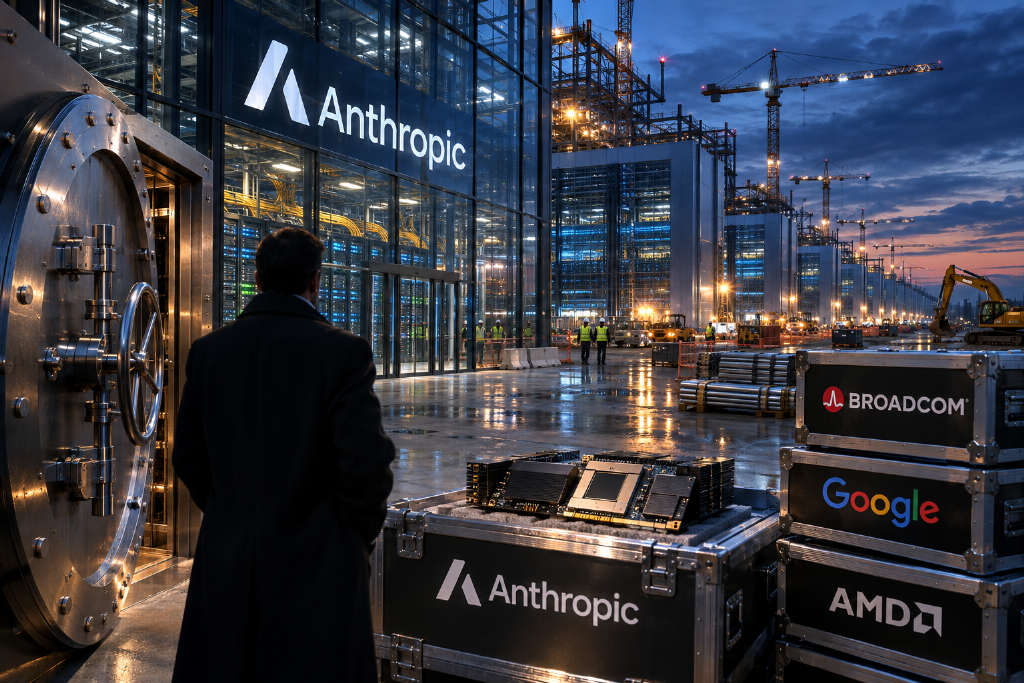
Anthropic’s updated IPO filing shows that its push to build large-scale artificial intelligence capacity depends on financing arrangements that could shift part of the risk to chip suppliers, lenders and investors. The company added third-quarter financial data to the filing this week, reporting that rising compute costs are narrowing its profit margin. It also disclosed commitments for additional data-center construction that could total as much as $895.4 billion through 2045. Broadcom has agreed to a $63 billion equipment-financing arrangement tied to Anthropic’s purchases. If Anthropic defaults, Broadcom could face as much as roughly $43 billion in potential liability once the equipment has been delivered and deployed. Google and AMD have also linked some funding to Anthropic’s leasing or deployment of their hardware. The Broadcom transaction involves Bank of America, Citigroup, Morgan Stanley and Blackstone, which will fund a new company to buy Broadcom chips and networking equipment and lease them to Anthropic, with delivery expected in 2027. Analysts cited by Fortune warned that custom TPU hardware could be harder to re-lease than Nvidia GPUs, leaving residual-value and guarantor risks central to the financing structure.
430
Anthropic’s $895 Billion Compute Bet Relies on Risky Financing
Philadelphia Semiconductor Index
Nov 4, 2026

Philadelphia Semiconductor Index Extends Losses to 3%, Micron Down 5.85%

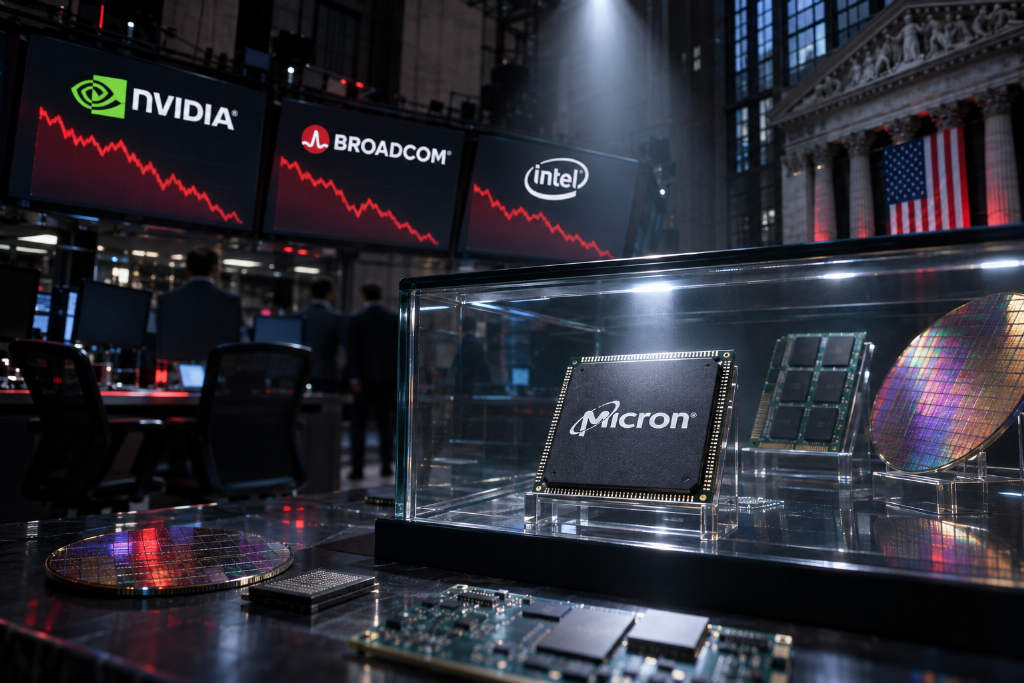
The Philadelphia Semiconductor Index widened its decline to 3%, according to data from MSX.COM cited by Odaily. Among major chip names, Nvidia fell 2.04%, Broadcom lost 2.03%, Micron dropped 5.85%, and Intel slid 4.84%. The update was published as a 7x24 news flash by Odaily, focusing on the latest move in semiconductor equities. No additional market context or cause for the decline was provided in the source. The report listed the index move and the declines in four semiconductor stocks.

470
Philadelphia Semiconductor Index Extends Losses to 3%, Micron Down 5.85%
Jim Cramer
Nov 4, 2026

Jim Cramer says tech leadership may shift away from the biggest names

CNBC’s Jim Cramer said leadership in the technology sector may be moving beyond the group that has dominated recent gains, naming Nvidia, Microsoft, Alphabet, and Meta as companies that may no longer be the only market drivers. He pointed to Broadcom and Micron as stocks that helped support the major indexes on Nov. 3, Eastern Time. He also said AMD and networking equipment maker Arista Networks posted better quarterly results after the bell, while Oracle rose nearly 6%. Cramer also flagged risks that, in his view, still argue for caution. He said data center construction is facing local opposition, and that the war in Iran remains a source of uncertainty. He added that the technology sector has not yet confirmed a long-term bottom and said he would prefer to wait for clearer signals before putting more money to work. The remarks were cited by Techub News, which attributed them to CNBC.

670
Jim Cramer says tech leadership may shift away from the biggest names
US stocks
Nov 3, 2026

U.S. semiconductor stocks extend gains, with AMD, SanDisk and Cerebras up more than 5%

U.S. semiconductor stocks widened their gains, according to data from MSX.COM cited by Odaily. Among the names mentioned, AMD, SanDisk and Cerebras were up more than 5%. AMR and Broadcom rose more than 4%, while Western Digital, NXP, Nvidia, Seagate Technology and Applied Materials gained more than 3%. The update was published as a market analysis newsflash by Odaily. No additional price levels, trading volumes or time-based performance details were disclosed in the source.

590
U.S. semiconductor stocks extend gains, with AMD, SanDisk and Cerebras up more than 5%
Google
Nov 3, 2026

A further TPU v9 delay could squeeze Google’s ramp window and reshape supplier timing

Google’s in-house TPU roadmap is facing fresh timing questions, and a new analysis from StatementDog suggests the impact could extend well beyond one product cycle. The firm said that if TPU v9 slips again, its mass-production ramp could be compressed before v10 arrives, changing the shipment outlook for Google’s custom compute chips and affecting when suppliers such as Broadcom, MediaTek, and Intel may see related orders. StatementDog estimates total 2028 shipments for the TPU v9 generation at about 2.3 million units, including roughly 1.9 million Humufish chips and 400,000 Triggerfish chips. It also raised its 2028 forecast for the older Zebrafish, or v8t, pointing to a scenario in which Google relies on the prior generation for longer if the new platform ramps more slowly. The report ties the schedule pressure to changes in the Core A design, echoing an earlier ChainCatcher-linked report that said development had been delayed by about three weeks. It also notes packaging and substrate yield as key constraints, with TrendForce previously saying v9 is expected to use Intel’s EMIB-T packaging. StatementDog stressed that its supplier allocation assumptions are part of its own model, not official guidance.

700
A further TPU v9 delay could squeeze Google’s ramp window and reshape supplier timing
Intel
Oct 30, 2026

Intel earnings miss drags chip stocks lower as AI trade worries return

Intel’s weaker-than-expected results and soft outlook, combined with Amazon’s earnings miss, triggered a fresh sell-off across semiconductor names and revived concerns around the artificial intelligence investment trade. According to MSX.COM data, Broadcom fell about 4% at the open of Friday’s regular session, AMD dropped nearly 10%, and Micron Technology lost 5.5%. Intel slid nearly 30% on Friday, wiping out about $120 billion in market value. The decline also hit chip equipment makers, with Applied Materials down nearly 5% and Lam Research off 5.5%. Qualcomm also moved lower alongside weakness in the wireless communications and smartphone segments. The market is weighing softer corporate hardware demand and signs that smartphone demand may be running into a bottleneck.

660
Intel earnings miss drags chip stocks lower as AI trade worries return
Panel-Level Packaging
Oct 29, 2026

Panel-level packaging moves into investment phase as ASE targets AMD Venice and PTI wins Singapore approval

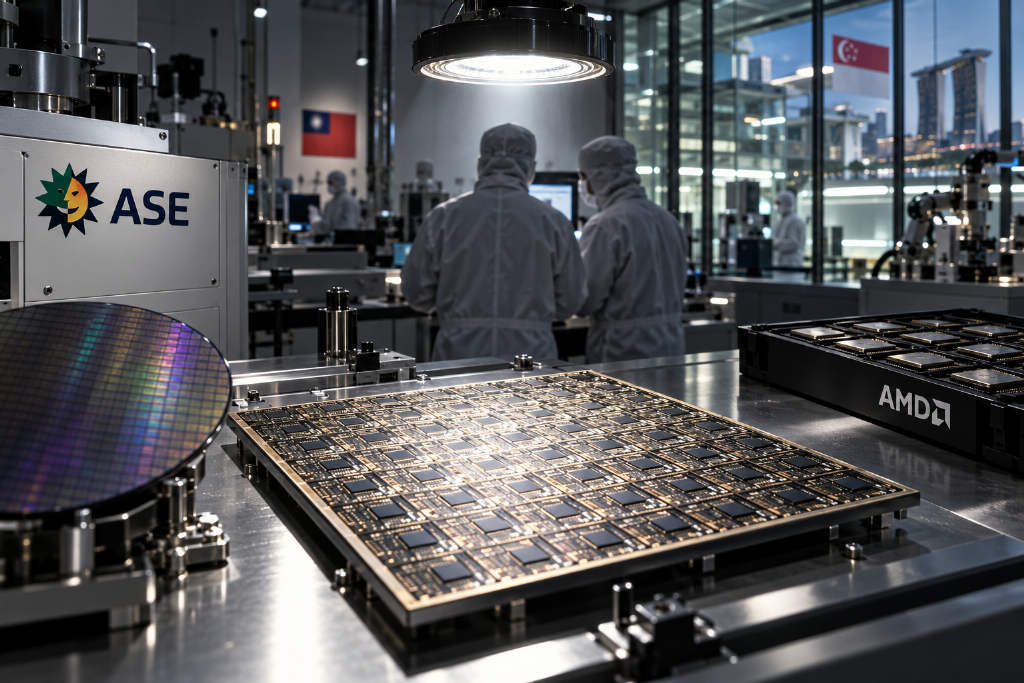
Panel-level packaging, or PLP, is moving beyond technical validation and into capital deployment, according to the source article from ABMedia. SemiAnalysis said ASE Technology has shown a PLP solution for AMD’s next-generation Venice CPU, with initial mass production targeted for the first quarter of 2027. The report said ASE and its subsidiary Siliconware Precision Industries are working with AMD to introduce second-generation Fan-Out Embedded Bridge, or FOEB, packaging for Venice, with early production expected to be limited and possibly based in Kaohsiung. The article also said Taiwan’s Ministry of Economic Affairs Investment Commission approved Powertech Technology’s plan to set up operations in Singapore with a $400 million investment. The project, launched with Broadcom under XCIP TECHNOLOGIES, will cover panel-level advanced packaging, assembly, and final test services. ABMedia said PTI has been expanding beyond DRAM and NAND Flash packaging and testing into advanced packaging, FOPLP, and heterogeneous integration. The report added that TSMC is pushing CoPoS and working with Ibiden and Innolux on glass substrate validation. Test samples were said to show a 16% improvement in package warpage and a 19% reduction in the coefficient of thermal expansion versus traditional organic substrates. TSMC expects panel-level packaging R&D to be completed as early as 2027, with commercialization in 2028.

750
Panel-level packaging moves into investment phase as ASE targets AMD Venice and PTI wins Singapore approval
AI infrastructure
Oct 28, 2026

AI infrastructure stocks rebound as Anthropic spending estimates and Broadcom financing reshape the trade

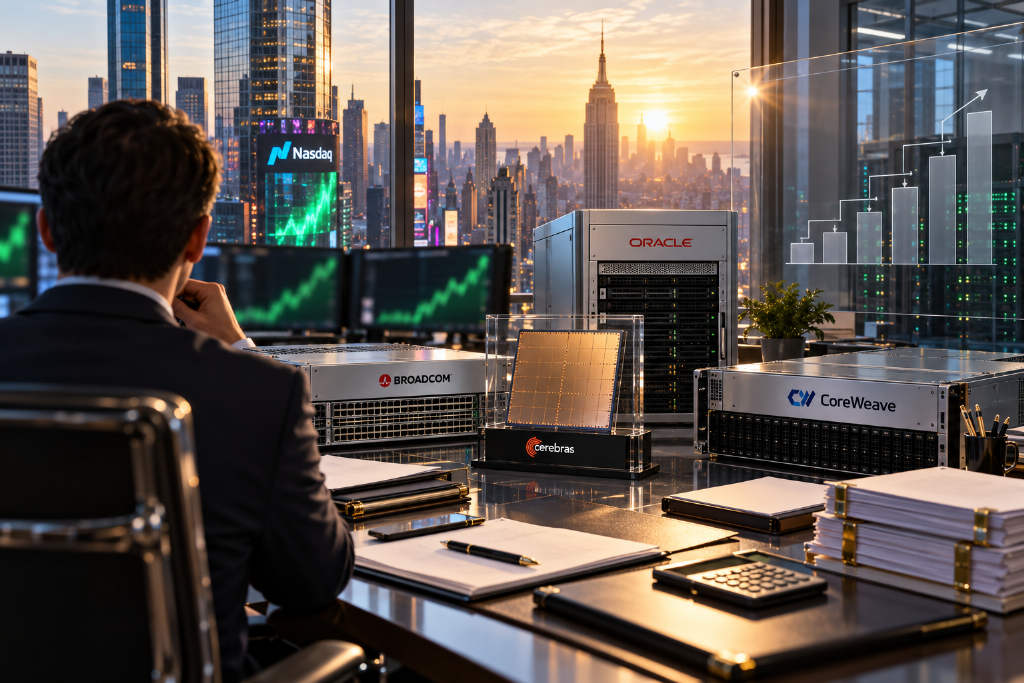
U.S. AI infrastructure names rallied on Oct. 27 as investors reassessed what matters most in the buildout cycle: not just whether demand exists, but how visible that demand is, who finances it, and whether it can turn into durable cash flow. The Philadelphia Semiconductor Index rose 3.6%, with all 30 constituents closing higher. Broadcom gained 4.00%, Oracle rose 3.55%, Cerebras climbed 10.10%, and CoreWeave added 7.94%, while NVIDIA was up only 0.90%. Two developments drove the move. First, media summaries of Anthropic’s IPO filing pointed to long-term compute and infrastructure arrangements estimated as high as $807 billion, including cloud services, equipment leases, procurement agreements, and future capacity plans. Second, Broadcom disclosed a $63 billion financing structure involving Bank of America, Blackstone, Citigroup, and Morgan Stanley. Under the arrangement, an SPV will buy Broadcom XPU AI accelerators and networking gear and lease them to Anthropic, with deliveries expected to begin in 2027. The market response suggests investors are placing a premium on demand visibility and financing pathways. But the article’s core point is narrower: contract size is not recognized revenue, financing commitments are not risk-free cash, and rising orders do not automatically produce better shareholder returns. Delivery schedules, utilization, customer payment capacity, residual values, and free cash flow remain the key tests.

1010
AI infrastructure stocks rebound as Anthropic spending estimates and Broadcom financing reshape the trade
Total 123 items
Go topage