PONS2026-08-29 01:45:52PONS Market Cap Briefly Tops $158M, Sets New All-Time HighOn August 29, data from GMGN showed that PONS, a token in the Robinhood Chain ecosystem, briefly pushed its market capitalization above $158 million, setting a fresh all-time high before easing back to $148 million. The token was up 29.20% over the past 24 hours, with roughly $15.3 million in trading volume for the asset during the same period, according to BlockBeats. PONS is the platform token of Pons, a native token launchpad built on Robinhood Chain. The platform supports the creation and issuance of tokens with a fixed supply. WETH fees collected through the platform are used to buy back PONS, while PONS-denominated fees are burned directly. That design has led some community members to describe it as the Pump.fun of Robinhood Chain. BlockBeats cautioned that tokens in this category can see violent price swings and that investors should approach any investment with care.1050
Hyperliquid2026-08-23 18:07:14Hyperliquid buyback and burn total tops $1.251 billionHyperliquid’s native buyback-and-burn program has surpassed a cumulative $1.251 billion, according to monitoring cited by Odaily and attributed to HyperliquidNews. The tracked average purchase price was reported at $26.808. The source input did not provide additional details on the time frame, token amount, or the cadence of the buybacks and burns. This was published as a market analysis newsflash by Odaily.1110
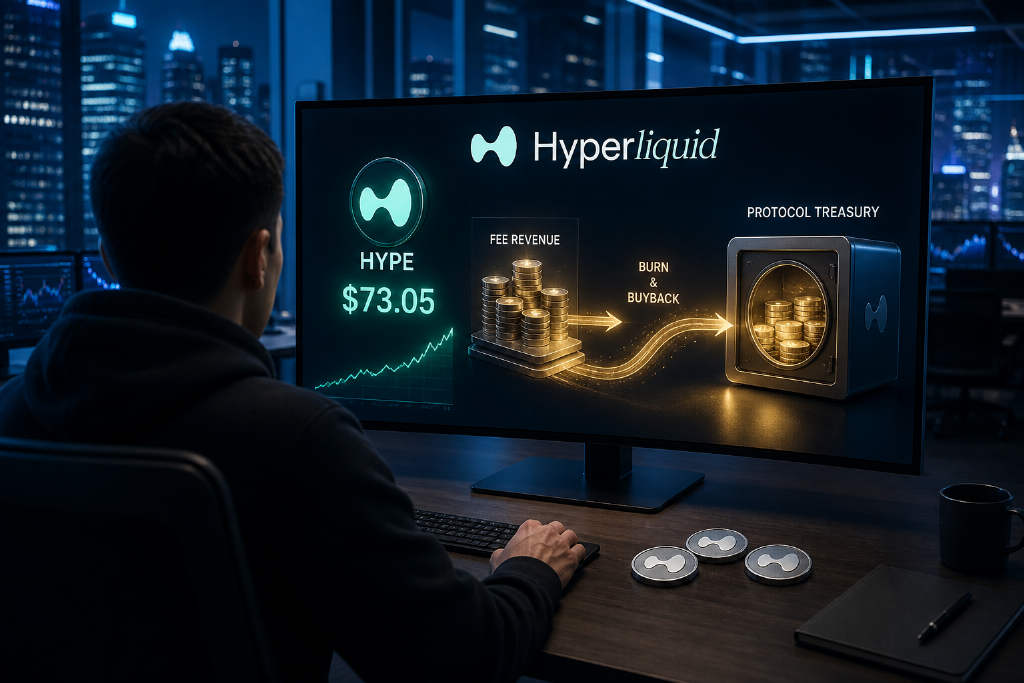
Hyperliquid2026-08-21 14:07:59HYPE nears $73 as Hyperliquid buyback-and-burn model draws fresh attentionHYPE, the native token of decentralized derivatives platform Hyperliquid, was trading near $73, according to Bitcoin.com. The move has renewed attention on the project’s fee-driven buyback and burn structure, which crypto trader Pentosh1 said is set to expand after the rollout of AQAv2. He said that change could help support HYPE’s performance in the next bull market. Since November 2024, Hyperliquid has repurchased and burned 462 million HYPE worth about $1.27 billion. Roughly 99% of protocol fees are directed to buybacks, while the platform’s annualized protocol revenue is currently estimated at about $600 million to $950 million. AQAv2, short for Aligned Quote Asset v2, is scheduled to begin on Aug. 26. Under the plan, around 90% of the yield generated by more than $5 billion in USDC reserves on the platform will be routed into the Assistance Fund, with the first transfer expected on Oct. 3. Market participants estimate the upgrade could add another $135 million to $160 million in annual buybacks. Coinbase and Circle, named in May as Hyperliquid’s official USDC deployment partners, have also pledged to stake sizable amounts of HYPE to help get the mechanism running.1690
PUMP2026-08-21 10:24:07PUMP nearly doubles in a month as buybacks and platform revenue drive the movePUMP has rebounded steadily since touching a low of $0.001 in late June, with the token up about 19% over the past 24 hours, 36% over seven days, 98% over 30 days, and roughly 116% over 90 days, according to BlockBeats. The price has also moved close to $0.004. While the broader crypto market has recovered over the past two days, with Bitcoin briefly rising above $79,000 and meme tokens such as PEOPLE, NEIRO, and BOME appearing among Binance’s top gainers, BlockBeats said PUMP’s rally started about two months earlier than the current market rebound. The report tied the move mainly to Pump.fun’s fundamentals, describing a positive loop built around revenue, buybacks, and traffic. On-chain data cited by BlockBeats showed the platform generated about $38.15 million in fees and about $29.19 million in revenue over the past 30 days, trailing only Tether, Circle, and Canton while exceeding protocols including Hyperliquid, Polymarket, GMGN, and Tron. Pump.fun uses 50% of revenue to buy back and burn PUMP. BlockBeats added that a recent weekly fee total above $10 million could translate into roughly $5 million in potential buy pressure under that mechanism.1320
TRON Eco2026-08-14 06:28:45TRON Eco says Q2 2026 buybacks and burns topped $34.75 millionTRON Eco has released its value-deflation ecosystem report for the second quarter of 2026, saying cumulative buybacks and token burns for the quarter exceeded $34.75 million as four core projects moved in tandem. JST recorded its largest buyback-and-burn to date, with more than 355 million tokens destroyed in a single move worth $34.59 million, a record for the project. The report said JST’s cumulative burn has reached 17.29% of its initial maximum supply, with total cumulative value above $94.62 million. SUN completed its 51st buyback-and-burn round, destroying more than 9.02 million SUN during the quarter and lifting cumulative burns past 678 million tokens. TRON Eco also said BTT and WIN have upgraded their mechanisms: BTT will use all revenue from its decentralized business for buybacks, while WIN will allocate all oracle service revenue to buybacks. The new arrangements are set to become routine from the third quarter, bringing all four projects into what TRON Eco described as a sustainable deflation framework.2030
Uniswap2026-08-12 20:58:49Uniswap Founder Says Test-Period Creator Fees Went to Buyback-Burn ContractUniswap founder Hayden said on X that the team had not expected tokens created during the pools.trade testing phase to be discovered. Uniswap has relinquished all creator fees generated during employee testing and moved them into an automated buyback-and-burn contract. Hayden said the team is now weighing whether to offer the mechanism as a feature for other deployers.1770
Uniswap2026-07-31 08:39:16UNI nearly doubled as Uniswap’s fee switch finally started feeding real buybacksUNI outperformed much of the crypto market in June and July, climbing from around $2.3 in early June to nearly $4.6 by the end of July. The move came months after Uniswap’s long-debated fee switch was formally implemented through the UNIfication governance proposal on Dec. 28, 2025, which routed protocol revenue into TokenJar and then into the Firepit contract to buy and permanently burn UNI. At first, the mechanism looked too small to matter. Dune data cited in the article showed that only about $800,000 worth of UNI was burned in the first 12 days, implying roughly $26 million to $27 million on an annualized basis, far below what the market needed to reprice the token, especially with a 20 million UNI annual growth budget still in place. The picture changed in July after Robinhood Chain launched on July 1 with Uniswap v2, v3, v4 and UniswapX deployed on day one. The chain pushed Uniswap daily volume to $500 million within eight days, while cumulative volume crossed $1 billion on July 10. After the v4 fee switch went live on July 27, DefiLlama data showed protocol revenue nearly tripled and daily funds flowing into UNI burns rose from about $114,000 in early July to $325,000, with Robinhood Chain contributing roughly $170,000. The article argues that the market is no longer pricing UNI on expectation alone. It is now reacting to visible cash flow and a working buyback-and-burn path, while the next major test will come when Robinhood Chain’s gas subsidy expires roughly 90 days after launch.3680
UNI2026-07-31 08:30:41UNI Nearly Doubled in Two Months as Uniswap Buyback-and-Burn Starts Showing Up in Cash FlowUNI has been one of the stronger large-cap crypto tokens through June and July, rising from around $2.3 in early June to nearly $4.6 by the end of July. According to Foresight News, the move was not simply a delayed reaction to Uniswap’s long-debated fee switch, but a repricing tied to visible protocol revenue and token burn data after the UNIfication proposal went live on Dec. 28, 2025. Under that framework, parts of trading fees from Ethereum mainnet v2 pools and some v3 pools, along with Unichain sequencer revenue after OP sharing and L1 data costs, are routed into TokenJar. The treasury contract can only send funds to Firepit, which buys UNI on the market and burns it permanently. Uniswap also burned 100 million UNI from its treasury, while Uniswap Labs cut front-end, wallet, and API fees to zero and received an annual 20 million UNI growth budget. The first months were quiet, with burn value too small to impress the market. That changed in July after Robinhood Chain launched and v4 fee activation expanded the mechanism. Foresight News argues that the market is no longer trading UNI as a pure governance token story, but increasingly as an asset tied to protocol cash flow.970