CAICT
Nov 4, 2026

CAICT and 20 organizations issue self-regulatory convention on AI agents

China Academy of Information and Communications Technology, together with 20 organizations including Huawei, Alibaba, Tencent and Xiaomi, released the "Self-Regulatory Convention for AI Agent Development" on Nov. 4, according to CAICT as cited by Gelonghui. The document calls for building interoperable infrastructure for AI agents and advancing technologies and standards covering agent registration and resolution, capability description and discovery, intent understanding and conversion, network routing and connectivity, resource scheduling and metering, as well as protocol compatibility and mutual recognition. It also says the initiative aims to reduce the cost of cross-domain discovery and connection for agents and support coordinated interconnection. In addition, the convention calls for accelerating the use of AI agents across industries while serving the real economy, developing low-threshold tools for agent development and deployment, jointly building agents for real operational scenarios that create practical value, and embedding them into existing production systems and business processes to lower deployment costs and improve quality and efficiency.


730
CAICT and 20 organizations issue self-regulatory convention on AI agents
CAICT
Oct 9, 2026

CAICT opens trial run of agent identity network to public access

The China Academy of Information and Communications Technology, or CAICT, has officially launched the trial operation of its agent identification and identity network and opened access to the public, according to a post published on its official WeChat account. The network is built on trusted interconnection centers for intelligent agents in places including Beijing and Xiamen. It is designed to provide services such as identifier registration, identity verification, address resolution, and capability discovery for agents. CAICT said the network follows a technical route built around blockchain, decentralized identifiers, and what it called "super agents." It is also compatible with multiple DID methods and supports mainstream interconnection protocols including A2A and ANP. The announcement outlines the network’s core service scope and technical framework, while confirming that the system has moved from preparation into a formal trial phase with public access now available.

740
CAICT opens trial run of agent identity network to public access
Zhipu
Sep 21, 2026

Zhipu open-sources ZCode after security fixes and two external audits

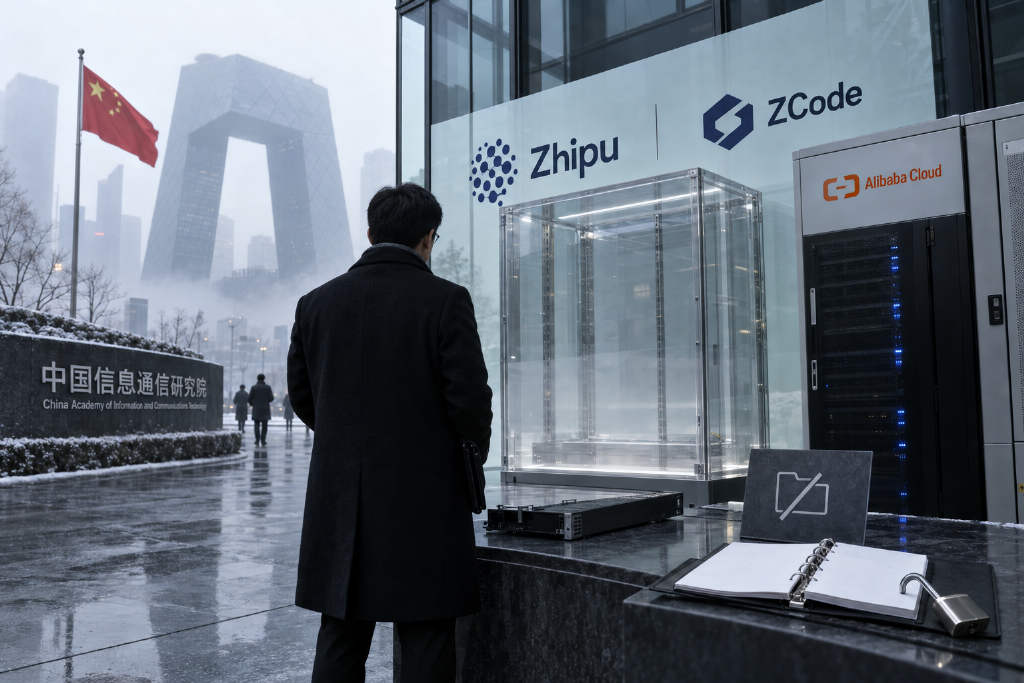
Zhipu said on Sept. 21 that it has officially open-sourced ZCode after completing remediation tied to product security issues previously raised by the community. The company said it opened the codebase for public oversight after finishing the fixes. According to Zhipu, ZCode v3.14.0 removed the Repo Wiki feature and cut off the pathway for generating and uploading local repository snapshots. After the remediation work, the company invited the China Academy of Information and Communications Technology and NSFOCUS to conduct security audits. Zhipu said both institutions confirmed that related cloud-side data had been cleared, and that the new client version did not contain a functional path that could trigger local repository snapshots or external file transmission. Addressing earlier concerns around code data, Zhipu said again that the relevant code data had "not been retained and has never been used for model training." The company also said ZCode will set up a standing security vulnerability feedback mechanism and provide rewards to developers based on issue severity.

1531
Zhipu open-sources ZCode after security fixes and two external audits
Zhipu
Sep 21, 2026

Zhipu says ZCode will be open-sourced as audits address data-handling dispute

Zhipu, the Chinese large-model company listed as 2513.HK, said its AI coding tool ZCode will soon be formally open-sourced. The company described the move as the first step in responding to outside concerns over how ZCode handled data, and said it plans to push the product further toward a community-driven model by inviting users to download the code, inspect it, and help improve it. Zhipu said it has asked the China Academy of Information and Communications Technology to conduct a security audit focused on data retention. According to the company, technical testing confirmed that the zcode-prod Alibaba Cloud OSS bucket held zero cloud data. It also said the ZCode v3.14.0 client has completed security remediation, including removal of the Repo Wiki feature and the cutoff of the local repository snapshot generation and upload path. Separately, NSFOCUS reviewed the case and confirmed that the related data objects and the storage bucket itself had been deleted. The statement follows earlier social media allegations that ZCode silently uploaded users’ programming and development data without permission. On Sept. 18, Zhipu said the controversy stemmed from a codebase indexing feature that was enabled by default, and that uploaded data was used only to generate RepoWiki before being destroyed. On Sept. 20, Zhipu’s MaaS platform said a data non-retention feature would go live soon.

1260
Zhipu says ZCode will be open-sourced as audits address data-handling dispute
Artificial Intelligence
Jul 18, 2026

CAICT vice president says China’s daily token calls reached 140 trillion by late March 2026

China’s daily Token call volume has surged from about 100 billion at the start of 2024 to 140 trillion by the end of March 2026, a rise of more than 1,000 times, according to China Central Television Finance, citing Wei Liang, vice president of the China Academy of Information and Communications Technology (CAICT). Wei said intelligent agents are giving rise to a new economic form centered on tokens, or "ciyuan" in Chinese, which serve as a key unit for large models to process information and measure usage costs. The report said token growth is one of the clearest gauges of industry expansion. In the agent era, a single user instruction can trigger multiple rounds of model calls and resource consumption, directly driving a jump in demand for AI computing power. As agent deployments scale up, new models are also emerging around token metering, scheduling, pricing and trading.

2540
CAICT vice president says China’s daily token calls reached 140 trillion by late March 2026
CAICT
Jul 18, 2026

CAICT says China’s daily token calls have risen more than 1,000-fold

China Academy of Information and Communications Technology (CAICT) Vice President Wei Liang said on July 18 that China’s average daily token calls climbed from about 100 billion at the start of 2024 to 140 trillion by the end of March 2026, marking growth of more than 1,000 times. He said the rise of AI agents is giving shape to a new “token economy.” In this context, tokens refer to the basic units large models use to process information and measure invocation costs. Wei described token growth as one of the clearest gauges of industrial development. He also said that in the agent era, a single user instruction can trigger multiple rounds of model calls and resource consumption, driving a surge in demand for AI computing power. As agents move into scaled deployment, new models are emerging around token metering, scheduling, pricing, and trading.

2620
CAICT says China’s daily token calls have risen more than 1,000-fold