Kingboard Laminates
Oct 14, 2026

Kingboard raises some CCL and prepreg prices by 15%, while Panasonic plans 200% hikes on selected products from 2027

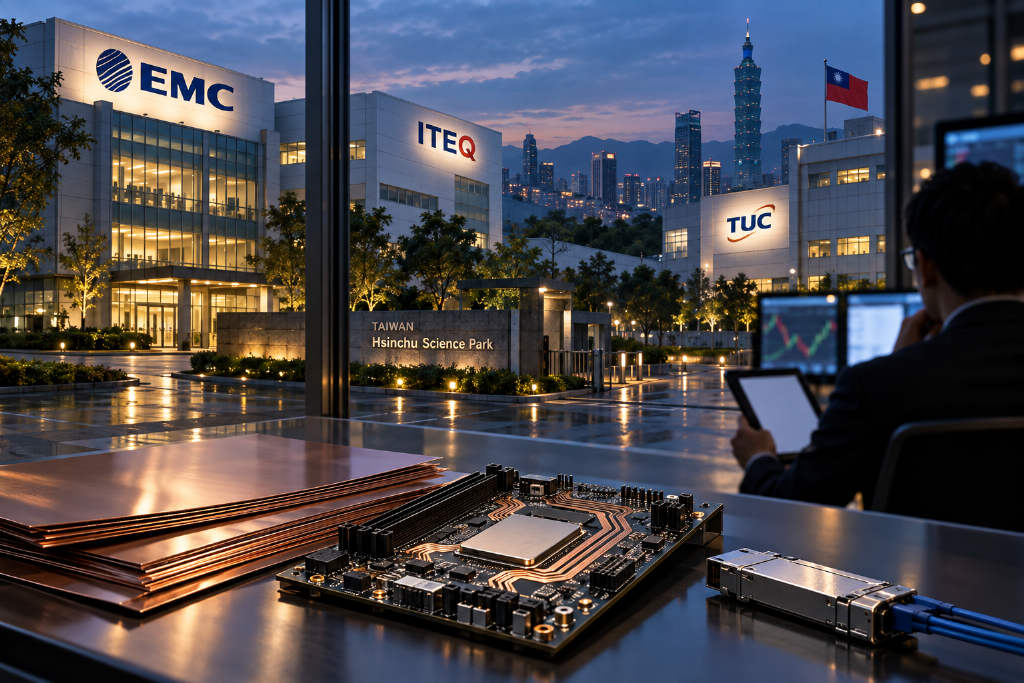
Price increases in the copper clad laminate, or CCL, market are spreading across Asia. Kingboard Laminates, a major Chinese CCL producer, said on Oct. 13 that it would raise prices by 15% on new orders for CCL and prepreg made with 2116-grade and thinner fiberglass cloth, marking its eighth price adjustment this year. The company said demand for thin fiberglass cloth has stayed strong while upstream supply of fiberglass cloth and fiberglass yarn remains tight, pushing raw material costs higher. Panasonic has also notified customers that some CCL products for standard multilayer boards will see a 200% price increase on shipments starting Jan. 1, 2027. The adjustment applies to the R-1705, R-1766, R-1566 and R-1755 series, with R-1705 covering all specifications and the other models applying to products with thickness of 1.1 mm or above. The change will apply across production sites in Koriyama, Guangzhou, Suzhou, Taiwan and Thailand. The report also cited Sinolink Securities in Hong Kong, which said demand for AI-related CCL and printed circuit boards remains strong. In the third quarter, EMC posted revenue of NT$60.885 billion, up 28.79% quarter over quarter and 142.13% year over year, while TUC reported NT$17.948 billion, up 25.51% from the previous quarter and 122.6% from a year earlier.
2160
Kingboard raises some CCL and prepreg prices by 15%, while Panasonic plans 200% hikes on selected products from 2027
AI servers
Oct 7, 2026

Analyst says AI-era CCL orders will hinge on five factors, with Shengyi seen in the lead

Competition among copper clad laminate, or CCL, suppliers is shifting as AI server demand keeps rising, according to PCB industry analyst kokycpcb. In a recent post on X, the Taiwan-based analyst argued that being a market leader or having stronger specifications is no longer enough to secure Nvidia orders. Instead, allocation decisions now depend on five factors: technology, lead time, sales execution, feedback from PCB makers, and end-customer satisfaction. By that measure, kokycpcb said China’s Shengyi Technology currently meets all five conditions. He added that among Taiwan’s four major CCL makers, the company with the strongest vertical integration stands out most, though he did not name it directly. Based on the industry structure described in the report, ABMedia said that company is most likely Nan Ya Plastics. The report also linked Shengyi’s position to a supply-chain check by TF International Securities analyst Ming-Chi Kuo, who said Shengyi is the current frontrunner in material evaluation for Nvidia’s NVL576 switch tray. Nvidia is expected to finalize its material choice by the end of 2026, with PTFE as the preferred option and hydrocarbon resin, or HC, treated as a transitional route. The next key points to watch are the final material decision, actual NVL576 allocation, and whether vertically integrated suppliers can turn supply advantages into orders and earnings.

1720
Analyst says AI-era CCL orders will hinge on five factors, with Shengyi seen in the lead
Nvidia
Oct 1, 2026

Nvidia Tests HC Clothless CCL for Next-Gen AI Servers, Pressuring PTFE-Linked Suppliers

Nvidia is testing a new PCB material route for its next-generation AI server hardware, according to a supply-chain survey cited by TF International Securities analyst Ming-Chi Kuo. The latest round of evaluation replaces the previously tested clothless PTFE copper clad laminate, or CCL, with a clothless hydrocarbon resin-based CCL for the Rubin Ultra NVL576 switch tray program, which is targeted for mass production in the second half of 2027. After the report circulated, Taiwan Union Technology fell 3.99% and Asia Electronic Material dropped 4.71%. Kuo said the change should not be read as a final material decision, nor as a sign that Nvidia has abandoned PTFE. He said the new HC-based CCL met the switch tray’s high-frequency electrical requirements, though its electrical performance remained below the PTFE option. It still outperformed the M9-grade solution and exceeded the published M10 specification. Shengyi Technology is currently the leading supplier under evaluation, with material references including SG5300N, SG1030N, and SIF09. The report also highlighted a split view on whether HC can improve manufacturing yield. Some analysts see a wider process window, while others point to softness, higher thermal expansion, warpage risk, and copper adhesion challenges. Kuo said PTFE remains a long-term trend in advanced PCB materials, but shipment growth over the next two years still depends on Nvidia’s final material choice, NVL576 adoption, and the progress of Kyber-class rack designs using orthogonal backplanes.

1330
Nvidia Tests HC Clothless CCL for Next-Gen AI Servers, Pressuring PTFE-Linked Suppliers
Nvidia
Sep 30, 2026

Kuo says Nvidia is testing glass-fiber-free hydrocarbon CCL for Rubin Ultra NVL576

TF International Securities analyst Ming-Chi Kuo said Nvidia has started testing a glass-fiber-free copper clad laminate based mainly on hydrocarbon resin, replacing the glass-fiber-free PTFE CCL it had tested earlier. The material is being paired with a glass-fiber-free hydrocarbon prepreg to determine whether the combination can meet the PCB requirements of the Rubin Ultra NVL576 switch tray. According to Kuo, NVL576 is an eight-rack interconnect system scheduled to enter mass production in the second half of 2027. Early tests aimed at improving PCB manufacturability show the glass-fiber-free hydrocarbon CCL has already met the switch tray’s high-frequency electrical requirements. He said its electrical performance trails the original PTFE option, but is better than the M9-grade solution and exceeds published M10 specifications. Kuo added that the result does not indicate a final material decision. Instead, it shows Nvidia is still trying to balance electrical performance with higher PCB yield and production efficiency. He also said Shengyi Technology is currently the leading supplier under evaluation for NVL576 switch tray materials, including SG5300N, SG1030N and SIF09.

3370
Kuo says Nvidia is testing glass-fiber-free hydrocarbon CCL for Rubin Ultra NVL576
CCL
Sep 18, 2026

CCL stocks rebound as supply chain pushes back on downgrade claims tied to CPO

A market rumor that co-packaged optics, or CPO, could replace high-speed copper transmission and drag motherboard copper clad laminate specifications down to M4 triggered a sharp sell-off in Taiwan’s CCL names on Sept. 17. Elite Material fell to limit down, while EMC and Taiwan Union Technology dropped more than 7% and 6%, respectively. The move drew attention because it came even as the broader Taiwan market rose 0.96% to 46,288 points. Supply chain sources and institutions later challenged that narrative on X, arguing that the market had overstated both the pace of CPO adoption and its impact on high-end CCL demand. Their case centered on three points: CPO is still largely confined to scale-out switches, not scale-up interconnects inside GPU clusters; it addresses signal loss and power consumption in long-distance high-speed transmission rather than eliminating all internal electrical links in servers; and even if upgrade priorities shift, each new motherboard generation is still expected to move to higher specifications. GF Securities Managing Director Jeff Pu added that CPO is unlikely to enter server compute motherboards in the near term, and that even next year’s NVSwitch NPO/CPO version will still use a hybrid structure built on PTFE substrates and M8/M9 ultra-low-loss CCL. By noon on Sept. 18, all three major CCL stocks had turned positive.

2340
CCL stocks rebound as supply chain pushes back on downgrade claims tied to CPO
Market Analysis
Sep 16, 2026

Rising upstream costs squeeze PCB margins as substrate and CCL prices stay on an upward track

Economic Daily reported that CCL makers have raised product prices by roughly 20% to 30% over the past nearly six months as upstream material costs climbed across the board. Most PCB manufacturers have not been able to pass those increases through immediately, with a lag of around two to three months, pressuring gross margins. Institutional investors said some PCB makers are set to raise prices starting in the third quarter of this year, which could help earnings recover. Analysts also said substrate materials remain tight. Electronic fiberglass cloth led by T glass, along with copper foil and drill bits, continues to face shortages. The T glass gap is described as the most severe, with some manufacturers seeing a shortfall of as much as 20%, and the gap is expected to continue into next year. In the second half, demand from AI GPUs and ASIC high-performance computing, together with tight key raw materials, is expected to push substrate makers into a supply shortfall, leaving room for further rolling price increases. The report also named Taiwan-based CCL makers Taiwan Union Technology and ITEQ, and substrate supplier Nan Ya PCB, as companies the market remains positive on.

1590
Rising upstream costs squeeze PCB margins as substrate and CCL prices stay on an upward track
Morgan Stanley
Sep 15, 2026

Morgan Stanley maps AI materials trade, putting glass fiber cloth, copper foil and optical fiber at the top

Morgan Stanley said in a September 13 semiconductor report that the AI investment focus is shifting upstream, away from GPUs and servers and toward the materials that support PCB and MLCC production. The bank argued that the market has not fully priced in bottlenecks in high-end glass fiber cloth, HVLP4 copper foil and optical fiber, and highlighted companies including Nittobo, Jinan Acetate? No — in the report as cited by ABMedia, the named beneficiaries include Nittobo, Taiwan Union Technology? Also no. The report specifically flagged Nittobo, Elite Material? Again, not here. It named Nittobo, Jinan? The article cited Nittobo, Gold Circuit-related name Jinsu and Corning as examples of companies with direct earnings sensitivity to upstream shortages. Morgan Stanley said AI material stocks had risen 91% over the past 12 months but had also pulled back about 36% from their 52-week highs reached in May and June. Even so, it sees room left in the trade, noting AI material names are valued at about 26x estimated 2026 earnings versus roughly 35x for PCB and CCL peers. The report also laid out a ranking across six material groups, with high-end glass fiber cloth and HVLP4 copper foil at the top, optical fiber next, CCL as a core holding, electronic-grade resin behind that, and synthetic diamond, tungsten and molybdenum framed as longer-cycle optional themes.

1450
Morgan Stanley maps AI materials trade, putting glass fiber cloth, copper foil and optical fiber at the top
Nvidia
Sep 3, 2026

J.P. Morgan says Nvidia’s NVL576 may use PTFE, but hybrid material designs remain the base case

J.P. Morgan said in its latest Asia-Pacific equity industry survey that Nvidia’s Rubin Ultra-generation NVL576 switch tray is reportedly set to use PTFE, or polytetrafluoroethylene. The bank said that point should not be read as a rejection of the broader high-speed CCL upgrade path. In its view, PTFE is part of a broader materials race rather than a single decisive winner. The report said Nvidia is testing a range of materials against electrical performance targets. PTFE is on the list because of its low-loss characteristics, but being a candidate does not mean the design is finalized. J.P. Morgan added that many M10 samples submitted by suppliers still fall short of target performance, leaving technical risk in place. Instead of a pure PTFE route, the bank said the industry is moving toward a hybrid structure. Under that approach, PTFE handles low-loss electrical performance while glass-less M10 improves manufacturability. It also outlined why pure PTFE remains difficult to scale, citing high-temperature lamination limits and drilling challenges. The bank expects the hybrid approach to appear first in the switch tray of Rubin Ultra NVL576 8-rack clusters, while broader PTFE adoption may have to wait until the Feynman generation, assuming process and capacity constraints are resolved.

2330
J.P. Morgan says Nvidia’s NVL576 may use PTFE, but hybrid material designs remain the base case
Total 26 items
Go topage