USD.AI
Oct 28, 2026

USD.AI says it will use sUSDai net interest spread to buy back CHIP

USD.AI has outlined how it plans to allocate protocol revenue and structure its business model, with a buyback mechanism for CHIP at the center of the plan. The project said all of sUSDai’s net interest spread, after deducting CHIP Foundation costs, will be directed to programmatic CHIP buybacks, effective immediately. USD.AI also said origination fees and most sale proceeds will be reinvested by USD.AI Inc. to reduce loan friction and improve turnover speed. In addition, 40% of sale proceeds will be allocated to the Yield Reserve to maintain sUSDai’s 7% CHIP hurdle rate. According to the statement, the project’s long-term objective is to achieve net deflation for CHIP.

590

USD.AI says it will use sUSDai net interest spread to buy back CHIP
On-chain Data
Oct 26, 2026

Wallet adds $2.7 million over 10 days, unrealized loss reaches $1.904 million

On-chain analyst Ai Yi said a wallet added another $2.7 million over the past 10 days, bringing its cumulative position size to $10.79 million. The address is now sitting on a total unrealized loss of $1.904 million across four tokens: ZRO, WLD, BAT, and CHIP. The wallet holds 2.55 million ZRO with an entry price of $2.08 and an unrealized loss of $970,000. It also holds 6.3 million WLD bought at $0.5189, with a paper loss of $568,000. In addition, the address holds 5.77 million BAT at an entry price of $0.1981, showing a loss of $288,000, and 20 million CHIP at $0.04928, with an unrealized loss of $77,000. The figures were reported by Odaily, citing monitoring data from Ai Yi.

860
Wallet adds $2.7 million over 10 days, unrealized loss reaches $1.904 million
MemSilicon
Oct 14, 2026

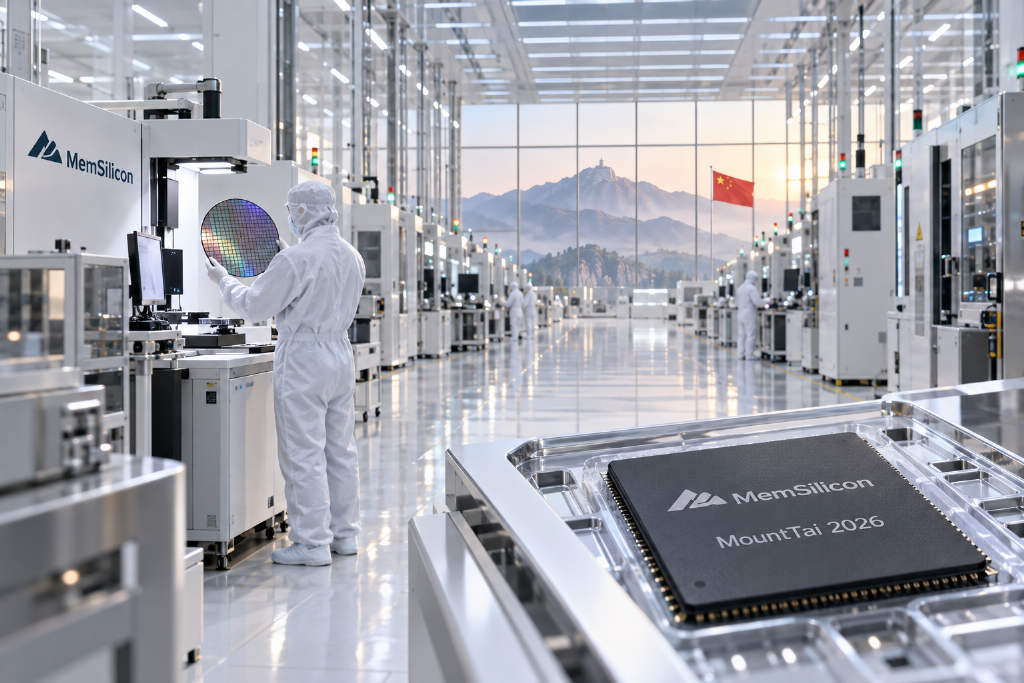
MemSilicon completes tape-out of 1Gb RRAM chip MountTai 2026

MemSilicon has completed the tape-out of its first-generation high-density, large-capacity RRAM chip, MountTai 2026, built on a 1TnR technology route. According to the company, the chip uses a 28nm CMOS process and a 1T4R cell structure, delivering 1Gb of capacity on a single chip and a density of 30Mb/mm². It also posts access latency below 20ns and includes on-chip hardware error-correction circuitry. MemSilicon said the design raises storage capacity per unit area by allowing multiple resistive memory cells to share a selection transistor, while remaining fully compatible with the CMOS platform. The chip is aimed at demand for high-density, large-capacity non-volatile on-chip memory in applications such as AI inference and embodied intelligence. The company said tape-out has been completed and validation work is now under way. The item was cited by QbitAI, according to Techub News.

1100
MemSilicon completes tape-out of 1Gb RRAM chip MountTai 2026
whale
Oct 8, 2026

Whale Wallet Built $8.09 Million Altcoin Position in Four Hours, Including ZRO, WLD and CHIP

On-chain analyst Ai Yi said wallet address 0x129…72EbE accumulated $8.09 million worth of altcoins over the past four hours, with positions centered on artificial intelligence and cross-chain infrastructure tokens. The disclosed holdings include 2.55 million ZRO worth about $5.3 million at a withdrawal price of $2.08, 4.41 million WLD worth about $2.29 million at a withdrawal price of $0.5189, and 10 million CHIP worth about $492,000 at a withdrawal price of $0.04928. The data was shared on Oct. 8 and cited by BlockBeats.

1070
Whale Wallet Built $8.09 Million Altcoin Position in Four Hours, Including ZRO, WLD and CHIP
Nvidia
Aug 30, 2026

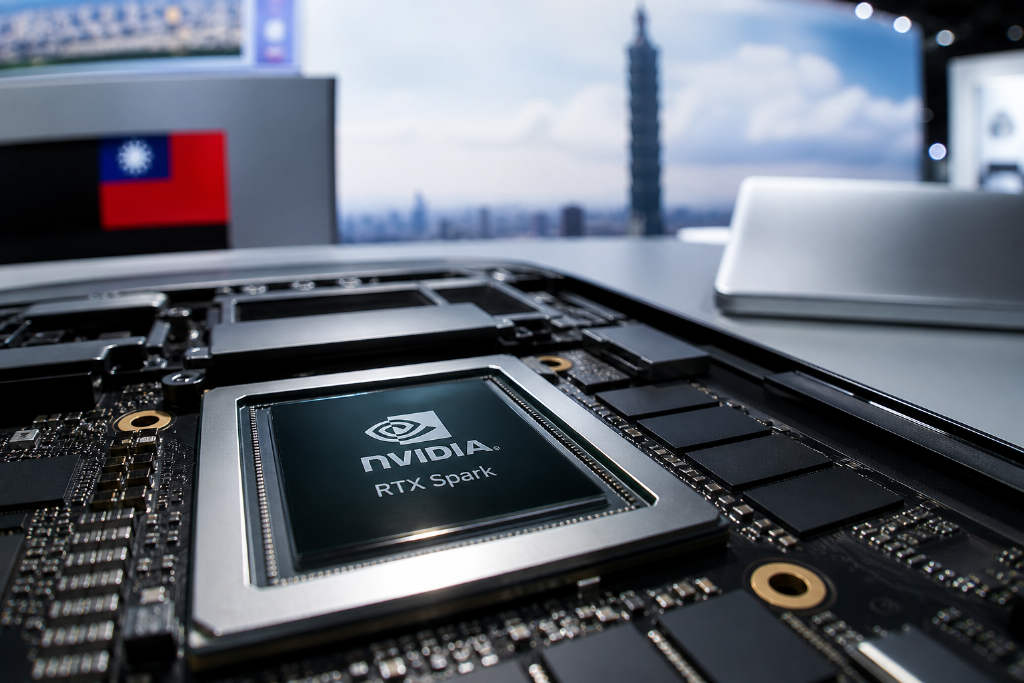
Nvidia Unveils RTX Spark Chip to Take on Apple in On-Device AI

Nvidia has introduced the RTX Spark, a superchip built on the Arm architecture, at the Taipei International Computer Show in Taiwan. The chip can run large language models with up to 120 billion parameters directly on a device, and supports a context window of up to 1 million tokens. That puts it in direct competition with Apple's M-series chips, which currently lead the on-device AI processing market. The RTX Spark is aimed at high-end laptops priced between $3,000 and $4,000, mainly targeting developers and researchers. It uses a unified memory architecture and leverages the CUDA ecosystem, both of which are central to Nvidia's effort to challenge Apple's stronghold in local AI. The company also wants to shift AI workloads from data centers to personal devices, making it possible for large models to run without cloud support. The announcement was first reported by Techub News, citing CryptoBriefing. Nvidia's move signals a push to expand its AI platform beyond data center GPUs into consumer hardware, though the company has not disclosed further details about availability or exact laptop models.

1820
Nvidia Unveils RTX Spark Chip to Take on Apple in On-Device AI
Total 18 items
Go topage