OpenAI
Oct 22, 2026

OpenAI open-sources php2shell checker, letting Codex verify PHP versions

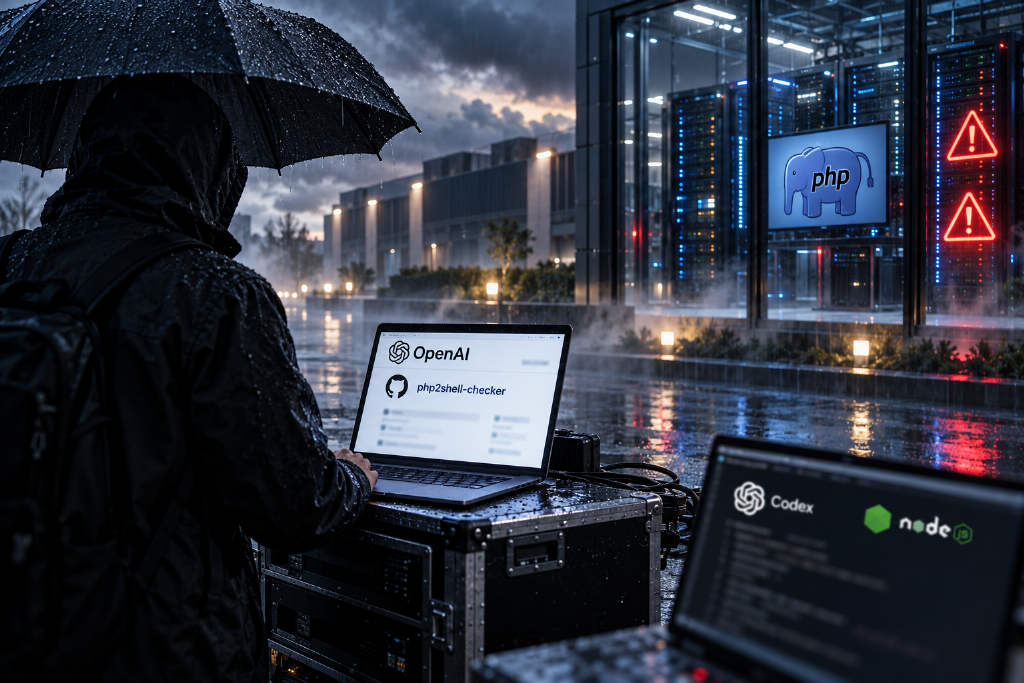
OpenAI has released php2shell-checker on GitHub, an open-source utility designed to help site operators determine whether their PHP deployments fall within the affected range of two php2shell vulnerabilities, CVE-2026-109618 and CVE-2026-109619, both listed in the source material as carrying a CVSS score of 9.2. The tool can be used through two Codex skills, phpcheck-url and phpcheck-server, or by running phpcheck.js with Node.js. It returns OK, VULNERABLE, or UNKNOWN, supports JSON output, and is meant to fit into automated operations workflows. OpenAI says the checker does not send exploit traffic: the URL mode only issues HEAD requests, reads the Server and X-Powered-By headers, does not follow redirects, and does not parse page content. The company also warns that the results have limits. An OK result is only a version comparison, while UNKNOWN does not mean a system is patched. CISA has urged immediate upgrades to PHP 8.5.12, 8.4.27, 8.3.36, or 8.2.35, and Cloudflare said it had already observed attack traffic and enabled protections by default for both free and paid WAF users.
960
OpenAI open-sources php2shell checker, letting Codex verify PHP versions
Policy Regulation
Sep 9, 2026

NSA, FBI and CISA accuse six Chinese AI firms of large-scale distillation of U.S. models

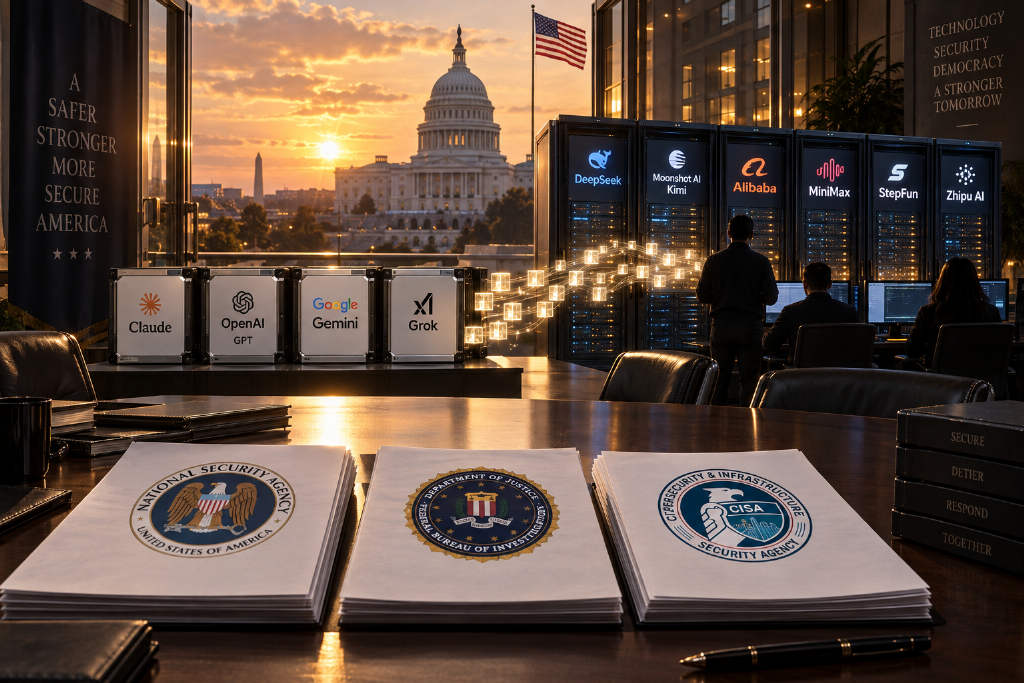
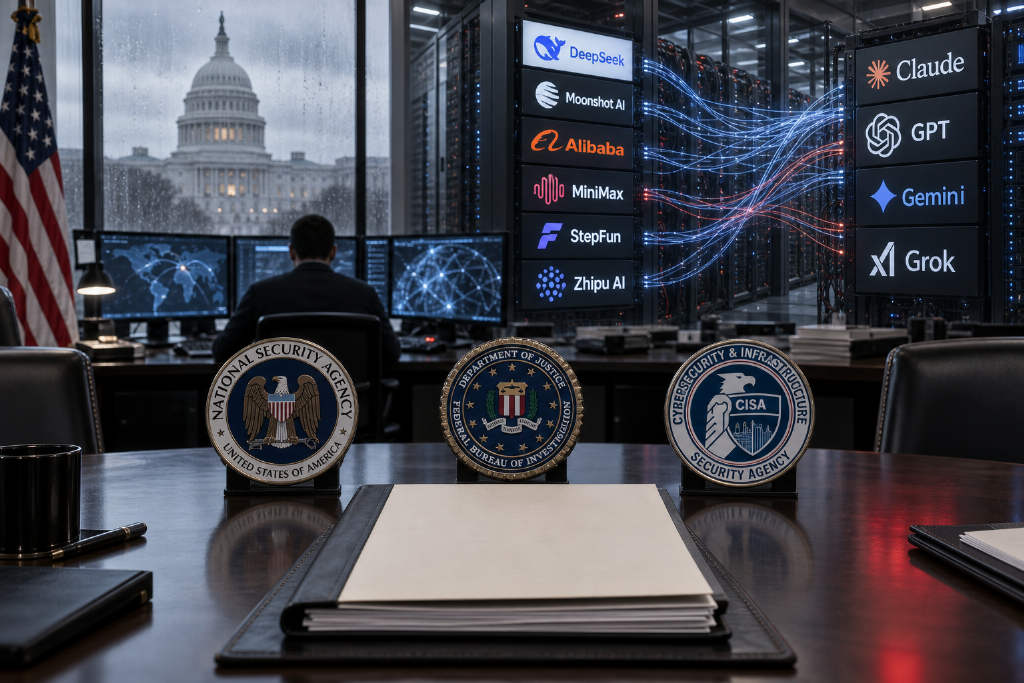
The U.S. National Security Agency, Federal Bureau of Investigation and Cybersecurity and Infrastructure Security Agency have issued a joint advisory, numbered AA26-251A, alleging that six Chinese AI companies carried out industrial-scale knowledge distillation against leading American models. The firms named in the notice are DeepSeek, Moonshot AI, Alibaba, MiniMax, StepFun and Z.AI. The agencies said the activity began in late 2024 and involved billions of tokens extracted through millions of requests. The advisory says the targeted systems included multiple versions of Claude, GPT, Gemini and Grok. It also describes a range of alleged evasion methods, including gray-market API proxy services used to bypass geographic restrictions, bulk account creation with obfuscated identities, automated metadata cleaning at the infrastructure layer and coordinated switching between blocked pathways. At the same time, the document draws a distinction between legitimate distillation as a recognized AI research technique and what the agencies describe as aggressive, targeted extraction centered on restricted proprietary capabilities. The accusations have been disputed. Moonshot denied earlier allegations tied to Kimi K3, and independent researchers including Snorkel AI co-founder Braden Hancock and analyst Nathan Lambert questioned whether the timeline cited in that earlier dispute was technically plausible.

1710
NSA, FBI and CISA accuse six Chinese AI firms of large-scale distillation of U.S. models
FBI
Sep 9, 2026

U.S. agencies accuse several Chinese AI firms of unauthorized model distillation

The U.S. National Security Agency, the Federal Bureau of Investigation, and the Cybersecurity and Infrastructure Security Agency have issued a joint report naming DeepSeek, Moonshot AI, Alibaba, MiniMax, StepFun, and Zhipu. The report alleges that, since at least late 2024, the companies made large-scale use of outputs from Claude, GPT, Gemini, and Grok to train their own models, involving millions of requests and billions of tokens. According to the report, DeepSeek used multiple Claude, GPT, Gemini, and Grok models to generate training data for R1 and V3. Moonshot AI was accused of using Claude Fable 5 data to train Kimi K3 and GPT-4o data to train Kimi K2. U.S. officials also said the companies bypassed regional restrictions through large numbers of accounts, third-party API aggregators, and gray-market relay services, while using prompts to extract hidden reasoning traces from models. The report describes such conduct as "malicious distillation." It also notes that distillation itself is a common model-training method, and says the concern in this case is large-scale unauthorized access and efforts to evade access controls.

1890
U.S. agencies accuse several Chinese AI firms of unauthorized model distillation
NSA
Sep 9, 2026

NSA, FBI and CISA joint report names DeepSeek, Moonshot AI and four other Chinese AI firms

A joint report from the U.S. National Security Agency, the Federal Bureau of Investigation and the Cybersecurity and Infrastructure Security Agency names six Chinese artificial intelligence companies: DeepSeek, Moonshot AI, Alibaba, MiniMax, StepFun and Zhipu. According to the report, the firms had been using outputs from Claude, GPT, Gemini and Grok to train their own models since at least late 2024, in what U.S. authorities described as activity involving millions of requests and billions of tokens. The document also lists model-level allegations. It says DeepSeek used multiple Claude, GPT, Gemini and Grok models to generate training data for R1 and V3, while Moonshot AI allegedly used Claude Fable 5 data to train Kimi K3 and GPT-4o data to train Kimi K2. U.S. authorities also said the companies bypassed regional restrictions through large numbers of accounts, third-party API aggregators and gray-market relay services, and used prompts to try to extract hidden reasoning from models. The report refers to that behavior as malicious distillation.

1710
NSA, FBI and CISA joint report names DeepSeek, Moonshot AI and four other Chinese AI firms
Google
Sep 5, 2026

Google patches exploited Chrome zero-day CVE-2026-85046 and urges users to update

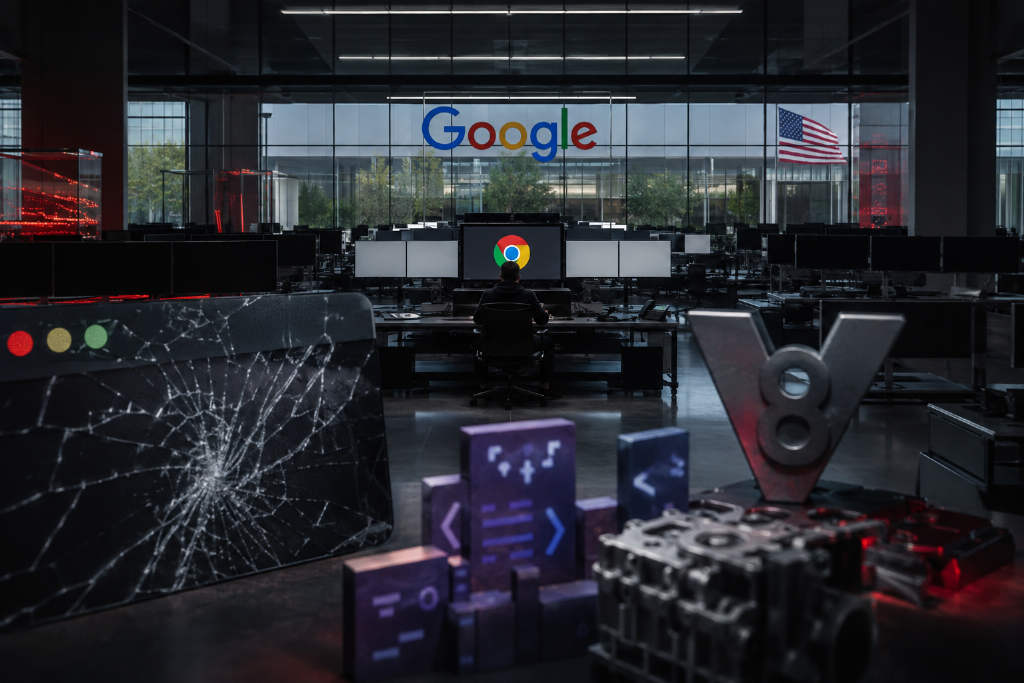
Google has released a fix for CVE-2026-85046, a high-severity Chrome zero-day that was being exploited in real-world attacks at the time the patch shipped. The flaw affects Chrome’s V8 JavaScript and WebAssembly engine and is described as a type confusion issue that can be triggered through crafted HTML or JavaScript content. According to Google’s security notice, the bug could lead to incorrect handling of memory object types, giving attackers arbitrary read and write capabilities and allowing attacker-controlled code to run inside the browser sandbox. The patch was included in the Stable Channel update released on Sept. 3. Version numbers are Chrome 152.0.7977.82/.83 for Windows and macOS, and 152.0.7977.82 for Linux, with rollout continuing over the coming days to weeks. The bug was reported by researcher Salvatore Gulizia on Aug. 4 and earned a $1,000 bounty. On Sept. 4, the U.S. Cybersecurity and Infrastructure Security Agency added the flaw to its Known Exploited Vulnerabilities catalog and directed Federal Civilian Executive Branch agencies to patch by Sept. 18.

1230
Google patches exploited Chrome zero-day CVE-2026-85046 and urges users to update