SK Hynix
Nov 13, 2026

SK Hynix and Intel Explore Shared Memory Pools to Ease AI Server Memory Constraints

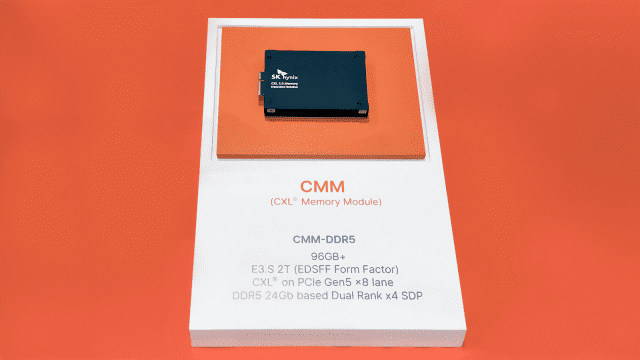
SK Hynix is teaming up with Intel and other partners to develop shared memory pools, allowing multiple AI servers to draw from a unified pool and address memory capacity and bandwidth strains from agentic AI. At the Intel AI Summit on November 12, 2026 (Beijing time), SK Hynix introduced the idea: high-capacity memory housed in dedicated racks, accessed via high-speed CXL and RDMA interconnects. Internal tests showed average first-token latency dropping from 80.76 seconds to 15.45 seconds—a roughly 81% reduction—using remote CXL DRAM. The architecture will undergo further validation with Intel and others.

10
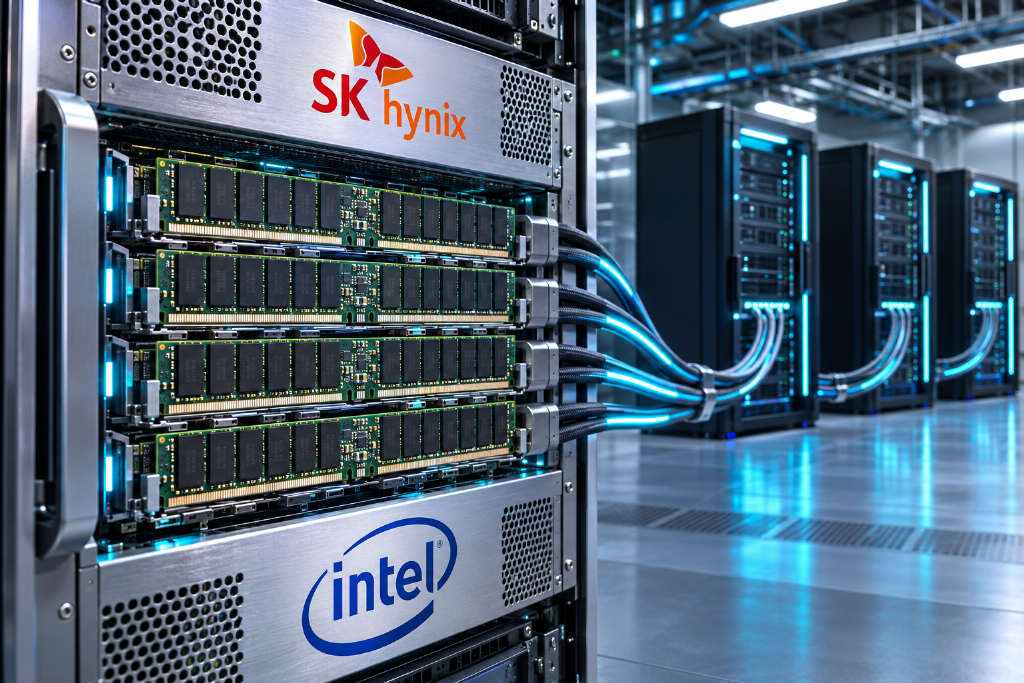
SK Hynix and Intel Explore Shared Memory Pools to Ease AI Server Memory Constraints
Samsung Electronics
Oct 14, 2026

Samsung and AMD unveil CXL memory expansion system at OCP 2026

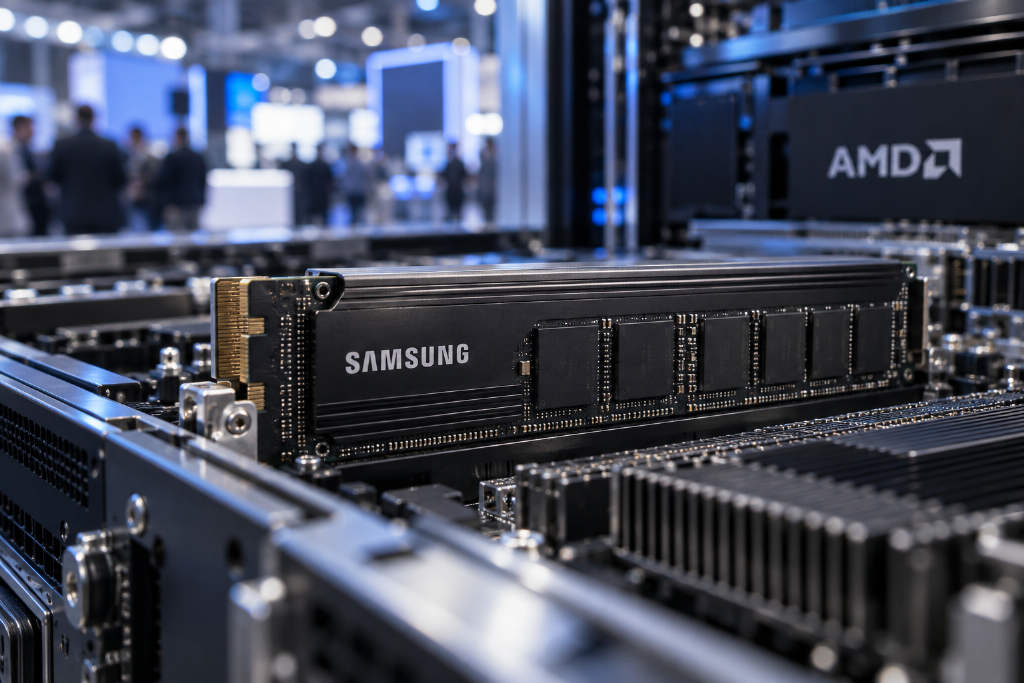
Samsung Electronics and Advanced Micro Devices used OCP Global Summit 2026 to show a CXL-based memory expansion design built around CMM-D memory pooling, a setup aimed at easing the capacity limits that appear as AI inference workloads grow. The companies presented the system as a way for multiple machines to share a common memory pool instead of relying only on memory installed on each server motherboard. Samsung tied the pitch to a broader AI memory strategy that also included HBM5, custom HBM, zHBM, processing-in-memory, and newer SSD technologies such as QLC NAND and Flexible Data Placement. The company also highlighted KV cache optimization, Direct Storage, and its Samsung MAX Lab program, which lets customers test technologies under real AI workloads before commercialization. Beyond memory, Samsung displayed Groq LPU wafers and an Nvidia Groq 3 LPX system, with reports saying the chips are being mass-produced on Samsung Foundry’s 4 nm process, and it also showed a wafer made with its 2 nm GAA process. Even so, the OCP presentation did not include performance figures, customer names, or a commercialization timeline.

1200
Samsung and AMD unveil CXL memory expansion system at OCP 2026
Morgan Stanley
Oct 8, 2026

Morgan Stanley says AI memory crunch could last, with Nvidia’s Rubin platform likely to ship lower-memory options

Morgan Stanley said in a new semiconductor report that the bottleneck in the AI buildout is shifting from GPU count to memory supply, and that Nvidia may respond by offering lower-memory versions of its Rubin platform rather than waiting for supply to catch up. The bank said Rubin’s HBM4 configuration could be reduced from 288GB to 192GB, while rack-level LPDDR5 capacity could drop from 54TB to 28TB in some variants. Morgan Stanley argued that this should not be read as a collapse in demand. In its view, memory needs are being redistributed across the stack, pushing more data toward NAND, DRAM and high-speed interconnects. The report also highlighted a broader architectural shift in AI inference. Morgan Stanley said prefill and decode workloads are increasingly likely to be split across different types of processors, a setup that could create room for companies including Cerebras, AMD, AWS, Nvidia and Groq-related technology. It also pointed to Compute Express Link, or CXL, as a growing opportunity, estimating that the market for CXL and related memory-connectivity semiconductors could reach about $6 billion by 2030. On the storage side, the bank maintained Overweight ratings on Micron and Sandisk, while warning that the biggest risks remain a slowdown in AI spending and delays in data center buildouts caused by land, power or infrastructure constraints.

1560
Morgan Stanley says AI memory crunch could last, with Nvidia’s Rubin platform likely to ship lower-memory options
Marvell Technology
Aug 4, 2026

Marvell unveils AI memory lineup spanning CXL expansion and photonic shared memory

Marvell Technology has introduced a new portfolio of memory solutions for AI infrastructure, targeting bottlenecks in memory capacity and bandwidth during Agentic AI inference. According to the company, the lineup spans server-class AI storage, rack-scale CXL memory expansion and pooling, and multi-cabinet shared memory built on optical interconnects. Marvell said growing model sizes, longer context windows, and rising KV Cache demand are making traditional tightly coupled compute-memory architectures less efficient for inference workloads. The company argues that memory disaggregation allows memory resources to scale more independently from compute, which can improve GPU utilization and reduce data movement latency. The launch includes the Bravera SC6 PCIe 6.0 SSD controller for AI inference storage, the Structera X memory expansion platform based on CXL, and the Photonic Fabric optical memory solution. Marvell said the Bravera SC6 is designed to help cloud providers move more KV Cache to high-performance SSDs and is expected to begin sampling in the fourth quarter of 2026. The company also said Photonic Fabric can support up to 32TB of warm KV Cache offload and deliver as much as 2x to 3x higher token throughput within existing data center space and power limits.

2740
Marvell unveils AI memory lineup spanning CXL expansion and photonic shared memory
Samsung Electronics
Jul 21, 2026

Samsung, SK Hynix and Micron pull back from in-house CXL controller plans

The world’s three largest memory makers are backing away from commercializing their own Compute Express Link, or CXL, controllers, according to a report translated by TechFlow from ZDNet Korea. Samsung Electronics, SK Hynix and Micron have either scaled back or dropped plans to bring internally developed CXL expansion device controllers to market, with design work increasingly shifting to fabless chip companies including Montage, Astera Labs and Primemas. The reported reason is not a loss of confidence in CXL itself. Instead, memory manufacturers are weighing the business risk of selling high-priced integrated CXL modules that could erode demand for the commodity DRAM DIMMs that still generate core revenue. Major data center customers are said to prefer lower-cost disaggregated architectures, where a CXL controller is installed separately on the system board and paired with standard DIMMs. Micron has already shut down its standalone controller development line and adopted a Primemas solution. SK Hynix has told key partners it is ending in-house CXL controller development and is reallocating staff to processing-in-memory, or PIM. Samsung is taking a more limited approach, keeping its internal controller for research use while buying fabless-designed controllers for external products. The report says Samsung also removed formal commercialization of its internal controller from its roadmap.

1200
Samsung, SK Hynix and Micron pull back from in-house CXL controller plans
Japan AI
Jul 16, 2026

Penguin Solutions eyes Japan launch for CXL AI memory server as alternatives to Nvidia reshape HBM demand

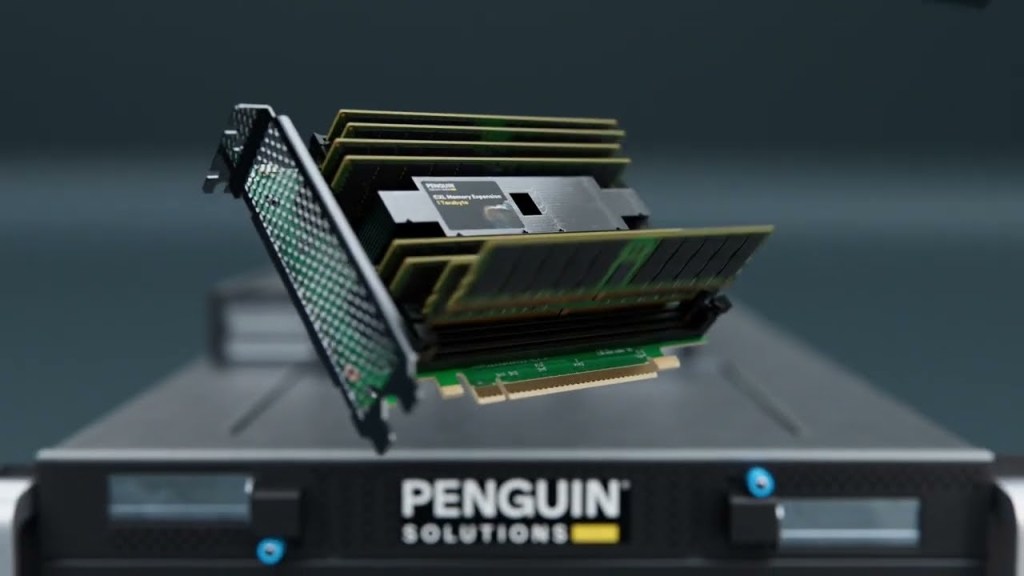
Japan’s AI industry is moving to reduce its reliance on Nvidia GPU servers, according to a Nikkei Asia report, and one of the clearest examples is Penguin Solutions’ plan to introduce its MemoryAI KV cache server in Japan in the fourth quarter of 2026. The product is designed to expand memory capacity for large language model inference by offloading KV cache from GPU-based high-bandwidth memory to external DDR5 memory through CXL, or Compute Express Link. Nikkei Asia said the system can be configured with up to 11 TB and may cut per-GB memory expansion costs to between one-third and one-seventh of a GPU expansion approach, while running 10 times faster than NVMe-based alternatives. The report also pointed to a second track in the same “de-Nvidia” shift: lower-power inference systems built around NPUs. Toyotsu Device has signed an MOU with South Korean AI startup Rebellions and is now conducting a proof of concept in Japan with local AI company Tomorrow Net using servers equipped with Rebellions NPUs. Nikkei Asia argued that these changes could affect demand for high-bandwidth memory, a market where Counterpoint data puts SK hynix at 58%, Samsung at 21%, and Micron at 21% by revenue. As AI workloads move from training toward inference, the report said, memory-optimized and lower-power architectures may emerge as a longer-term challenge to GPU-centered infrastructure.

2450
Penguin Solutions eyes Japan launch for CXL AI memory server as alternatives to Nvidia reshape HBM demand