Google
Oct 29, 2026

Chrome adds Gmail-powered autofill for order, tracking, and flight details

Google said Wednesday that Chrome is rolling out a new "enhanced autofill" feature that can pull certain personal details from a user’s Gmail inbox to help complete web forms. According to the company, the feature can suggest order numbers, package tracking information, and flight booking details when a site asks for them. It is powered by Gemini through Google’s Personal Intelligence system and is being introduced to Gemini in Chrome users in the U.S. across desktop, Android, and iOS, provided Personal Intelligence is turned on. Google’s announcement limits Gmail-sourced data to those three categories and does not say the browser will extract credit card numbers or addresses from inboxes. Those remain part of Chrome’s standard autofill, which relies on information users have already saved in the browser. The company also said users can manage whether enhanced autofill is enabled and what it can access through Chrome settings, adding that sensitive data is encrypted. The update arrives as Google faces continued scrutiny over how Gemini interacts with Gmail, Photos, and other connected services. The company has previously said Gemini and AI Mode do not train directly on Gmail inboxes or Google Photos libraries, though it does use limited information such as prompts and model responses. Google’s post does not explain exactly how Chrome scans Gmail content for the new feature or when the rollout will expand beyond the U.S.


1230
Chrome adds Gmail-powered autofill for order, tracking, and flight details
Google
Oct 29, 2026

Google adds enhanced autofill to Chrome with Gmail-based suggestions

Google said Wednesday that Chrome is rolling out an "enhanced autofill" feature that uses Gemini with Personal Intelligence to pull limited information from a user’s Gmail account and suggest entries when web forms need them. In its announcement, Google said the feature can retrieve order numbers, package tracking details, and flight reservation information from Gmail. It is available to U.S. users who have already enabled Personal Intelligence, across desktop, Android, and iOS, while launch timing for other markets has not been disclosed. Google’s notice limited the new capability to those three Gmail-based data types. Credit card numbers and addresses remain part of Chrome’s standard autofill system and come from information users have already saved in the browser; the company did not say the new feature would extract those details from inboxes. Chrome product manager Amanda Lim said users can manage whether enhanced autofill is enabled and what data it can access in Chrome settings, adding that sensitive data is encrypted and users remain in control. On privacy, Google has previously said Gemini and AI Mode do not directly use Gmail inboxes or Google Photos libraries for training. Users can choose whether to connect apps and can turn that off at any time, though Google does use limited information such as certain prompts and model responses for training. Google also revised its privacy policy on Oct. 16 to add an exception covering cases where users choose to make Gmail, Drive, and Photos content available to other Google services that support personalized ads.

1210
Google adds enhanced autofill to Chrome with Gmail-based suggestions
GoDaddy
Oct 23, 2026

GoDaddy revokes more than 400,000 certificates after CP/CPS mismatch and missed deadline

GoDaddy disclosed in a report filed with Mozilla’s Bugzilla incident tracker that 404,607 TLS/SSL website certificates issued under its GoDaddy and Starfield brands did not match the policy information described in its own Certificate Policy and Certification Practice Statement, or CP/CPS. Under CA/Browser Forum rules, certificates issued outside a CA’s documented CP or CPS should be revoked within 24 hours and must be revoked within five days. GoDaddy said it had revoked only 170,566 certificates before the deadline, roughly 42% of the total. In an update posted early on Oct. 23 Taiwan time, the company said all affected certificates had been handled. The final count was revised to 403,643, down by 964 from the original figure, without an explanation for the change. Of those, 378,067 were revoked and 25,576 had already expired before revocation, leaving zero still valid. Mozilla also noted that browser behavior may differ after revocation: Firefox desktop, starting with version 137, uses CRLite to check revoked certificates more broadly, while Chrome generally relies on CRLSets, which Mozilla estimated covers only about 1% of revoked certificates.

1230
GoDaddy revokes more than 400,000 certificates after CP/CPS mismatch and missed deadline
eMudhra
Oct 23, 2026

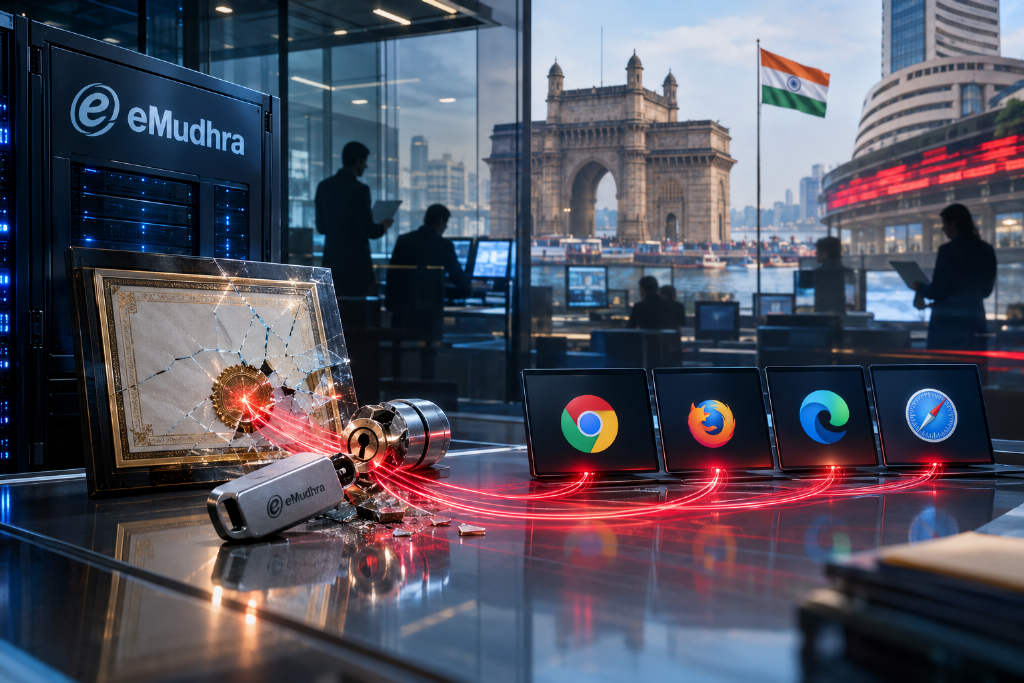
eMudhra exits global SSL/TLS certificate business after weak private keys trigger browser bans

Indian certificate authority eMudhra said on Oct. 22 that it would voluntarily exit the global SSL/TLS certificate business after a severe key management failure led major browser vendors to block its certificates. At the center of the incident were eight subordinate certificates generated on April 30, 2025, whose P-384 private keys were found to be catastrophically weak. Mozilla engineer Dennis Jackson wrote in a Bugzilla report that the affected keys were all integers below 256, making them trivial to recover by brute force. He also said a local AI agent derived one of the keys on the first try with a simple prompt. Six of the affected certificates were TLS intermediates trusted by Chrome, Mozilla, Microsoft, and Apple. Mozilla warned that anyone holding the private keys could issue forged HTTPS certificates for websites they did not own. After researchers disclosed the issue on Oct. 17, Firefox pushed a blocklist in under three hours, while Chrome, Microsoft, and Apple followed on their own timelines. eMudhra later blamed a temporary testing step and similar key labels, while also saying social media amplified scrutiny beyond the business’s roughly 1% revenue contribution. India’s technology ministry has opened an investigation, and the company’s shares fell sharply over two trading days.

1350
eMudhra exits global SSL/TLS certificate business after weak private keys trigger browser bans
Polkadot
Oct 21, 2026

Polkadot Tells Fearless Wallet Users to Move Funds After Private-Key Leak

Polkadot has warned users of Fearless Wallet to move their funds after a private-key leak, with the foundation urging affected holders to generate fresh keys. The report said Chrome was still listing an affected extension version that had around 6,000 users. The warning centers on wallet security and the risk tied to continued use of the compromised version. TheDefiant reported the development on Oct. 21, 2026.

920
Polkadot Tells Fearless Wallet Users to Move Funds After Private-Key Leak
Starknet Foundation
Oct 20, 2026

Starknet Foundation launches Bramble wallet with STRK20 shielding

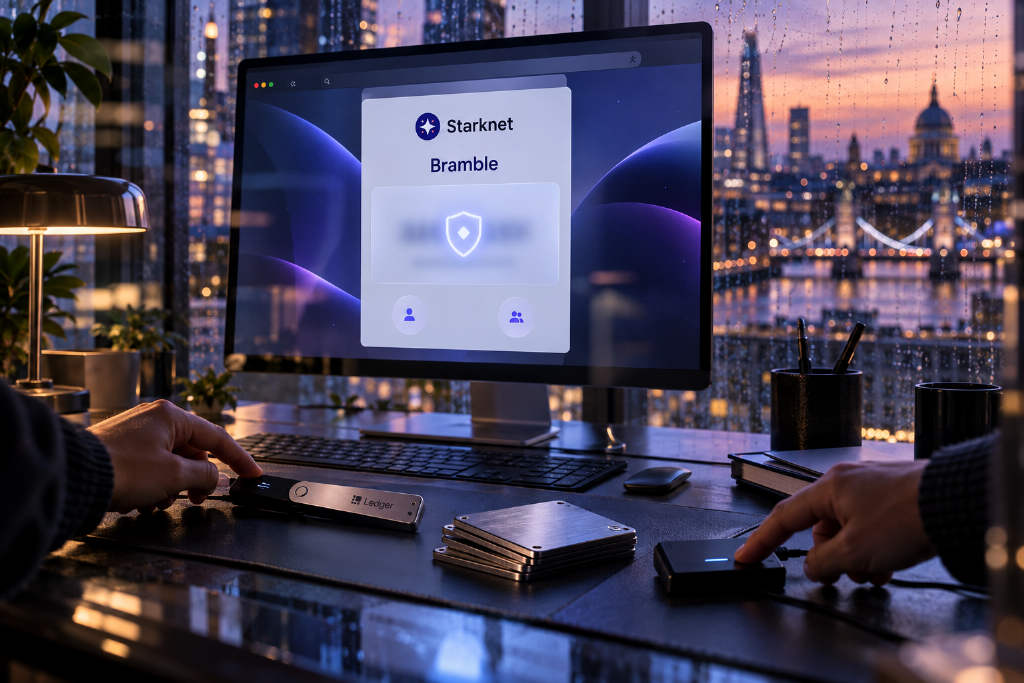
Starknet Foundation has launched Bramble, a Chrome-only wallet that combines several account and security features in one product. According to information shown on TheDefiant’s page, the wallet includes private balances, Ledger signing, and multisig accounts. It also comes with a recovery phrase for backup. The brief item does not provide additional technical details on how the STRK20 shielding works, but it identifies privacy as a core part of the wallet’s design. The same page also notes that the publication’s articles are stored on Filecoin. No broader rollout details, supported platforms beyond Chrome, or launch metrics were disclosed in the source snippet.

1090
Starknet Foundation launches Bramble wallet with STRK20 shielding
Starknet
Oct 20, 2026

Starknet Foundation launches Bramble wallet with STRK20 shielding support

The Starknet Foundation has introduced Bramble, a new wallet that includes STRK20 shielding support and lets users hold private balances. The wallet is currently available only on the Chrome browser. Bramble combines private balances, Ledger hardware signing, and multisignature account features in a single product. It also provides a recovery seed phrase for backup. The announcement was reported by ChainCatcher in a 7x24 news update.

1440
Starknet Foundation launches Bramble wallet with STRK20 shielding support
Miden
Sep 16, 2026

Miden launches Bread self-custody privacy wallet on testnet

Miden has released Bread, a privacy-focused self-custody wallet that supports iOS, Android and Chrome. The wallet is currently running on the Miden testnet, according to ChainCatcher. Users can obtain access to the mainnet through an early access list. At the same time, Miden Wallet is no longer in service. The update points to a shift in Miden’s wallet offering, with Bread now serving as the newly introduced product while the previous Miden Wallet has been discontinued.

2300
Miden launches Bread self-custody privacy wallet on testnet
Total 22 items
Go topage