OpenAI
Nov 4, 2026

ChatGPT is reportedly getting built-in GIF creation with OpenAI’s unannounced Images 2.6 model

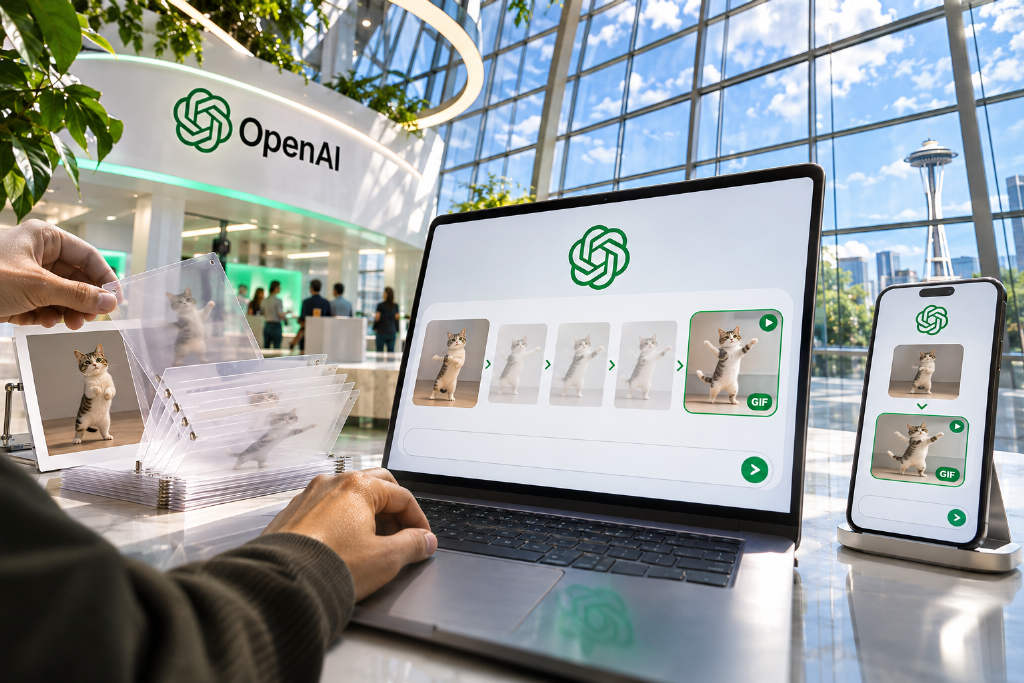
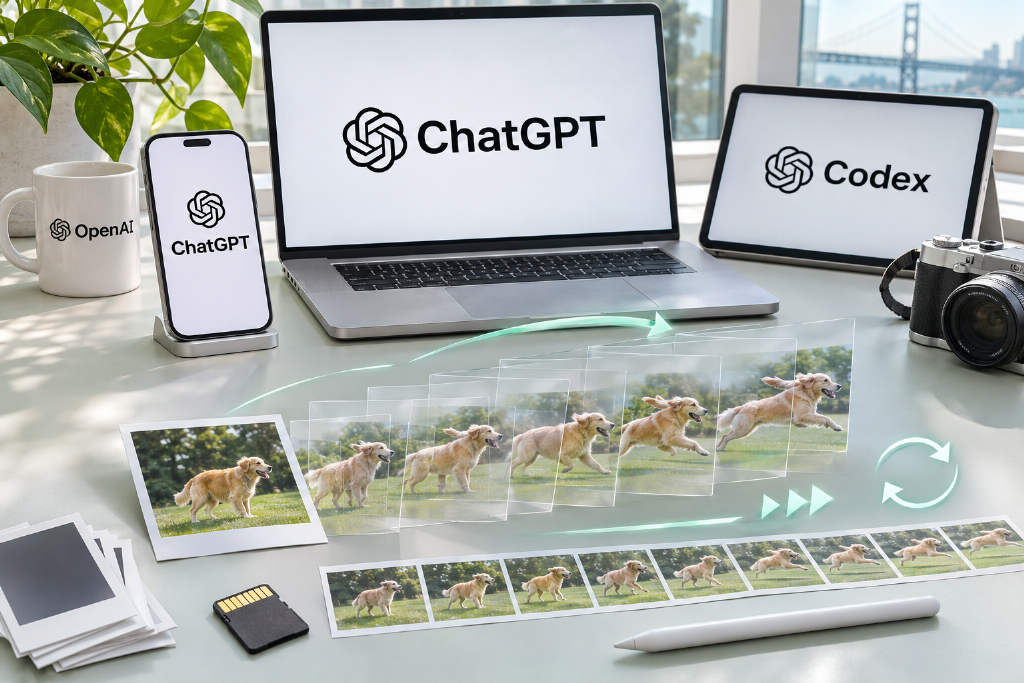
OpenAI is reportedly rolling out a feature that lets users create animated GIFs directly inside ChatGPT, according to The Verge, with the tool powered by a new image model called Images 2.6 that has not yet received a formal standalone product announcement. Users can describe an animation in plain English or upload an existing photo and ask ChatGPT to animate it, then adjust playback speed, inspect frames one by one, edit the result, and share the finished GIF. Decrypt said it tried the feature but did not find it available on its own accounts at the time of testing, seeing only a sequence of frames rather than a completed animation. The rollout appears to be gradual, and OpenAI has not given a date for when all ChatGPT accounts will receive access. The broader Images 2.6 update is also said to bring faster image generation to ChatGPT and Codex across web, desktop, and mobile, while developers are set to receive two API models, GPT-Image-2.6 Flare and GPT-Image-2.6 Sunburst, aimed at speed and image quality.
670
ChatGPT is reportedly getting built-in GIF creation with OpenAI’s unannounced Images 2.6 model
OpenAI
Nov 4, 2026

OpenAI starts rolling out GIF generation inside ChatGPT

OpenAI is gradually rolling out GIF generation in ChatGPT, letting users create animated images from natural-language prompts or turn existing photos into GIFs. Once a GIF is generated, users can adjust playback speed, inspect frames one by one, edit the result, and share it. According to The Verge, the feature runs on OpenAI’s new image model, Images 2.6, which has not yet been formally introduced through a standalone product announcement. The report said GIF creation is part of the Images 2.6 update, which is also expected to deliver faster image generation. The Verge also reported that OpenAI is bringing the model to ChatGPT and Codex users across web, desktop, and mobile. For developers, the company is preparing two new API models, GPT-Image-2.6 Flare and GPT-Image-2.6 Sunburst, aimed at faster generation and higher-quality output, respectively. OpenAI has not published a separate breakdown of the model’s capabilities, and the GIF feature remains in phased release, with no timeline yet for when all ChatGPT accounts will receive access.

580
OpenAI starts rolling out GIF generation inside ChatGPT
OpenAI
Nov 4, 2026

OpenAI to acquire developer tools startup Pierre Computer, Axios reports

OpenAI is set to acquire Pierre Computer, a startup focused on developer tools, according to Axios. The report says Pierre Computer’s technology has already been integrated into Codex, OpenAI’s code-generation model. The deal points to OpenAI’s push deeper into software development tooling as AI agents take on a larger share of programming work. Axios also frames the move as part of OpenAI’s entry into competition with GitHub, the Microsoft-owned platform that has long held a central position in developer workflows. No financial terms or timeline for the acquisition were disclosed in the source material provided.

580
OpenAI to acquire developer tools startup Pierre Computer, Axios reports
Postman
Nov 4, 2026

Postman accused of auto-installing AI plugins and approving Codex hooks during desktop app upgrades

Postman is facing scrutiny after GitHub users reported that its desktop app automatically installed plugins for OpenAI Codex and Anthropic Claude Code during upgrades, while also adding Postman CLI. A GitHub issue filed by user indicava on Oct. 25 said Postman Desktop 12.33.4 on Mac installed the integrations without explicit approval and altered Codex settings by adding a SessionStart hook tied to Postman’s api-engineer skill. Source code cited in the report showed an approvePostmanHook function that writes a hook hash into Codex’s trusted_hash field, effectively handling a review step that Codex would normally present to the user. The issue author said the report did not establish that data had been exfiltrated. Another user, ronthedrummer, also said they had no evidence that data was uploaded. The controversy spread to Hacker News, where a post about the issue reached the top spot on Nov. 3. Postman later responded through a GitHub account named zecoquit, saying the bundled installation was meant to help users who had trouble setting up the tools manually, and that the company would review its hook approval and session-start behavior. As of Nov. 4, Postman’s plugin repository still contained the hook approval logic, and release notes for desktop version 12.35.2 did not mention changes to plugin installation behavior.

570
Postman accused of auto-installing AI plugins and approving Codex hooks during desktop app upgrades
ByteDance
Nov 4, 2026

ByteDance restricts employee use of external AI tools for internal data access

ByteDance has introduced a new internal policy governing AI tool usage, placing broad limits on employees who use personal accounts on external services such as Claude and Codex to access company materials. Starting this month, the company will block external AI access to all L4-level code repositories and Feishu documents across the organization. Under the new rules, AI accounts purchased by employees themselves will no longer be able to reach those internal resources. The notice was circulated internally last week and prompted discussion among some staff. Those discussions focused on permissions for external AI tools, internal information security, and the relationship between ByteDance’s in-house AI products and third-party services. ByteDance representative Hong Dingkun said internal information security was a key factor behind the change, adding that once L3 and above content is leaked, the consequences are very serious.

680
ByteDance restricts employee use of external AI tools for internal data access
OpenAI
Nov 4, 2026

OpenAI briefly exposed two unreleased model IDs in its API as GPT-6.2 Astra speculation intensified

OpenAI briefly listed two previously unseen model IDs, rc-ada-or-vm and rc-ada-sh-vm, in its official API model catalog before removing them within minutes. Developers who tried to call the models reportedly ran into 503 capacity-limit errors. The appearance came as discussion around GPT-6.2 Astra accelerated, following a cryptic remark from Codex lead Tibo, fresh online tests attributed to GPT-6.2 Astra, and references in leaked Codex logs to gpt-6.2-astra and gpt-6.2-betelgeuse. At nearly the same time, OpenAI published a blog post titled "Accelerating engineering R&D in the physical world," which included a BenchCAD 2.0 chart comparing GPT-6 Astra with an unnamed "internal model." According to the chart data cited in the report, GPT-6 Astra peaked at 59.4%, while the internal model started at 75.8% and reached 87.5% at higher reasoning settings. The benchmark covers 100 real engineering tasks involving code generation, physical engineering knowledge, 3D part and assembly reconstruction, and PCB connectivity analysis. The report argues that the API leak, the dual-VM naming pattern, the Codex log references, and the benchmark results together point to OpenAI preparing a next-generation release. It cites posts from developer Pankaj Kumar on X and says the original article was published by the WeChat account Xinzhiyuan, written by ASI Qishilu and edited by Moses and Taozi.

1000
OpenAI briefly exposed two unreleased model IDs in its API as GPT-6.2 Astra speculation intensified
OpenAI
Nov 3, 2026

OpenAI unveils Pando Git backend now running its main code repository

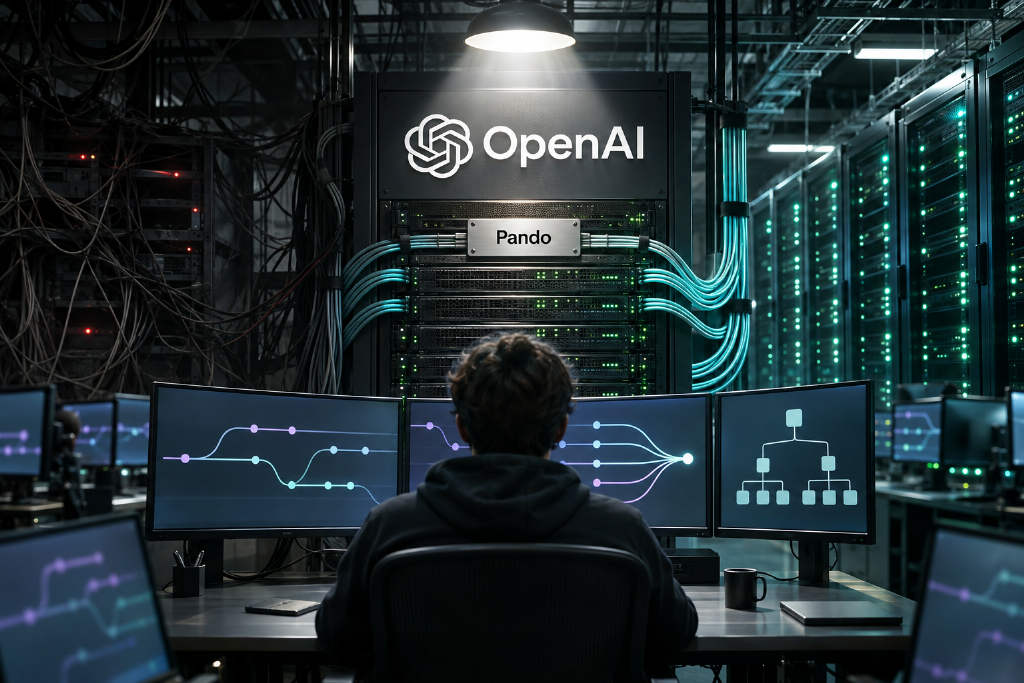
OpenAI has introduced Pando, an in-house Git backend that has already taken over the company’s main code repository, according to ChainCatcher. The move comes after a year in which Codex enabled engineers to dispatch large numbers of coding agents at the same time, driving up the volume of branches, pushes, merges, and pull requests. Under that load, OpenAI’s previous system reportedly suffered frequent slowdowns and merge failures, with reliability at one point falling below 90%. The report said one engineer led the core architecture design while several Codex agent teams helped build the system, and Pando was put into production in 10 weeks. OpenAI said the new backend allows code pushes from different branches to be processed in parallel instead of waiting in line. For code pulls, it reuses existing Git packfiles and distributes them through cache rather than generating a separate package for each client. After the change, median push latency fell by nearly 80%. The system now distributes nearly 1 PB of data per day and posts a cache hit rate above 99%, though different branches no longer guarantee the exact same point-in-time view. Unlike Anthropic’s Scion, which drops Git, OpenAI kept the Git client and protocol and rebuilt only the backend, leaving existing workflows for engineers and agents largely unchanged.

810
OpenAI unveils Pando Git backend now running its main code repository
PixVerse
Nov 3, 2026

PixVerse and OpenAI launch deeper integration and creator education program

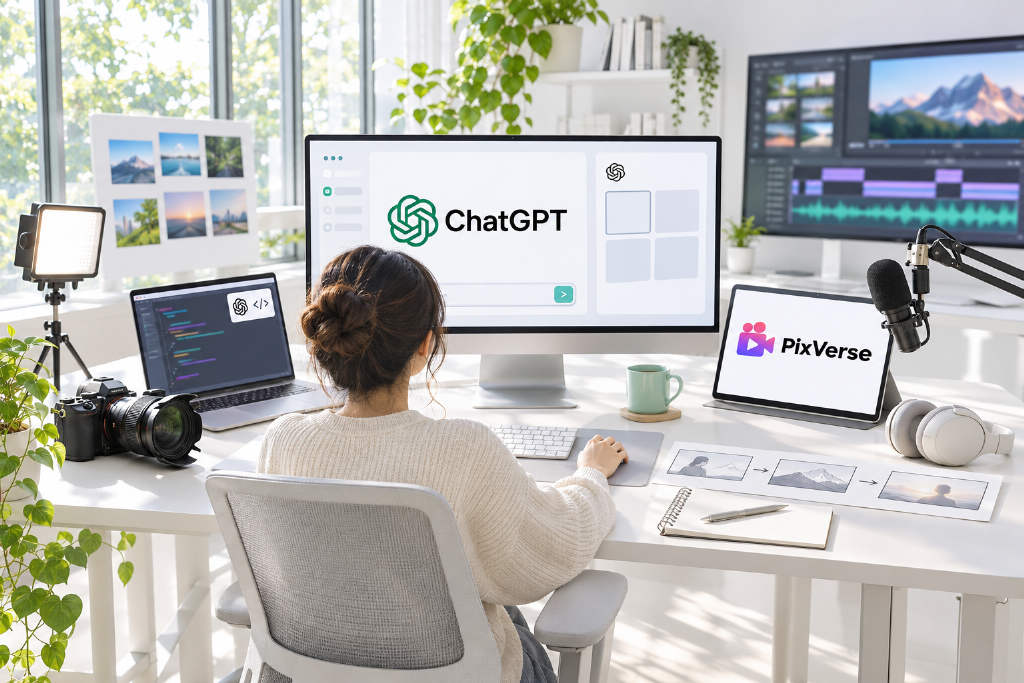
PixVerse, the AI video model platform under Aishi Technology, has announced a deeper partnership with OpenAI, combining product integrations with a new creator education initiative called From Prompt to Production. The program will use online workshops and a video series to help overseas creators turn ideas into finished content more efficiently. As part of the rollout, the official PixVerse plugin now connects natively with ChatGPT and Codex, allowing users to handle end-to-end production across video, image, and audio workflows in one place. PixVerse also said its CLI turns Codex into an AI content studio by supporting centralized access to generation capabilities and standardized workflow building. In addition, the plugin now supports Canvas, where users can manage creative assets and move directly into production. At the first workshop, OpenAI applied AI engineer Tyler Ryu demonstrated how OpenAI frontier models, agent capabilities, and PixVerse multimodal tools can be used together. A PixVerse U.S. marketing executive said video generation is becoming a capability that agents can call, and that the company wants to serve as creative infrastructure for both people and AI agents.

810
PixVerse and OpenAI launch deeper integration and creator education program
Total 179 items
Go topage