Reason
Oct 18, 2026

Reason launches network for cross-device AI coding agents, but code-conflict prevention is still incomplete

Y Combinator-backed AI coding startup Reason has introduced Reason Network, a system designed to let coding agents from different vendors communicate directly across separate computers and assign work to one another. The company said the network supports tools including Claude Code, Codex, Cursor, and OpenCode. In the example described, a user could have Grok Bot assign a task to Claude Code on their own machine and then ask Codex on a colleague’s computer to review the code, without a human relaying messages between agents. At the center of the product is a live agent directory that shows which agents are online, which repository they are editing, what branch they are using, and what they are currently working on. Messages can be delivered into an agent’s existing session rather than requiring a new chat. Each computer runs a lightweight background service. Devices on the same local network can communicate directly, while cross-network connections try peer-to-peer first and fall back to encrypted relay if needed. Reason has also promoted the product as a way to reduce code conflicts, but that part is not fully built yet. A GitHub design document shows that automatic detection of multiple agents editing the same file at the same time has not been developed. For now, coordination depends on shared work status rather than automatic prevention of overwrites.


980
Reason launches network for cross-device AI coding agents, but code-conflict prevention is still incomplete
Grok Bot
Oct 18, 2026

Grok Bot users are wiring in Claude and ChatGPT subscriptions, and Elon Musk has reposted the how-to

xAI’s Grok Bot is being used by some users as a front end for rival AI models. In an Oct. 14 post on X, AI Operator Academy’s Corey Ganim shared a prompt that tells Grok Bot to install Anthropic’s Claude Code and OpenAI’s Codex command-line tools on its cloud computer, log in with the user’s own Claude and ChatGPT subscriptions, and then route writing tasks to Claude and coding work to OpenAI models. Elon Musk later reposted the thread. The workflow was first described by entrepreneur and former Mixergy host Andrew Warner after Musk said on Oct. 7 that SpaceX would choose the best backend model for each Grok Bot task, naming Claude Opus 5.5, MidJourney and Suno among the options. Ganim later turned Warner’s idea into a five-step prompt covering installation, device-based login, model testing, task routing rules and shared memory. The setup has also raised questions about terms-of-service compliance. Anthropic’s public Claude Code compliance documents say users may sign in to an unmodified Claude Code client with their own subscription, including in hosted environments, but third-party developers may not offer Claude account login inside their own apps or collect and store Claude credentials. OpenAI’s Codex documentation separately says users can sign in with either a ChatGPT subscription or an API key, with device-code login recommended for remote environments.

3040
Grok Bot users are wiring in Claude and ChatGPT subscriptions, and Elon Musk has reposted the how-to
OpenAI
Oct 17, 2026

How OpenAI’s Codex rebounded in under a year and became the new ChatGPT desktop app

Dan Shipper, co-founder and CEO of tech media company Every, has published a long-form report titled How Codex Happened, tracing how OpenAI’s coding agent Codex moved from a stalled cloud product to the foundation of the new ChatGPT desktop app. Based on months of reporting and interviews with six key contributors — Greg Brockman, Thibault Sottiaux, Alexander Embiricos, Mia Glaese, Andrew Ambrosino and Ed Bayes — the piece lays out a sequence of product pivots that unfolded across roughly a year. According to the report, Codex cycled through four product forms: cloud, terminal, editor sidebar and finally a native desktop application with no built-in code editor at all. OpenAI first pushed a cloud-based Codex that launched on May 16, 2025, but the product struggled outside the company because users had to recreate their local setup in remote environments and could not easily steer tasks mid-run. The team later shifted to local execution, rewrote the agent core in Rust, improved the GPT-5 Codex model line for real-world codebases, and built a desktop experience centered on autonomous agents rather than manual editing. The numbers cited in the story are striking. Every reported that Codex surpassed 5 million weekly active users in June 2026. On July 9, the Codex desktop app became the new ChatGPT desktop app. Codex and ChatGPT for Work now exceed 40 million weekly active users combined, and Thibault Sottiaux has since taken charge of OpenAI’s core products and platform, overseeing ChatGPT, Codex and the API.

2280
How OpenAI’s Codex rebounded in under a year and became the new ChatGPT desktop app
OpenAI
Oct 17, 2026

OpenAI updates GPT-6 Astra Pro with parallel agents and lower usage costs for Codex

OpenAI said on Day 12 of its 28-day product sprint that it has updated ChatGPT’s GPT-6 Astra Pro to support multiple agents working on different parts of the same task at the same time. Users can track the progress of each agent separately and open completed tasks to review the results. The company also said the new version responds faster and handles plugins and tools more smoothly, and that the update is now available to Pro users. OpenAI also said it has reduced usage overhead for Codex and ChatGPT Work. The changes include letting sub-agents reuse context, keeping caches for longer, improving request routing, and raising cache hit rates. According to the company, that cuts repeated processing of the same content and allows users to complete more work under the same subscription quota. In a separate product update, OpenAI said ChatGPT’s dot can now be added to the iPhone home screen, letting users message or call dot quickly through a widget after updating the app.

960
OpenAI updates GPT-6 Astra Pro with parallel agents and lower usage costs for Codex
OpenAI
Oct 16, 2026

OpenAI rolls out GPT-Live-1.1 for ChatGPT voice with new Japanese and Korean options

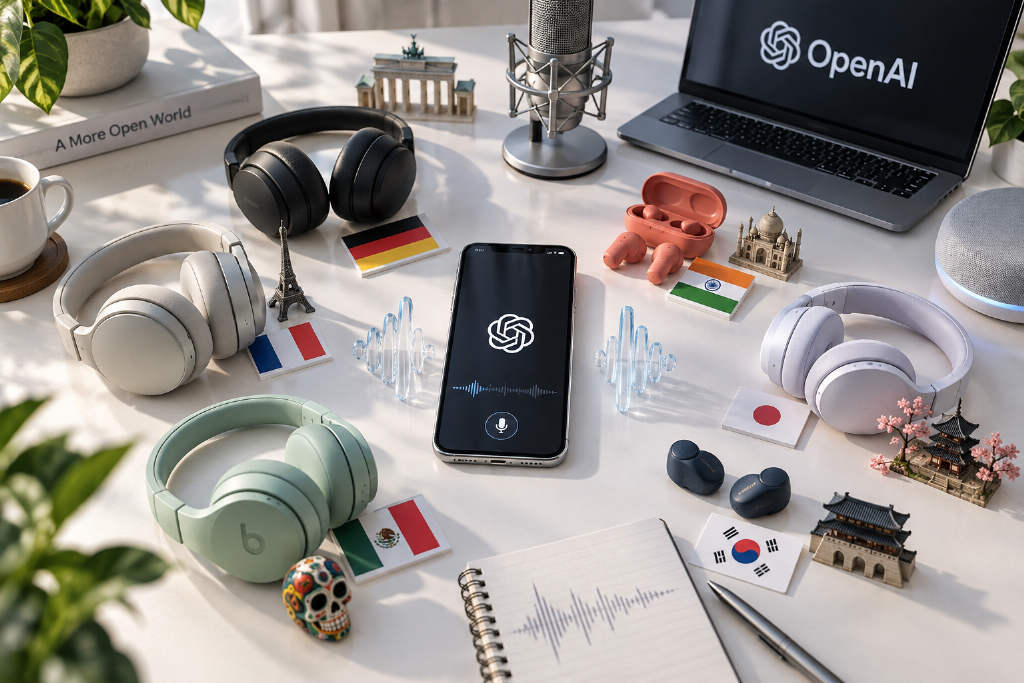
OpenAI said on Oct. 15 U.S. time that it has launched GPT-Live-1.1, a new voice model now being used across ChatGPT, Codex, and its persistent agent dots. The update focuses on more natural accents and adds new voices in French, German, Hindi, Mexican Spanish, Japanese, and Korean, along with one new English voice. OpenAI also said the model is being released to all users starting immediately, while the API version is still listed as coming soon. According to ChatGPT’s release notes and voice documentation, usage depends on plan tier. Free and Go users are assigned the smaller GPT-Live-1.1 Quip model, while Plus and higher tiers get GPT-Live-1.1. The company also changed the way Live responds during search so it uses shorter, more varied phrases instead of repeatedly saying “checking.” The documentation lists rolling 24-hour limits for consumer and business plans, notes that Live does not currently support video or screen sharing, and says default personality settings for ChatGPT do not yet apply inside Live conversations. OpenAI had only opened GPT-Live-1 to the API in September, pricing the front-end voice layer at $0.05 per minute. For GPT-Live-1.1, API timing and pricing have not been disclosed.

830
OpenAI rolls out GPT-Live-1.1 for ChatGPT voice with new Japanese and Korean options
OpenAI
Oct 16, 2026

OpenAI says added capacity has sharply reduced Codex capacity errors

OpenAI product and platform lead Tibo Sottiaux said on Day 11 of the company’s 28-day product sprint that the update was focused on infrastructure rather than new features. According to Sottiaux, OpenAI added more compute capacity for Codex and adjusted backend systems to address the recurring "Selected model is at capacity" error. Users had previously reported that Codex would frequently show the capacity message and interrupt tasks even when subscription usage was still available. Sottiaux said the latest changes have sharply reduced those errors. He added that if the issue appears occasionally, tasks should now resume on their own instead of staying stuck.

730
OpenAI says added capacity has sharply reduced Codex capacity errors
OpenAI
Oct 15, 2026

OpenAI rolls out GPT-Live-1.1 with six new voice languages

OpenAI said in a post on X that it has released GPT-Live-1.1, an update for the Voice features used across ChatGPT, Codex, and dots. The new version adds support for French, German, Hindi, Mexican Spanish, Korean, and Japanese voices. OpenAI also said the release improves accents and cuts down on the 「checking...」 prompt that users may see during voice interactions. According to the company, GPT-Live-1.1 is rolling out to all users today, while API availability is coming soon. The update was presented as a product release notice and did not include further technical details, pricing, or a separate launch timeline for the API beyond that near-term indication.

600
OpenAI rolls out GPT-Live-1.1 with six new voice languages
OpenAI
Oct 15, 2026

OpenAI Codex lead Tibo issues third full usage reset on Day 10 of 28-day challenge

OpenAI Codex lead Thibault Sottiaux, known as Tibo, used Day 10 of his self-imposed 28-day shipping challenge to issue another full usage reset instead of a product improvement. The reset was announced on Oct. 15 Taipei time and marked the third such day after similar resets on Day 6 and Day 8. The challenge, unveiled on Oct. 5 Taipei time, commits Tibo to either shipping one clear improvement relevant to most Codex and ChatGPT Work users each day or granting a full reset of usage limits. Under that framework, resets refill usage caps for ChatGPT Work and Codex on both the five-hour and weekly windows. From Day 3 through Day 10, five days brought feature updates and three days ended in full resets. The changes disclosed over that span included the rollout of GPT-6 to all ChatGPT users, a banked reset for paid accounts, live task adjustments with GPT-6.1 Sol Ultrafast, next-prompt suggestions in the Codex desktop app, a jump in GPT-6.1 Sol default context from 272,000 to 500,000 tokens, and a projected 60% cut in disk data used by the ChatGPT and Codex desktop apps.

1260
OpenAI Codex lead Tibo issues third full usage reset on Day 10 of 28-day challenge
Total 179 items
Go topage