OKX
Nov 7, 2026

OKX Founder Urges Users to Avoid Direct Transfers From MEXC

OKX founder Star has urged users to temporarily avoid transferring funds directly from MEXC to OKX, according to ChainCatcher. The warning comes as OKX manages the impact of special measures taken by FinCEN under a cautious standard similar to financial sanctions. The exchange said funds originating from relevant platforms may be frozen for review, while related accounts could face additional investigations under its compliance and risk-control procedures. FinCEN has provided a 30-day transition period, but OKX said it chose to significantly strengthen its controls ahead of the deadline rather than wait until the transition period expires. The company said protecting users and preserving the safety and integrity of the financial system remain its highest priorities. The notice did not provide further details about the specific funds, accounts or investigations that could be affected.

560
OKX Founder Urges Users to Avoid Direct Transfers From MEXC
WIDTH
Nov 7, 2026

WIDTH’s DART Adds MEXC Label Screening for Fund-Flow Checks

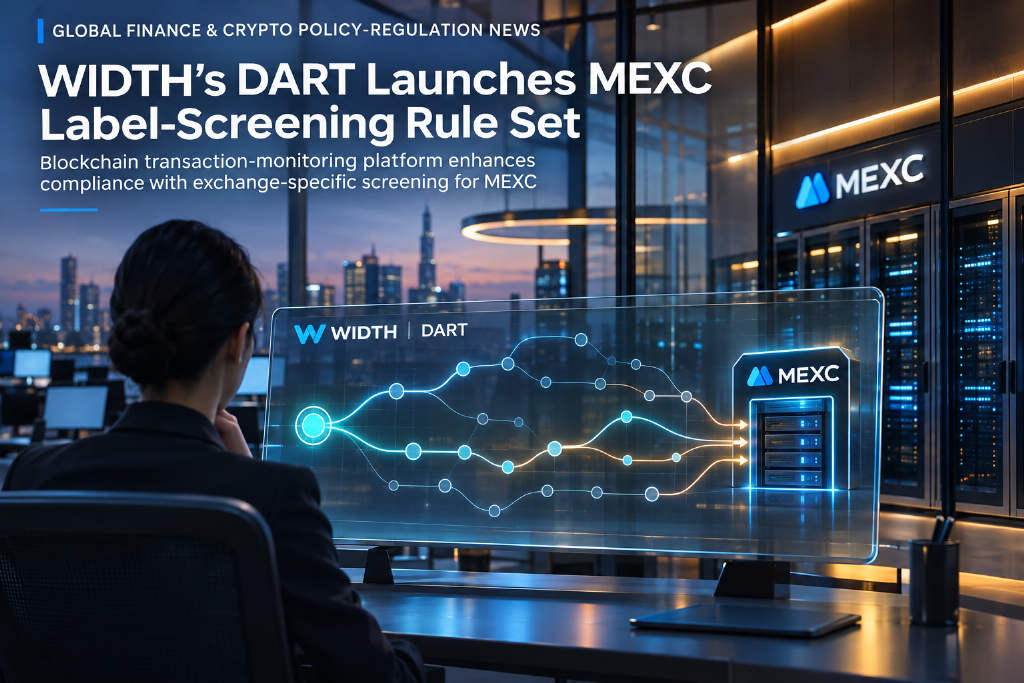
WIDTH’s DART, an on-chain transaction monitoring product, has added an in-platform rule set called MEXC Label Screening. The tool is designed for compliance teams assessing whether an address has a funding relationship with the MEXC exchange and how extensive that relationship may be. Its checks are divided into three layers: identity identification, direct fund flows and indirect connections. The first checks whether the screened address itself is an MEXC address. The second looks for funds sent directly from MEXC, such as a withdrawal from the exchange, or funds transferred directly to an MEXC hot wallet. The third traces indirect transfers within two to five hops and provides the full path, transaction amount and share of funds. WIDTH describes itself as an AI-driven, one-stop compliance and risk decision intelligence platform for financial institutions and digital-asset companies. Its capabilities cover customer onboarding, ongoing monitoring, risk investigations and decision handling. WIDTH says it serves more than 500 regulated institutions across over 180 jurisdictions. DART’s API access is available free of charge through December 31, 2028.

600
WIDTH’s DART Adds MEXC Label Screening for Fund-Flow Checks
Policy Regulation
Nov 5, 2026

Why a Crypto Payments License Still May Not Be Enough to Get a Bank Account

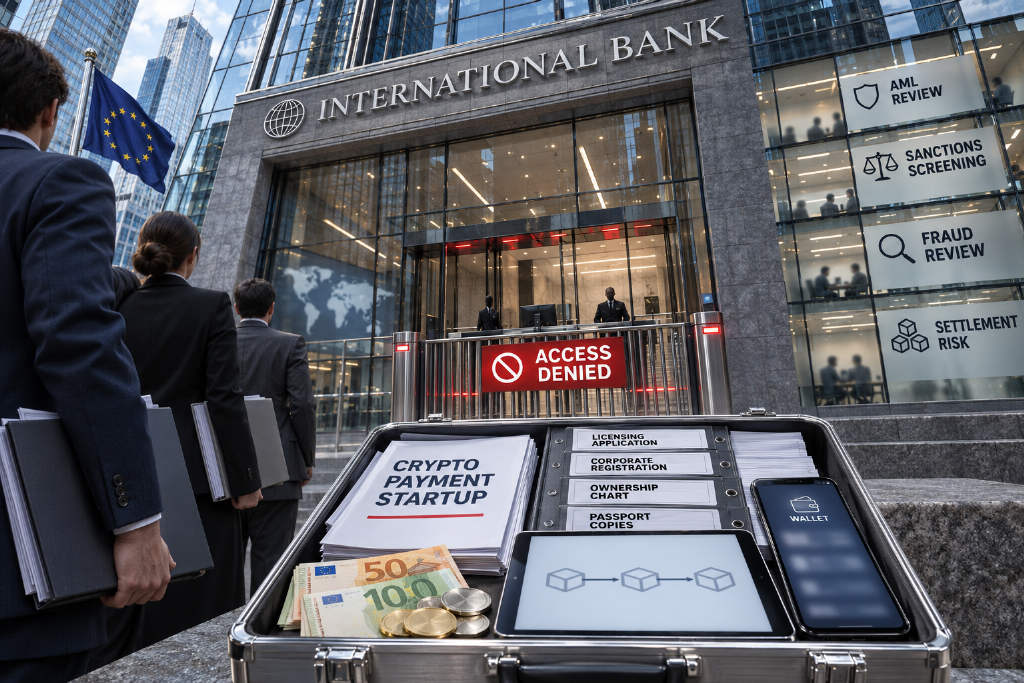
A PANews article argues that licensing and banking access solve two different problems for crypto payment firms. A license determines whether a company is allowed to provide a regulated service. A bank, by contrast, must decide whether it can take on the customer and the risks tied to that customer’s transactions inside its own account and payment systems. The piece says this gap becomes sharper in business models that combine on-chain assets, cross-border flows and multiple service providers. Even after a company secures a CASP, MSB, VASP or payment-related authorization, banks still run their own due diligence on anti-money laundering exposure, sanctions, fraud, operational controls, account purpose and the transparency of customer and fund flows. The article reviews positions from FinCEN, the U.S. Federal Deposit Insurance Corporation, the European Banking Authority, the Financial Action Task Force and the Hong Kong Monetary Authority. It also outlines the structures most likely to face friction at onboarding, including platforms with weak customer look-through, projects handling complex on-chain asset sources, mismatches between licensed entities and account use, and businesses whose actual products have expanded beyond what was originally licensed or disclosed. The core point is simple: regulatory approval may let a project operate, but banking access depends on whether a bank can clearly identify, control and keep monitoring the risks attached to every flow of money.

650
Why a Crypto Payments License Still May Not Be Enough to Get a Bank Account
Stablecoins
Nov 4, 2026

Stablecoin Yield War Heats Up as Exchanges Pay to Keep User Funds On-Platform

Binance’s latest stablecoin promotions have put unusually high headline yields in front of users, with flexible USDC deposits offering as much as roughly 11.5% annualized and top-tier VIP users eligible to apply that rate to as much as 300,000 USDC. The article argues that the point is not simply to hand out interest. Exchanges are competing for idle stablecoin balances that users are not ready to trade, because keeping those funds on-platform raises the odds that the next trade, margin position, or lending transaction also happens there. The piece breaks down how the economics work. Promotional rates are capped by user tier, deposit size, and campaign duration, which keeps the actual subsidy within a controllable marketing budget. It also compares different payout models across the market, including lending-driven products at OKX and platform-funded USDC rewards at Coinbase that tie back to Circle’s reserve-income and distribution-sharing model. It also draws a line between products that may look similar on the surface. Binance’s USDC and USDT flexible products, RWUSD, and BFUSD all carry different legal structures, redemption mechanics, and risk profiles. The article closes with a compliance warning, noting that mainland China does not permit this kind of virtual-currency financial business and that publicly pooling funds and promising returns could create legal exposure.

910
Stablecoin Yield War Heats Up as Exchanges Pay to Keep User Funds On-Platform
Apple
Nov 4, 2026

Apple insider trading policy bars covered personnel from betting on prediction markets

Apple has updated its insider trading policy to prohibit covered personnel from using confidential information obtained through work to bet, trade, or buy and sell event contracts on prediction markets or similar platforms. The restriction applies not only to Apple-related confidential information but also to material involving other companies, according to the filing cited by ChainCatcher. The policy also bars those subject to the rules from tipping off people who may participate in such markets by sharing relevant confidential information. Apple said the ban applies regardless of whether the conduct would qualify as insider trading or securities trading under applicable law. The document shows the policy covers directors, executives, employees, independent contractors, and consultants, and that the policy was updated in October 2026.

400
Apple insider trading policy bars covered personnel from betting on prediction markets
OKX
Nov 4, 2026

Star Xu says security and compliance should come before marketing after reported $6.3 billion incident

OKX founder Star Xu commented on a reported security incident involving $6.3 billion, saying many heavily packaged narratives and public performances eventually turn out to be little more than makeshift operations. In his post, Xu said the incident reportedly began when one employee fell into a fake recruitment interview trap, then spread to two other employees, with an internal AI tool also possibly becoming involved. He questioned whether that could still be described as so-called "defense in depth." Xu said he did not want to speculate too much about a rival’s failed security controls, but used the case to warn crypto users about the risks of a culture that is overly driven by marketing. He argued that while users may focus on promotional rewards, hackers and scammers are targeting their full principal. In his view, security, responsibility, and compliance should always rank ahead of marketing, because even the most attractive campaign incentives cannot make up for a loss of principal.

610
Star Xu says security and compliance should come before marketing after reported $6.3 billion incident
Nala
Nov 2, 2026

Nala names Ashraf Aly as global head of compliance and risk

Fintech company Nala has appointed Ashraf Aly as its global head of compliance and risk, according to a Techub News brief citing Finextra. In the role, Aly will oversee compliance and risk management for the Nala app as well as Rafiki, the company’s stablecoin payments infrastructure built for banks and businesses. The appointment covers both Nala’s consumer-facing application and its enterprise and banking payments stack. No additional details on the timing of the appointment or Aly’s background were disclosed in the source brief. The report identifies Rafiki as Nala’s stablecoin payment infrastructure serving banks and corporate clients, placing the compliance and risk remit across both product lines.

590
Nala names Ashraf Aly as global head of compliance and risk
FATF
Nov 2, 2026

FATF to launch targeted AML review of jurisdictions with significant crypto activity

The Financial Action Task Force (FATF) said it will begin a targeted anti-money laundering review focused on jurisdictions where virtual asset service provider activity is considered materially significant, according to Cointelegraph. The move is aimed at addressing gaps in how countries implement global AML standards in the crypto sector. FATF said the review will take into account each jurisdiction’s existing assessment status, while stressing that regular mutual evaluations and follow-up procedures will remain the main tools for judging compliance. The organization’s timetable shows preliminary conclusions are due in June 2027, with additional results scheduled for October 2027. After the review, FATF said it will introduce monitoring and faster reporting mechanisms to track how jurisdictions address identified deficiencies. It did not disclose which jurisdictions will be reviewed or how many will be included. The review follows issues highlighted in FATF’s July report this year. That report found that 83% of surveyed jurisdictions had passed travel rule legislation, but enforcement gaps remained wide. Among 91 jurisdictions with travel rule frameworks in place, 55 had not yet taken supervisory or enforcement action on compliance.

830
FATF to launch targeted AML review of jurisdictions with significant crypto activity
Total 548 items
Go topage