SEC
Oct 23, 2026

SEC tokenization exemption raises compliance questions as some companies oppose tokenized shares

The U.S. Securities and Exchange Commission’s innovation exemption, which allows institutions to operate trading venues for tokenized securities, is drawing fresh compliance scrutiny. The main question is which blockchains can meet the definition of being "public and permissionless." Projects such as Canton and Ethereum layer-2 networks have become part of that discussion. At the same time, reports indicate that a growing number of companies are pushing back against having their shares tokenized. Eleanor Terrett also referenced the issue in a post on X. The development puts the regulatory framing around tokenized securities and eligible blockchain infrastructure under closer watch.

790

SEC tokenization exemption raises compliance questions as some companies oppose tokenized shares
SEC
Oct 23, 2026

SEC adds tokenization and superintelligence to its FY2027 examination priorities

The U.S. Securities and Exchange Commission on Oct. 23 released its examination priorities for fiscal year 2027, outlining a broad set of areas it plans to review across regulated entities. The list includes investment adviser fiduciary duty, retail investor protection, private funds and private credit, anti-money laundering, cybersecurity, and the protection of customer information. The agency also singled out tokenization and the evolution of related market infrastructure as areas of focus. In the same document, the SEC said it will examine how advanced technologies, including superintelligence, could affect market operations, compliance management, fraud prevention, and investor protection. The regulator added that the priorities are not a complete list and said its examination division may adjust its focus in response to market changes, investor concerns, emerging technologies, and the development of new products and services. It also said regulated firms are expected to maintain compliance systems that match the risks of their businesses.

570
SEC adds tokenization and superintelligence to its FY2027 examination priorities
crypto payments
Oct 23, 2026

Crypto payments push deeper into the mainstream, with compliance emerging as the key competitive line

Crypto-linked card payments are growing quickly, but the sector’s compliance gaps are drawing sharper scrutiny. Data cited in the article shows monthly stablecoin card spending topped $1.2 billion in September 2026, roughly triple the level a year earlier, while the total stablecoin market cap has nearly doubled over the past two years to more than $300 billion. At the same time, a Crystal Intelligence report published in April said nearly 70% of crypto card providers had weak KYC requirements or none at all, and TRM Labs estimated illicit crypto flows exceeded $158 billion last year. The piece argues that weak KYC is not accidental. It stems from a mix of offshore licensing, intermediary issuing structures, and product designs built around minimal verification. It also links those gaps to sanctions evasion risks, workarounds for geographic restrictions on U.S. AI services, pressure on weaker-currency economies, and reputational exposure for card networks and banks. Against that backdrop, the article says regulators in the U.S., Europe, and Hong Kong, along with Visa and Mastercard, are tightening standards. For compliant providers, the shift changes the role of compliance from a cost center into a market access requirement, affecting banking relationships, issuance capacity, merchant quality, and long-term operating viability.

1140
Crypto payments push deeper into the mainstream, with compliance emerging as the key competitive line
Bank of Korea
Oct 23, 2026

Bank of Korea to require monthly reporting on cross-border crypto holdings

The Bank of Korea will require virtual asset transfer service providers to file monthly reports to the country’s foreign exchange information system starting Dec. 2, according to Digital Asset. The reporting duty covers month-end holdings of users who have transferred crypto assets across borders to overseas exchanges, personal wallets and similar destinations since July 19, 2024. Providers must submit reports even in months when no cross-border transaction takes place. Required data includes token amounts held, balances converted into Korean won, and total cross-border inflows and outflows for the month. Dormant accounts, delisted assets and staked assets are also included in the reporting scope. Filings must be submitted by 17:30 on the 10th day of the following month. It has not yet been determined whether firms will also need to retroactively submit records of cross-border transfer transactions made before the system takes effect.

550
Bank of Korea to require monthly reporting on cross-border crypto holdings
Polymarket
Oct 23, 2026

Polymarket fires CMO after internal probe into deceptive marketing and undisclosed paid promotions

Polymarket has fired Chief Marketing Officer Matthew Modabber after an internal investigation examined a series of marketing practices that, according to a New York Post report citing people familiar with the matter, included fake profit webpages, staged trading videos, and undisclosed influencer payments. The move comes as the decentralized prediction market platform tries to remove compliance risks ahead of a potential initial public offering. The report said Modabber, who had overseen growth since January 2024, was a close ally of founder and CEO Shayne Coplan. It also said Coplan initially resisted calls from legal and compliance staff to dismiss him, but pressure from the board and institutional investors grew as regulatory scrutiny intensified. Two earlier media reports were central to the review. The Wall Street Journal had reported on allegedly fabricated front-end trading pages and promotional videos suggesting ordinary users could easily profit on the platform. Politico later reported that Modabber used a personal PayPal account to pay social media influencers without disclosing the commercial relationship. The New York Post said the company is now working through a separation agreement with outside counsel, while Polymarket has declined to comment publicly.

460
Polymarket fires CMO after internal probe into deceptive marketing and undisclosed paid promotions
New York State Department of Financial Services
Oct 22, 2026

New York financial regulator issues alert over two critical PHP vulnerabilities

The New York State Department of Financial Services has issued an alert covering two critical PHP vulnerabilities, according to Odaily. The regulator said the notice was aimed at regulated entities and urged them to quickly identify and remediate the flaws. The warning specifically referred to vulnerabilities that are already known to be under active exploitation. The statement did not include additional technical details in the source brief, but it made clear that the regulator wants supervised institutions to move fast on detection and patching. The alert places the focus on immediate response by affected entities rather than longer-term guidance.

570
New York financial regulator issues alert over two critical PHP vulnerabilities
Mastercard
Oct 22, 2026

Mastercard draws lines between Crypto Credential, KYC, Travel Rule and blockchain screening

Mastercard has outlined how Crypto Credential differs from KYC/AML checks, Travel Rule requirements and blockchain screening, framing them as separate tools used for separate jobs in crypto payments. The comparison says identity verification, transfer-party information and onchain risk alerts should not be treated as interchangeable compliance steps. Instead, each addresses a different part of the payment flow. The key point in the article is that none of these controls automatically determines whether a transaction goes through. Mastercard says the provider handling the payment remains responsible for deciding whether a payment can proceed. That leaves the final judgment with the service provider even when identity checks have been completed, transfer information has been collected, or blockchain monitoring has generated alerts. The source page was only partially available in the provided input, so the report is limited to the facts explicitly shown there and does not add details beyond Mastercard’s stated comparison.

810
Mastercard draws lines between Crypto Credential, KYC, Travel Rule and blockchain screening
MEXC
Oct 21, 2026

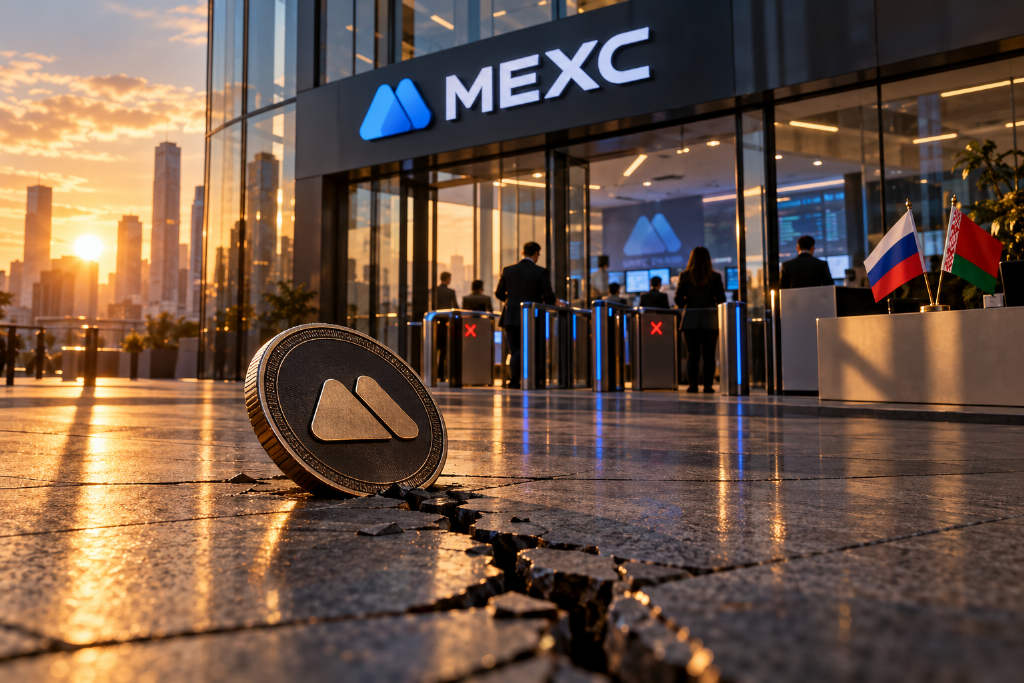
MEXC Halts Services for Russian and Belarusian Users as MX Drops 15%

MEXC has announced that it will stop providing services to users in Russia and Belarus, describing the move as part of its effort to strengthen global compliance operations. Following the announcement, the exchange’s native token MX fell sharply. According to HTX market data cited by BlockBeats on Oct. 21, MX dropped 15% and was last quoted at $1.695. The report links the sell-off to MEXC’s official notice on the service suspension. No additional details on the implementation timeline were provided in the source material. The development was published by BlockBeats under the market analysis category.

980
MEXC Halts Services for Russian and Belarusian Users as MX Drops 15%
Total 548 items
Go topage