Jensen Huang
Oct 14, 2026

Jensen Huang recounts NVIDIA’s first TSMC deal and tours Taiwan night markets with Lex Fridman

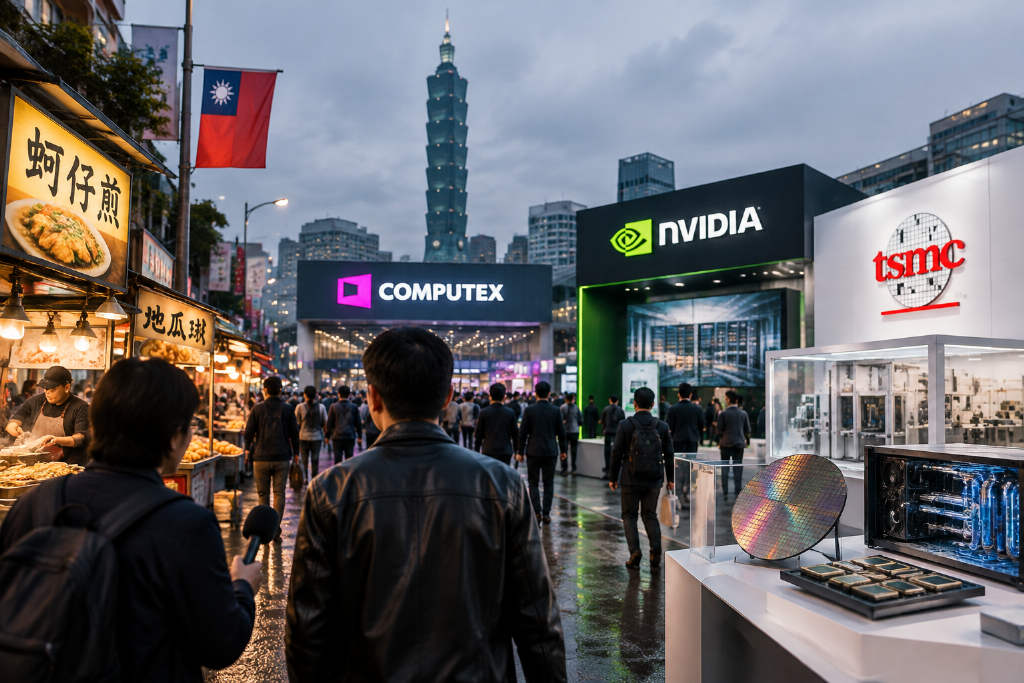
NVIDIA CEO Jensen Huang used a Taiwan trip with podcast host Lex Fridman to revisit two threads that have shaped his public image and his company’s history: his ties to Taiwan and NVIDIA’s long relationship with Taiwan Semiconductor Manufacturing Co. In a roughly 90-minute documentary released by Fridman, the two toured Computex, met engineers, and sampled Taiwanese street food including oyster omelets, sweet potato balls, pig’s blood cake, sausage, spring rolls, and peanut ice cream rolls with cilantro and peanut powder. Huang also described how, in NVIDIA’s early years, repeated calls to TSMC’s U.S. office went unanswered, leading him to write directly to founder Morris Chang. That letter, he said, opened the door to a partnership that has lasted about 30 years. Huang said the relationship was built less on price or process technology than on Chang’s views on integrity, corporate governance, and long-term cooperation. He also discussed how AI is changing computing economics from selling CPU cores to selling tokens, pointed to NVIDIA’s move from about 80% liquid cooling to fully liquid-cooled systems, and argued that U.S. policy on China should balance national security with the need to preserve America’s global technology platform advantage.
840
Jensen Huang recounts NVIDIA’s first TSMC deal and tours Taiwan night markets with Lex Fridman
Nvidia
Aug 30, 2026

Nvidia Unveils RTX Spark Chip to Take on Apple in On-Device AI

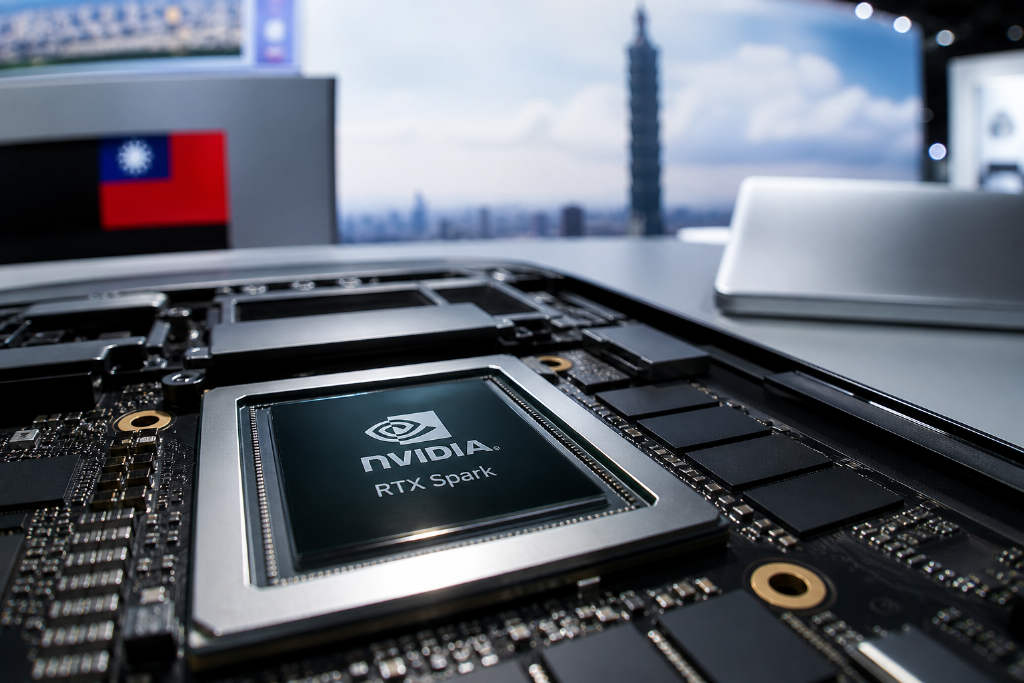
Nvidia has introduced the RTX Spark, a superchip built on the Arm architecture, at the Taipei International Computer Show in Taiwan. The chip can run large language models with up to 120 billion parameters directly on a device, and supports a context window of up to 1 million tokens. That puts it in direct competition with Apple's M-series chips, which currently lead the on-device AI processing market. The RTX Spark is aimed at high-end laptops priced between $3,000 and $4,000, mainly targeting developers and researchers. It uses a unified memory architecture and leverages the CUDA ecosystem, both of which are central to Nvidia's effort to challenge Apple's stronghold in local AI. The company also wants to shift AI workloads from data centers to personal devices, making it possible for large models to run without cloud support. The announcement was first reported by Techub News, citing CryptoBriefing. Nvidia's move signals a push to expand its AI platform beyond data center GPUs into consumer hardware, though the company has not disclosed further details about availability or exact laptop models.

1800
Nvidia Unveils RTX Spark Chip to Take on Apple in On-Device AI