MetaMask
Sep 14, 2026

MetaMask Rolls Out New Scam Defenses Across Mobile App and Browser Extension

MetaMask has introduced a new set of wallet security features aimed at reducing crypto scam losses across its mobile app and browser extension. Announced Monday, the update adds alerts for lookalike wallet addresses, investment and romance scams, and transfers to first-time recipients, while also making transaction review screens clearer. A separate feature called Added Protection will automatically revert transactions if the final transaction does not match what the preview showed; it will launch on the browser extension first, with mobile support coming later. Martin Peko, Staff Product Manager at MetaMask, told Decrypt the company found that many users were bypassing scam warnings because they either strongly trusted the recipient or were being coached through the process. MetaMask is also adding a route to priority support from that warning flow so uncertain users can reach a person. Peko said the wallet is working with security partner Blockaid, which uses large language models, classification models, and analysis of websites, social feeds, onchain bytecode, and transaction flows to identify phishing, scam, and malicious activity in real time. The rollout comes as U.S. authorities continue targeting services tied to investment and romance fraud, and as MetaMask prepares for Consensys’ planned split of its consumer and institutional businesses by the end of 2026.

1100
MetaMask Rolls Out New Scam Defenses Across Mobile App and Browser Extension
Policy and Regulation
Sep 12, 2026

WuBlockchain Weekly: Revised CLARITY Act adds DeFi registration, Consensys to split MetaMask business

WuBlockchain’s weekly top 10 roundup centered on regulation, market infrastructure and corporate restructuring across the crypto sector. In the U.S., a revised Senate Republican draft of the CLARITY Act would require non-decentralized DeFi protocols to register with the Commodity Futures Trading Commission, while keeping ethics, BRCA and stablecoin yield provisions unchanged. Germany is considering ending the tax exemption for crypto assets held longer than 12 months, with withholding tax collection by service providers set to start in 2028. In the U.K., the House of Lords backed an amendment calling for a national digital asset strategy within 12 months after the Financial Services and Markets Bill becomes law. Canada’s OSFI said tokenized deposits carry the same legal character as traditional deposits. The U.S. Commerce Department finalized up to $300 million in funding for Rigetti, D-Wave and Quantinuum under the CHIPS and Science Act to support quantum chip and fault-tolerant computing work. Separately, MetaMask said parent company Consensys Software will split into two standalone companies, while a crypto political network launched a seven-figure national TV ad campaign ahead of a planned Sept. 15 Senate vote on the CLARITY Act.

2600
WuBlockchain Weekly: Revised CLARITY Act adds DeFi registration, Consensys to split MetaMask business
MetaMask
Sep 10, 2026

Consensys split puts MetaMask on its own as consumer finance push accelerates

Consensys Software Inc. said it is reorganizing into two independently operating companies, separating MetaMask’s consumer business from its protocol and institutional infrastructure operations. The original company will be renamed MetaMask and will focus on products for retail users, while a newly formed company retaining the Consensys name will house businesses such as Linea, Besu and Teku. The split was announced on Sept. 9, 2026, and the separation process is expected to be completed before the end of 2026. Joe Lubin will serve as chairman and CEO of MetaMask, while Mike Kriak will become CEO of the new Consensys and David Cunningham its president. The move comes as MetaMask expands far beyond its original wallet role, adding mUSD, MetaMask Card, perpetuals, prediction markets, tokenized equities and its Monad-based Money Account. The company says existing users will not need to migrate wallets, reimport seed phrases or move tokens, and developer tools including its SDK and APIs will continue to operate.

1030
Consensys split puts MetaMask on its own as consumer finance push accelerates
Consensys
Sep 9, 2026

Consensys to split business, with MetaMask becoming a standalone company

Ethereum infrastructure firm Consensys is separating its operations into two independent businesses, according to Fortune. Under the new structure, the consumer arm will operate as a standalone company under the MetaMask name, focusing on the wallet and related consumer financial services. The protocol business and Ethereum software products aimed at institutions will be placed into a separate entity that will continue to use the Consensys brand. The move redraws the company’s structure around two distinct lines of business that have developed at different speeds. Founder Joe Lubin will serve as CEO of the independent MetaMask company while also taking the role of executive chairman at the new Consensys. Longtime executive Mike Kriak will lead Consensys. Lubin said one reason for the split was that the value of MetaMask’s consumer business has been growing faster than the rest of the company. Fortune said MetaMask has expanded beyond an Ethereum wallet into a platform resembling a crypto digital bank, with services including a unified account, debit card, perpetuals and prediction markets. Lubin and a company spokesperson did not provide specific details on any IPO timeline for either company or on whether MetaMask plans to issue a token.

1410
Consensys to split business, with MetaMask becoming a standalone company
MetaMask
Sep 9, 2026

MetaMask says user assets and private keys will remain unchanged after standalone shift

MetaMask said on Sept. 9 that it is entering a new phase as a standalone company, with a corporate restructuring that changes how the business is organized but leaves current users unaffected. According to the announcement, Consensys Software Inc., the company previously behind MetaMask, will be renamed MetaMask and will focus fully on the consumer platform. At the same time, protocol and institutional infrastructure businesses, including Linea, will be placed into a new company that will continue to use the Consensys name. MetaMask said the change will not affect existing users. The app, user assets, private keys, and access permissions will all remain the same, and the company said no action is required from users. Looking ahead, MetaMask said it plans to concentrate resources on expanding beyond its role as a crypto wallet into a platform where users can hold, spend, trade, and grow funds. The company described that direction as "open money."

1770
MetaMask says user assets and private keys will remain unchanged after standalone shift
Swift
Aug 29, 2026

Swift tests a blockchain shared ledger on Linea with 17 banks in pilot

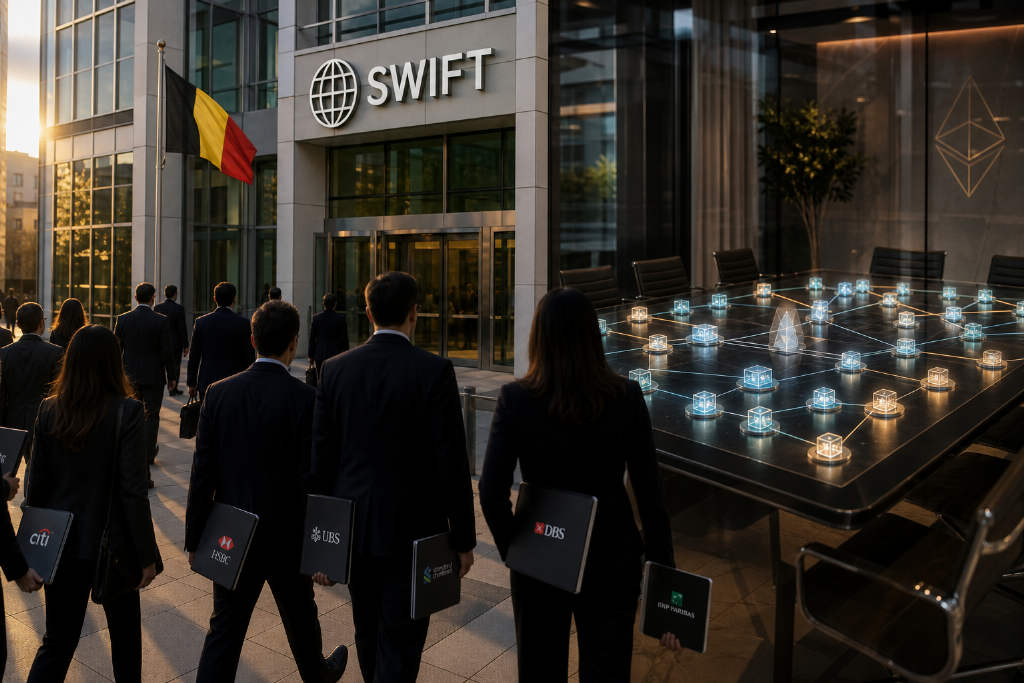
Swift is testing whether blockchain infrastructure can plug into its existing cross-border messaging network, which handles about $1.5 quadrillion in annual traffic, according to a CoinDesk report published on Aug. 29. The pilot uses a shared ledger built on Linea, the Ethereum Layer 2 network developed by ConsenSys, to explore round-the-clock tokenized payments that could operate outside standard banking hours. The initial trial includes 17 major banks across six continents, including ANZ, BNP Paribas, BNY Mellon, Citi, DBS, HSBC, Standard Chartered, UBS, Mitsubishi UFJ and Wells Fargo. Under the current setup, final settlement still runs through existing payment rails, while the blockchain ledger is being used first for messaging and coordination. The test lines up with a wider push in traditional finance toward tokenized cross-border payments, including JPMorgan’s Kinexys. For Swift, the main challenge is not simply whether the technology works, but whether it can run with the scale, reliability and regulatory standards required by a network that sits at the center of global banking flows.

1940
Swift tests a blockchain shared ledger on Linea with 17 banks in pilot
Ethereum
Jul 30, 2026

Where Ethereum’s eight co-founders are 11 years after the genesis block

Ethereum’s genesis block was mined on July 30, 2015. Eleven years later, the network has grown into the crypto sector’s second-largest blockchain by market capitalization, topping $230 billion according to CoinGecko, while many of its original founders have taken sharply different paths. Protos reviewed what the project’s eight official co-founders are still doing in public. Vitalik Buterin remains closely tied to Ethereum and the Ethereum Foundation, making him the figure most directly associated with the chain’s current direction. Joseph Lubin is still active through ConsenSys, the company behind MetaMask and Infura. Gavin Wood moved on to Parity Technologies and Polkadot, while Charles Hoskinson went on to launch Cardano. The report also highlights founders who have stepped back or kept a lower profile. Anthony Di Iorio told Bloomberg in 2021 that he did not necessarily feel safe in crypto and was trying to sell his accelerator business, though he later founded Andiami. Mihai Alisie is still listed on LinkedIn as the founder of the AKASHA Project, but the related foundation closed several months ago. Amir Chetrit and Jeffrey Wilcke have remained less visible, with Wilcke later co-founding Grid Games. Taken together, the list shows how many of Ethereum’s original builders have moved beyond the chain they helped launch.

2420
Where Ethereum’s eight co-founders are 11 years after the genesis block
Neobanks
Jul 29, 2026

Neobank census finds 368 live operators, with only 127 holding full banking licenses

A new industry census by Francesco Andreoli, head of developer relations at Consensys and MetaMask, argues that the real story in neobanking is not how many companies have raised capital, but how many quietly disappear. His dataset, published on neobankbeat.com, identifies 368 verified neobanks still operating as of July 2026. Together, based on self-reported figures, they serve roughly 1.46 billion customers. The breakdown shows a business with very different models under one label: 254 traditional challenger banks, 58 hybrid fiat-crypto apps, and 56 web3-native apps. Andreoli says 30% of neobanks founded in the 2020s and still alive today are web3-native self-custody applications, compared with 4% among those launched in the 2010s. The sharper finding is regulatory. Only 127 of the 368 active companies hold full banking licenses. The rest rely on sponsor banks, e-money licenses, or card-issuing partners. Andreoli ties that dependence to past failures such as WaveCrest in 2018, Wirecard in 2020, Synapse in 2024, and Ready in 2026. His review also challenges widespread AI claims. After checking 368 firms against filings, regulatory disclosures, and production evidence, he says only 67 passed, or 18%. The report adds that 106 infrastructure providers support the 368 consumer-facing brands, highlighting concentration risk below the surface.

2990
Neobank census finds 368 live operators, with only 127 holding full banking licenses
Total 61 items
Go topage