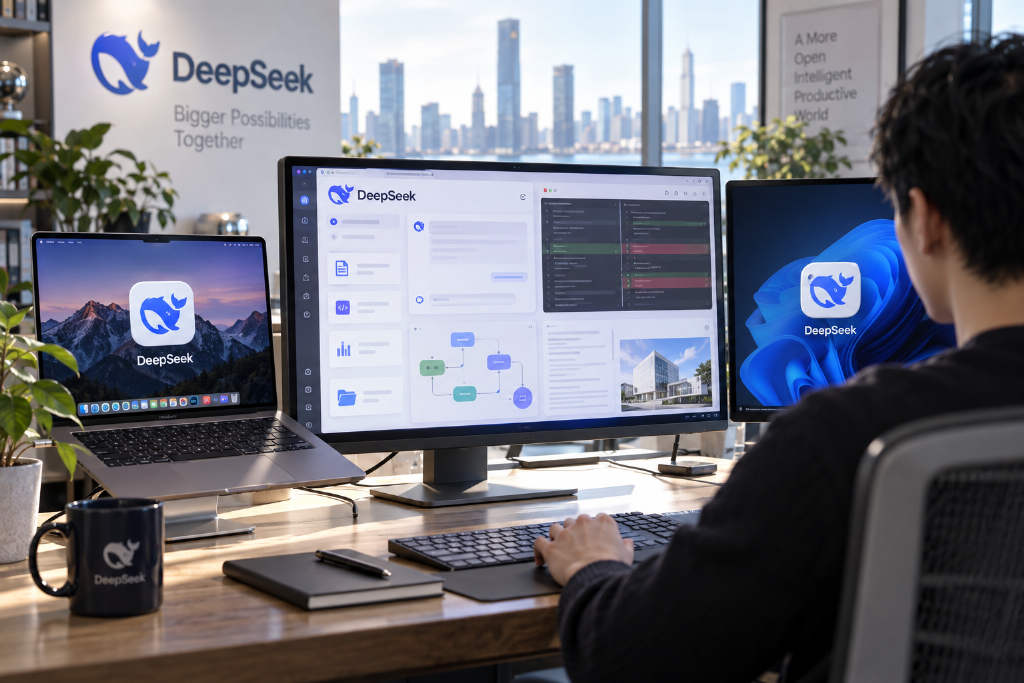
DeepSeek2026-10-04 04:55:34DeepSeek releases Harness v0.2 preview and official desktop appDeepSeek has rolled out a v0.2 preview of Harness, its open-source AI agent framework, alongside an official desktop application. The release is aimed at everyday work and programming use cases, bundling commonly used office and developer tools into a single package. According to the update, the framework includes plugin management, file and code diff previews, document processing, and automated task scheduling. The desktop app supports macOS on Apple silicon and 64-bit Windows, and users do not need to install Node.js or pnpm separately to run it. Harness is released under the MIT license and runs on the Cordis architecture. DeepSeek said every major layer in the stack, including model adapters, the tool registry, and the agent loop, is designed as a replaceable plugin. The framework supports not only DeepSeek models but also third-party OpenAI-compatible endpoints, and the company also uses Harness as its internal evaluation platform. In the v0.2.1-alpha.1 build, DeepSeek added an experimental Claude Code Mods compatibility layer and removed runtime immutable plugins, a change that could break some extensions. DeepSeek also warned that future versions will continue to bring compatibility changes.30
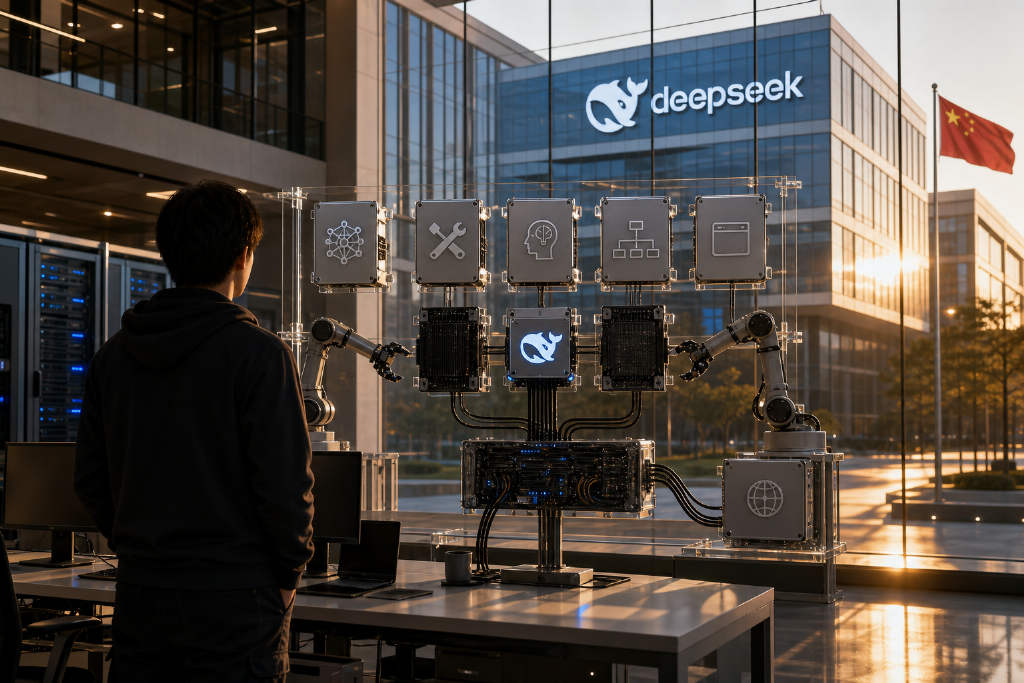
DeepSeek2026-08-15 07:28:09DeepSeek’s Harness launch shifts focus from model pricing to the Agent runtimeDeepSeek’s recent rollout of Harness, released around the same time as the V4 Pro price increase, has prompted a new reading of the company’s strategy. The original MarsBit commentary argues that DeepSeek may be moving away from a playbook centered mainly on cheaper and stronger models, and toward control over where model calls actually happen. Harness is presented not as a polished end-user Agent product, but as a modular runtime framework. In the article’s description, models, tools, Skills, workflows, and UI are all separable parts, while plugins can be loaded, removed, and recombined on the fly. Underneath that sits Cordis, a kernel focused on plugin lifecycle management and system stability during change. The piece links that design to a broader idea: Agents that can adjust their operating environment while they run. Another point the article highlights is that Harness does not force users onto DeepSeek’s own models. Developers can define models, protocols, and Base URL settings, and can theoretically connect competing models. From that angle, the commentary suggests DeepSeek may be targeting the Agent runtime layer as infrastructure, closer to an operating system logic than a single-model product strategy. In that framing, V4 Pro’s higher pricing and Harness’s open design are part of the same shift toward ecosystem economics.1460