Bitcoin
Oct 25, 2026

Winklevoss Twins and Barry Silbert Turn to Zcash as Privacy Coin Trade Heats Up

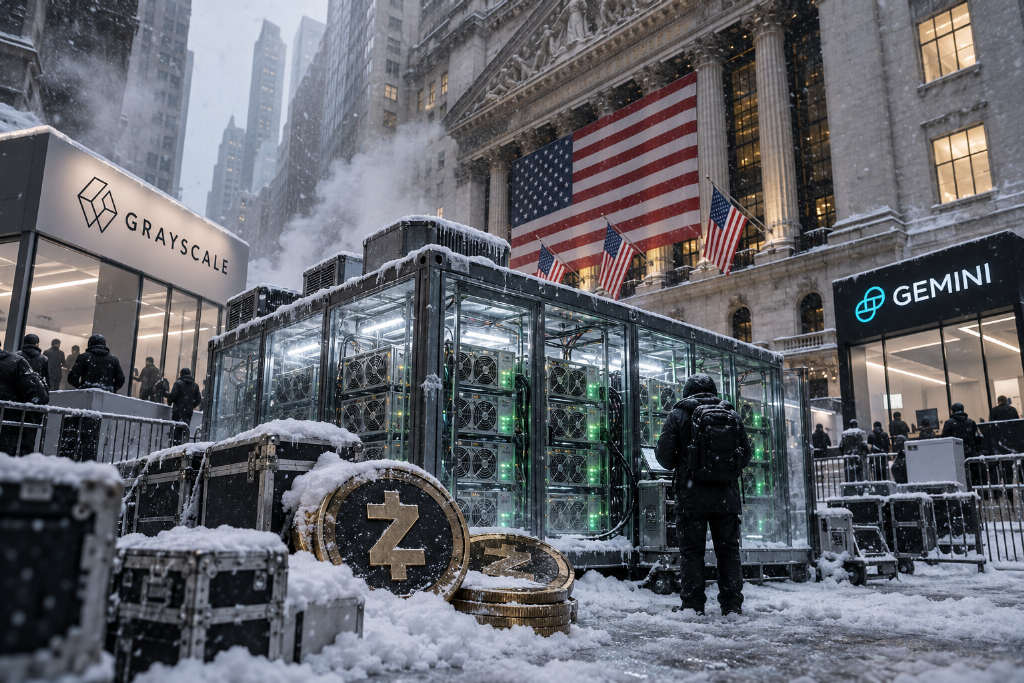
Early Bitcoin backers Cameron and Tyler Winklevoss, along with Digital Currency Group founder Barry Silbert, are now directing capital toward Zcash, according to ABMedia, citing Bloomberg. The report says ZEC has risen 347% over the past year, diverging from the broader crypto market and drawing fresh competition around mining infrastructure and Wall Street investment products. The three investors, all known for building wealth through large Bitcoin purchases in 2012 and 2013, are said to be backing Cypherpunk Technologies and Fortitude Mining with tens of millions of dollars to expand Zcash mining power while also pushing related fund products. ABMedia also points to three drivers behind the move: a March 2025 U.S. court ruling that reduced regulatory uncertainty for privacy coins, growing concern over blockchain traceability as AI tools improve, and a rise in kidnappings and robberies targeting crypto investors. For retail participants, the report says direct spot purchases and regulated financial products are the main access points, while risks remain around mining concentration, protocol security, regulation, and speculative capital flows.

830
Winklevoss Twins and Barry Silbert Turn to Zcash as Privacy Coin Trade Heats Up
Zcash
Oct 23, 2026

Winklevoss twins and DCG step up rivalry over Zcash mining and ETF products

A new contest is taking shape around Zcash as two well-known camps from crypto’s early years expand their bets on the privacy coin. According to Bloomberg, Zcash (ZEC) has climbed about 3000% so far this year, drawing heavier involvement from Gemini co-founders Cameron and Tyler Winklevoss and from Digital Currency Group founder Barry Silbert. Their competition now spans both investment products and mining infrastructure. On the product side, Grayscale, a DCG subsidiary, launched the first U.S. Zcash ETF in August, opening a route for institutional capital to access the asset. The Winklevoss twins followed this month by filing for their own Zcash ETF, setting up a direct challenge in the same segment. The rivalry also extends to mining. Cypherpunk Technologies, backed by the Winklevoss twins, and Fortitude Mining, backed by Silbert, have become major participants in the Zcash network. Both are planning to spend tens of millions of dollars to expand hash power in pursuit of a larger share of mining rewards. Cypherpunk currently controls about 20% of the network’s hash rate, while Fortitude said its share will reach 20% once new capacity is fully deployed. Bloomberg noted that because Zcash mining is a competition over a fixed issuance schedule, more hash power changes the odds of winning rewards, not the token price by itself.

1060
Winklevoss twins and DCG step up rivalry over Zcash mining and ETF products
Fortitude Mining
Oct 6, 2026

Fortitude Mining seeks up to $100 million in next-generation Zcash miners from Bitmain

Fortitude Mining, a Zcash mining company, said it has signed a non-binding letter of intent with Bitmain that gives it priority allocation for Bitmain’s next-generation Zcash mining machines. The planned purchase could reach as much as $100 million, according to the announcement carried by Techub News. The company said deliveries of the machines are expected to begin in the second quarter of 2027. The final size of the order has not been fixed and will depend on product specifications, pricing, and the execution of definitive purchase agreements. At the same time, Fortitude’s parent company, Digital Currency Group (DCG), increased the miner’s credit facility from $50 million to $70 million. Fortitude said it plans to draw $20 million this week, with the funding to be received in ZEC and used to pay a refundable deposit tied to the prospective equipment purchase. The item was attributed to Wu Blockchain in Techub’s report.

1070
Fortitude Mining seeks up to $100 million in next-generation Zcash miners from Bitmain
Umia
Oct 6, 2026

Umia raises $6.1 million in 7-day token auction, sells 34.6% of supply with no lock-up

Token issuance platform Umia raised $6.1 million through a seven-day on-chain auction, selling 17.3 million UMIA tokens at an $18 million fully diluted valuation. The sale represented 34.6% of total supply, and all tokens became tradable immediately after the auction ended, with no vesting period attached. The auction ran on Base from Aug. 26 to Sept. 2 using Umia’s modified version of Uniswap’s Continuous Clearing Auction mechanism. The minimum fundraising target was set at $2 million, while the maximum token price was capped at $0.36. According to Umia co-founder and CEO Francesco Mosterts, the platform intentionally sold a large share of supply so early backers could receive meaningful allocations instead of facing a thin float followed by future unlock pressure. Roughly 45% of the capital came from institutional investors. Ten funds joined the auction, including Galaxy Ventures, Digital Currency Group, Draper Associates, RenGen, Alpha EV, Maven 11 and Eon Capital, while nearly 700 individual bidders also took part. Mosterts said funds and retail participants received the same terms, with no discounts. CoinGecko data cited in the report showed UMIA trading at about $0.68, lifting its FDV to around $34 million. Umia said 20% of the proceeds were used to create a protocol-owned UMIA-USDC liquidity pool on Uniswap v4, with the remainder going to treasury. The platform has also selected three outside projects for token launches, including Slop.cash, a new project from ai16z founder Shaw that is expected to go live in the fourth quarter.

4740
Umia raises $6.1 million in 7-day token auction, sells 34.6% of supply with no lock-up
Barry Silbert
Oct 5, 2026

Barry Silbert says RWA tokenization and 24/7 trading are reshaping Wall Street

Digital Currency Group founder Barry Silbert said in a social media post that a view he expressed in 2011 — that tokenization and 24/7 trading would change Wall Street — is now starting to play out in the market. According to Silbert, the rise of real-world asset, or RWA, tokenization and the expansion of round-the-clock trading venues are concrete examples of that earlier prediction. The update was carried by Techub, which cited U.Today as the source. The post did not add further detail beyond linking today’s growth in tokenized real-world assets and always-open trading markets to Silbert’s long-held thesis about how financial market structure would evolve.

750
Barry Silbert says RWA tokenization and 24/7 trading are reshaping Wall Street
SEC
Oct 5, 2026

SEC weighs accredited investor overhaul as DCG points to Barry Silbert’s 2011 proposal

Digital Currency Group said on X that the U.S. Securities and Exchange Commission last week proposed changes to the accredited investor framework that would let some individuals qualify for private market access through exams and similar methods. DCG linked the proposal to a view long held by its founder, Barry Silbert, who raised a similar idea around 2011 while building SecondMarket. At the time, Silbert argued that the SEC’s accredited investor rules relied too heavily on income and net worth thresholds, even though wealth alone does not necessarily reflect investment capability. In his view, some high-net-worth individuals may lack sufficient financial knowledge, while some ordinary investors should be allowed to participate in private markets if they can pass a regulator-designed financial literacy test. The post frames the SEC’s latest move as a delayed adoption of that earlier line of thinking.

960
SEC weighs accredited investor overhaul as DCG points to Barry Silbert’s 2011 proposal
DCG
Oct 5, 2026

DCG says SEC’s proposed accredited investor overhaul echoes a Barry Silbert view from 15 years ago

Digital Currency Group (DCG), the parent company of Grayscale, said in a post on X that the U.S. Securities and Exchange Commission last week proposed changes to the accredited investor framework that would let some investors qualify for private market access through exams and similar methods. DCG said the idea closely matches a position its founder, Barry Silbert, had already put forward about 15 years ago. According to the post, Silbert raised the issue around 2011, when he founded SecondMarket. His argument was that the SEC’s accredited investor regime relies heavily on income and net worth thresholds, even though wealth does not necessarily reflect investment capability. Under that view, some high-net-worth individuals may still lack sufficient financial knowledge, while some ordinary investors should be allowed to participate in private markets if they can pass a regulator-designed financial literacy test. The statement ties the SEC’s latest proposal to a long-running debate over whether investor eligibility should be based only on wealth or also on demonstrated knowledge.

930
DCG says SEC’s proposed accredited investor overhaul echoes a Barry Silbert view from 15 years ago
Limited
Sep 28, 2026

Crypto business banking platform Limited raises $18.5 million in seed round

Limited, a crypto-focused business banking platform, has closed an $18.5 million seed round, according to an official announcement cited by ChainCatcher. The round was led by Third Prime, North Island Ventures (NIV), The House Fund, and Collab+Currency, with participation from ParaFi Capital, Pharsalus Capital, Digital Currency Group (DCG), 1982 Ventures, Onigiri Capital, and others. Limited said it operates as a global financial platform for multinational businesses, combining local business accounts, Visa cards, payments, treasury and expense management, and crypto infrastructure. The platform also supports collections and payouts through local rails including ACH, SEPA, Pix, and SWIFT, while enabling transfers in crypto assets such as BTC, ETH, and USDC.

1540
Crypto business banking platform Limited raises $18.5 million in seed round
Total 34 items
Go topage