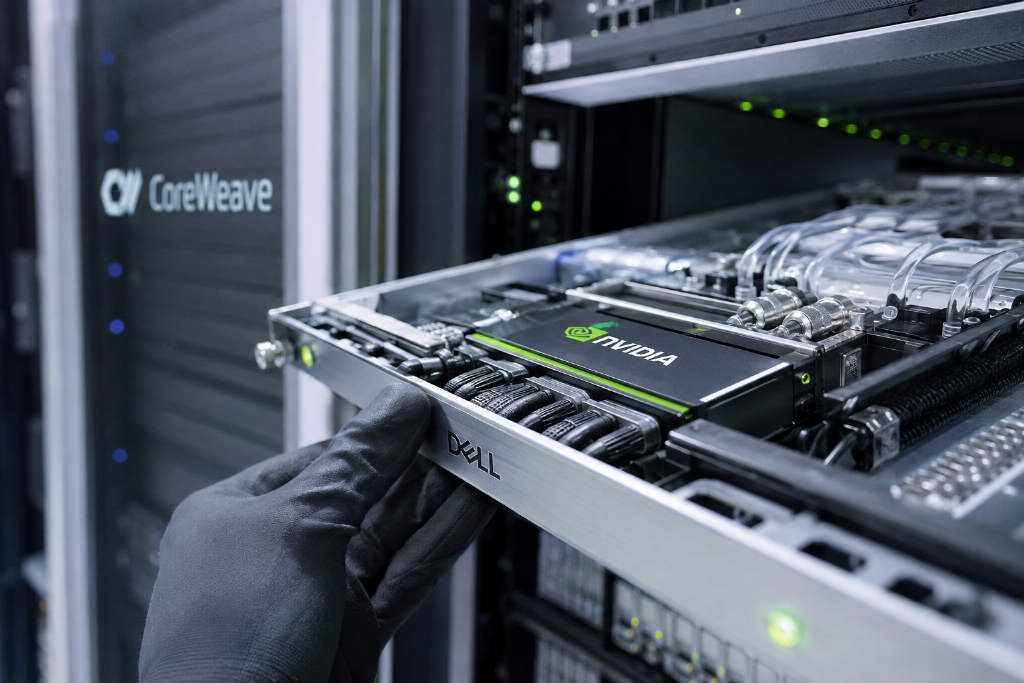
Dell Ships First Nvidia Vera Rubin NVL72 AI Server Racks to CoreWeave
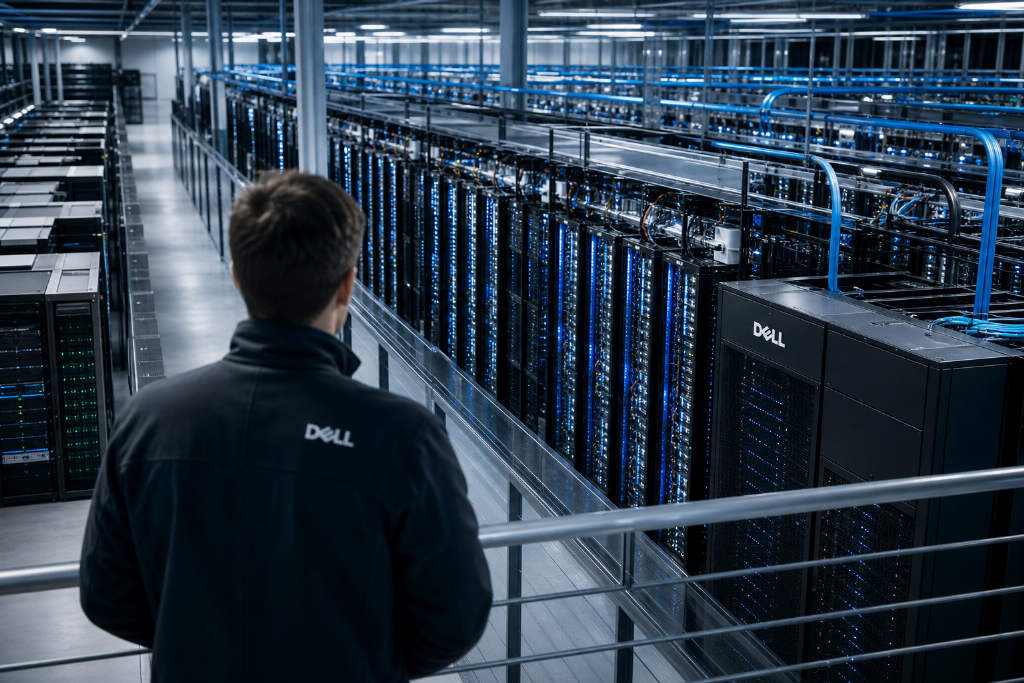
Dell Technologies has delivered the inaugural Nvidia Vera Rubin NVL72 AI server racks to CoreWeave, marking a milestone in AI efficiency and potential cost-energy reduction.
1600

Dell Technologies has delivered the inaugural Nvidia Vera Rubin NVL72 AI server racks to CoreWeave, marking a milestone in AI efficiency and potential cost-energy reduction.
U.S. stocks snapped a three-session losing streak as softer labor data and a pause in the latest oil surge gave risk assets room to recover. The Dow Jones Industrial Average rose 0.56%, the Nasdaq Composite added 0.45%, and the S&P 500 gained 0.46%. August ADP private payrolls increased by about 38,000, the weakest reading since January, cutting expectations for additional Federal Reserve tightening. At the same time, the geopolitical premium in crude briefly cooled after comments from Donald Trump on Iran and the Strait of Hormuz, helping benchmark yields retreat from intraday highs. Still, the backdrop remains fragile. The U.S. 10-year Treasury yield touched about 4.818% before ending near 4.78%, while the 30-year stayed close to 5.27%. In Japan, the 30-year government bond yield climbed to 4.155% ahead of a closely watched auction, raising the prospect of wider repricing across global fixed income markets if demand proves weak. Currency markets also stayed active, with the yen surging roughly 1.2% and the dollar index slipping toward 99.5. Within equities, AI-linked hardware names continued to outperform. Dell jumped 15.81% after record AI server orders and a sharply higher full-year revenue outlook. Nvidia rose 3.21%, while Broadcom’s quarterly results showed strong AI semiconductor growth but softer-than-expected guidance for the current quarter. By contrast, software and cybersecurity shares fell broadly as investors reassessed margins, growth quality, and new competition from large model providers including Google and Meta.
Dell raised its full-year AI server revenue outlook to $74 billion after reporting a sharp jump in orders, while Bank of Japan officials signaled a tougher discussion around a possible September rate increase. In WuBlockchain’s latest WhiteLine Daily, Dell said fiscal Q2 revenue reached $46.97 billion, up 58% year over year, with adjusted EPS at $7.04. The company booked $60.9 billion in AI server orders for the quarter, versus $24.4 billion in Q1, taking the trailing 12-month total above $130 billion. AI server revenue for Q2 came in at $16.4 billion, up 100%, and backlog rose to $95 billion. The report also highlighted a Reuters review showing large-load interconnection requests in Texas climbed from about 48 GW in 2023 to more than 474 GW now, mostly tied to data centers, even as regulators began screening project owners and funding sources. Separately, SoftBank-backed SB Energy filed for a U.S. IPO, disclosing about $439 billion in contracted backlog and 8.8 GW of contracted data center capacity, though none of its data centers are yet in operation. WuBlockchain framed the day’s key divide as the gap between orders that have already materialized and capacity figures that still require execution, financing, and customer verification.
Dell Technologies and Hewlett Packard Enterprise are set to release their latest quarterly results this week, putting AI server demand back under the microscope. Dell will report after the market closes on Sept. 1, with HPE following close behind. Dell's AI server revenue for the first quarter of its current fiscal year came in at $16.1 billion, a surge of 757% year over year. The company is carrying an order backlog of $51.3 billion. Analysts project second-quarter revenue of about $44.5 billion and earnings per share near $4.90. Both stocks have climbed sharply in 2026, up more than 260% for Dell and over 120% for HPE. The key issue for investors is whether demand for AI servers can stay at these levels. Supply-chain constraints are also in focus—shortages of memory and GPUs are squeezing margins, while differences in product mix between direct and channel sales could shape profitability. The reports come at a pivotal moment for the broader AI infrastructure trade. Beyond the two companies, the numbers will help set expectations for how much the sector can grow in the coming quarters.
Goldman Sachs released a research note on Dell's F2Q27 results, highlighting a surge in AI server orders to $60.9 billion, up 154% quarter-over-quarter, with a backlog of $95 billion. Dell raised its full-year revenue guidance to $192 billion and non-GAAP EPS guidance to $25.50. ISG margin reached 15.0%, significantly above the 11.7% estimate, while CSG margin came in at 7.6% versus 6.0%. Goldman maintained a buy rating with a $510 price target, but flagged concerns about the sustainability of AI server orders and margin drivers.
U.S. stocks closed lower on Tuesday, with the Dow down 0.79% and the Nasdaq falling 1.03%. AI-related stocks saw broad declines, led by Cadence dropping 7.6%, CrowdStrike 6.9%, and Dell 6.8%. The VIX volatility index surged 9.52%. MSX, a leading RWA trading platform, also reported the declines in tokenized U.S. equity assets.
Dell has stated that by 2030, artificial intelligence could account for 75% of all data center demand. The prediction was shared via Kalshi and reported by Techub News.
Dell forecasts that demand for AI inference tokens will surge 3,400% by 2030, according to Crypto Briefing. The prediction highlights a transformative shift toward autonomous systems, reshaping global enterprise operations.