
Market Analysis
Aug 2, 2026

Serenity says InP laser shortages for AI data centers may outstrip memory chip constraints

Serenity said Lumentum CEO Michael Hurlston has warned that the indium phosphide, or InP, laser supply chain serving AI data centers is facing a shortage more severe than the one affecting memory chips. According to the post, Lumentum could still ship more than 30% below customer demand even with its five InP wafer fabs, pointing to a growing bottleneck in optical communication components as AI infrastructure spending rises. Serenity said current supply pressure is centered on EML, or electro-absorption modulated lasers, though the broader InP laser shortage could keep spreading. The post added that it remains constructive on what it called bottleneck investment opportunities across the optical communications laser supply chain, naming Applied Optoelectronics, Sivers Semiconductors, Lumentum, and Coherent as companies being watched. Serenity also argued that as capital expenditures on AI data centers continue to climb, infrastructure segments such as optical modules and lasers, which it said had been undervalued by the market, are being repriced, with InP laser constraints emerging as a possible limiting factor in AI compute expansion.

2720
Serenity says InP laser shortages for AI data centers may outstrip memory chip constraints
Jefferies
Jul 17, 2026

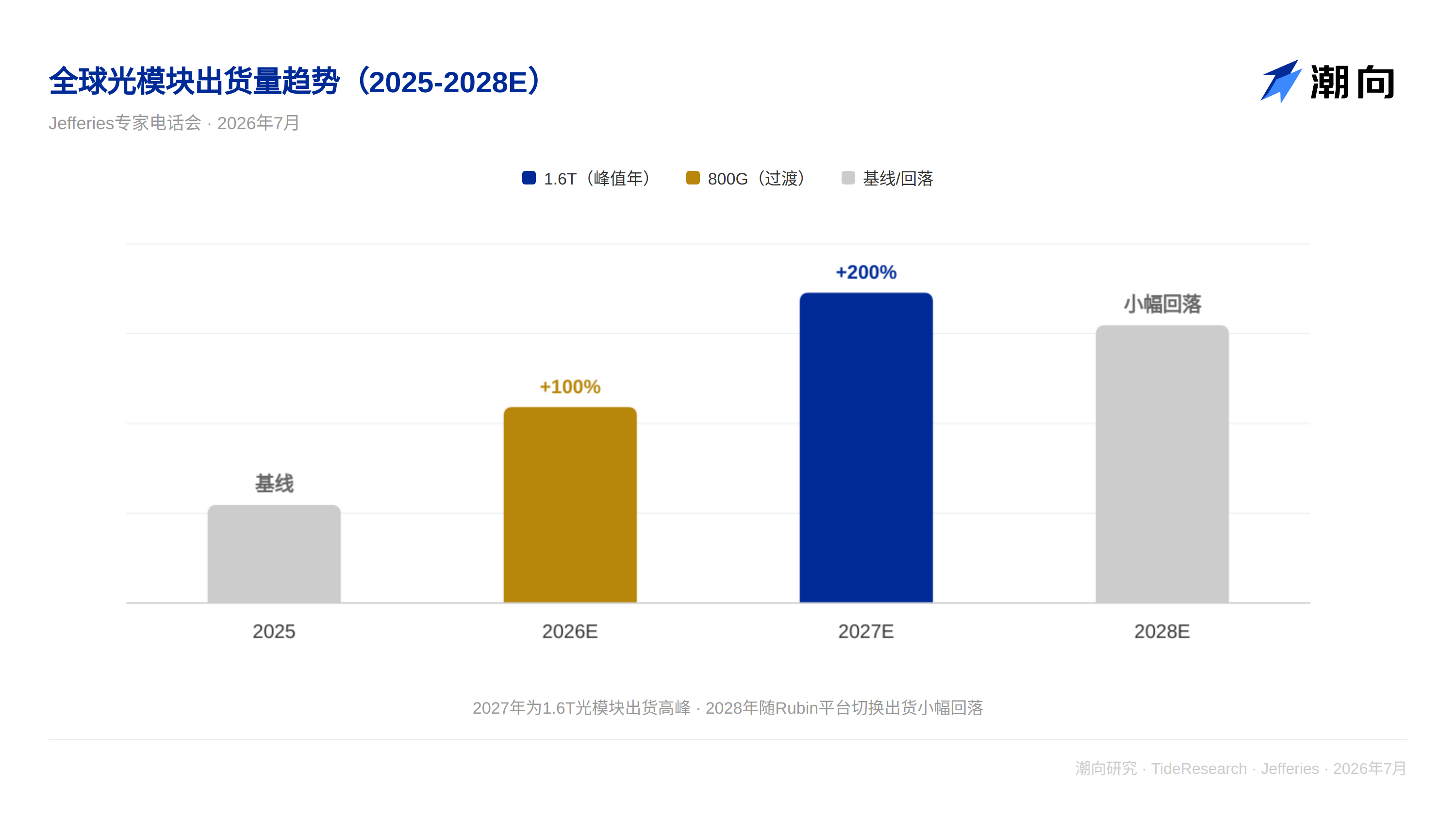
Jefferies sees optical module market tripling by 2027, with 1.6T supply still 30% short

A Jefferies research note discussed by TechFlowPost says demand for optical modules is rising faster than supply, leaving shortages in both 800G and 1.6T products and pushing the overall market toward a sharp expansion by 2027. The note estimates 800G shipments at roughly 40 million to 42 million units in 2026 versus demand of more than 45 million, while 1.6T is expected to face a wider gap, with 18 million units shipped against demand for about 26 million. Jefferies also says the bottlenecks sit upstream, especially in 3nm DSP chips for 1.6T and 200G EML components, where U.S. and Japanese suppliers hold the lead. At the same time, China is described as stronger in passive optical components and indium phosphide, or InP, substrate supply. The report argues that while silicon photonics may take more than 60% share in the 1.6T era, InP remains central across EML, silicon photonics and CPO architectures, making it one of the most critical materials in data-center optical interconnects.

6020
Jefferies sees optical module market tripling by 2027, with 1.6T supply still 30% short

