Polymarket
Oct 11, 2026

Polymarket unveils Protocol V2, sets Nov. 2 switch for new markets

Polymarket has introduced Protocol V2, a new architecture that rebuilds the protocol’s core contracts and replaces the Gnosis conditional token framework it has used since 2019. The update was announced by Polymarket protocol lead Rajath Alex. Under the new design, position token contracts will be consolidated into a single ERC-1155 standard, while pUSD will become the unified collateral asset. The protocol will also use one exchange and one router across all market types, rather than separate components for different structures. Alex said the system is built with a modular architecture that natively supports multiple market types. It also adds an OracleAggregator designed to connect with multiple oracle sources and includes a native cross-chain bridging module. Polymarket plans to run mainnet testing from Oct. 5 through Oct. 30. The team has tentatively scheduled a full switch for newly created markets on Nov. 2. At the same time, it plans to launch Data API V2, which is built in Rust. The update was cited by Techub News and relayed by Wu Blockchain.

1520
Polymarket unveils Protocol V2, sets Nov. 2 switch for new markets
Enjin
Aug 27, 2026

Enjin ERC-1155 Crypto Items flaw drained assets from about 52 wallets

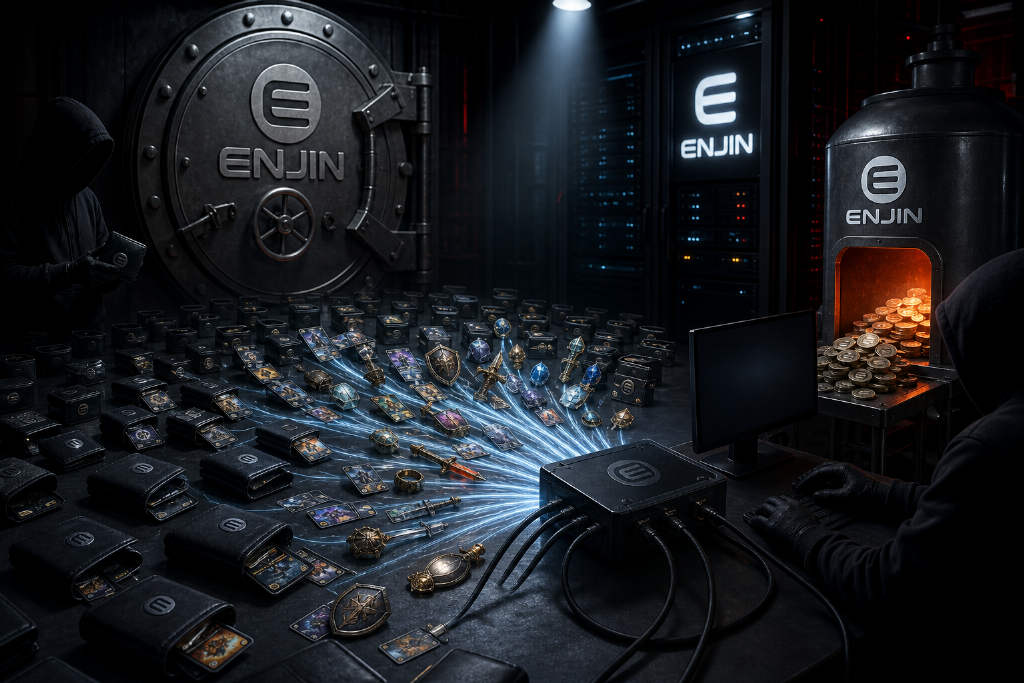
ChainCatcher reported that Enjin’s ERC-1155 "Crypto Items" let each item route transfers through a dedicated item adapter. An attacker registered and used a malicious transfer adapter to bypass owner approval checks. That allowed the attacker’s vulnerable contract to call transferFrom without approval and pull ENJ-backed items from about 52 unrelated holder wallets. After taking the items, the attacker called melt() on each stolen asset and redeemed the 500 ENJ backing attached to each item from the platform reserve. The report identified the issue as an approval-check bypass tied to the transfer adapter design.

1700
Enjin ERC-1155 Crypto Items flaw drained assets from about 52 wallets
Defimon
Aug 27, 2026

Defimon flags Enjin exploit with losses estimated at about $142,000

Defimon said it detected an exploit affecting Enjin, a Web3 gaming ecosystem development platform, with losses estimated at roughly $142,000. The issue involved Enjin’s ERC-1155 “Crypto Items,” which route transfers through item-specific adapters. According to Defimon, the attacker registered or used a malicious transfer adapter that bypassed owner approval checks. That allowed an exploit contract to call transferFrom and pull ENJ-backed items from around 52 unrelated holders’ wallets without approval. Defimon said the transfers were genuine TransferSingle events and did not require setApprovalForAll. After taking the items, the attacker called melt() on each stolen asset and redeemed the 500 ENJ backing tied to each item from the platform reserve. The disclosure outlines a mechanism-level failure in the transfer adapter flow rather than a user approval issue, based on the details provided by Defimon in its alert.

3020
Defimon flags Enjin exploit with losses estimated at about $142,000
Tapeout
Aug 18, 2026

Tapeout Tries to Recreate Chip Logic On-Chain With ERC-1155 and ERC-721

Tapeout.net is pitching an unusual idea: building an on-chain version of an integrated circuit by mapping core chip components to token standards. In the project’s design, ERC-1155 tokens represent transistors, while ERC-721 tokens represent the circuits that connect them. The article argues that this mirrors how real-world chips are built from basic units, then combined into logic gates, arithmetic units, and eventually complex processors such as GPUs and CPUs. It also points to a blockchain-native equivalent of a chip clock. In conventional hardware, transistors and circuits alone do not run unless a clock frequency drives the system. The author says block production on a blockchain can serve that role, with each new block acting like a recurring pulse for an on-chain chip. Tapeout was first launched on BNB Chain and is already live, with enthusiasts experimenting by minting “transistors” and designing their own “chips.” While the piece describes the project as primitive in terms of clock speed and current functionality, it presents the idea as a new line of thinking for crypto: whether semiconductor logic, and eventually parts of AI hardware, software, and compute, could be explored through decentralized architectures.

5030
Tapeout Tries to Recreate Chip Logic On-Chain With ERC-1155 and ERC-721