ESP32
Oct 16, 2026

ESP32 iPhone Agent goes open-source, turning a low-cost ESP32 board into an AI controller for iPhone

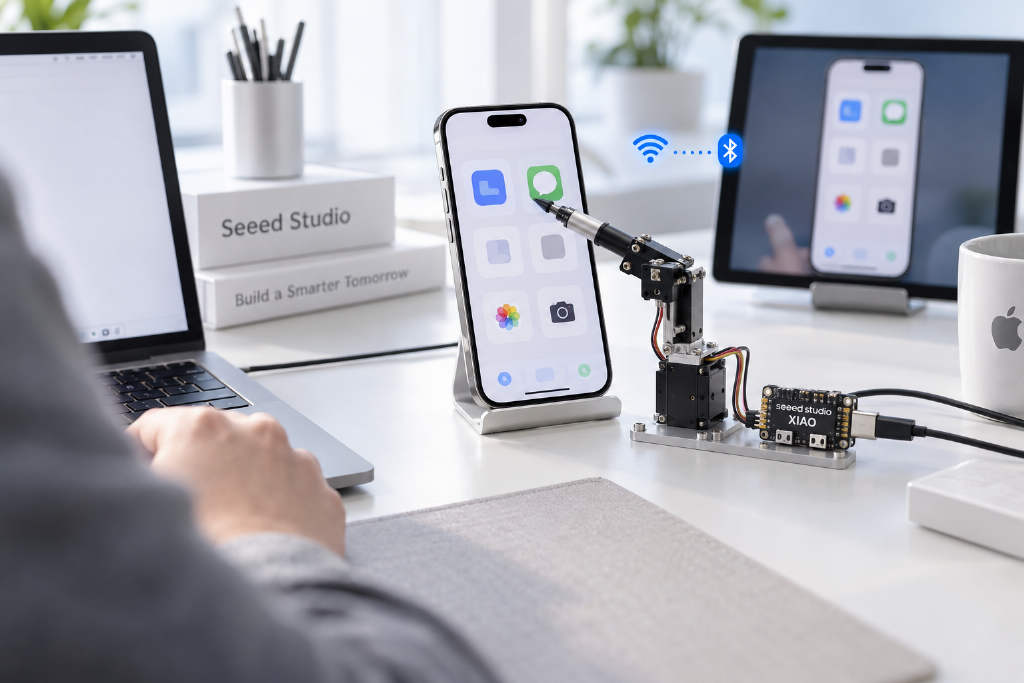
Developer Henry has open-sourced ESP32 iPhone Agent, a project that uses a XIAO ESP32S3 development board priced at roughly RMB 40 to 50 together with a mobile app to let AI operate a real iPhone. The setup can open apps, tap buttons, and swipe the screen without requiring a jailbreak or Apple XCTest testing privileges. Instead, the ESP32 creates its own Wi-Fi hotspot and acts as an AirPlay receiver. The iPhone mirrors its display to the board, which then sends compressed video back to an Agent app on the same phone over Bluetooth rather than decoding the stream itself. The app uses a vision model to read the interface, decides the next action, and sends commands back over Bluetooth so the ESP32 can emulate a USB mouse and keyboard. The system also calibrates the mouse pointer to reduce tap-position drift. The project runs on a standard ESP32-S3 and does not require dedicated video capture hardware such as NanoKVM Go, though it still has setup requirements and several technical limits.
930
ESP32 iPhone Agent goes open-source, turning a low-cost ESP32 board into an AI controller for iPhone
Meta
Oct 3, 2026

Meta open-sources Muse Gadgets and rolls out Home Link for custom AI hardware

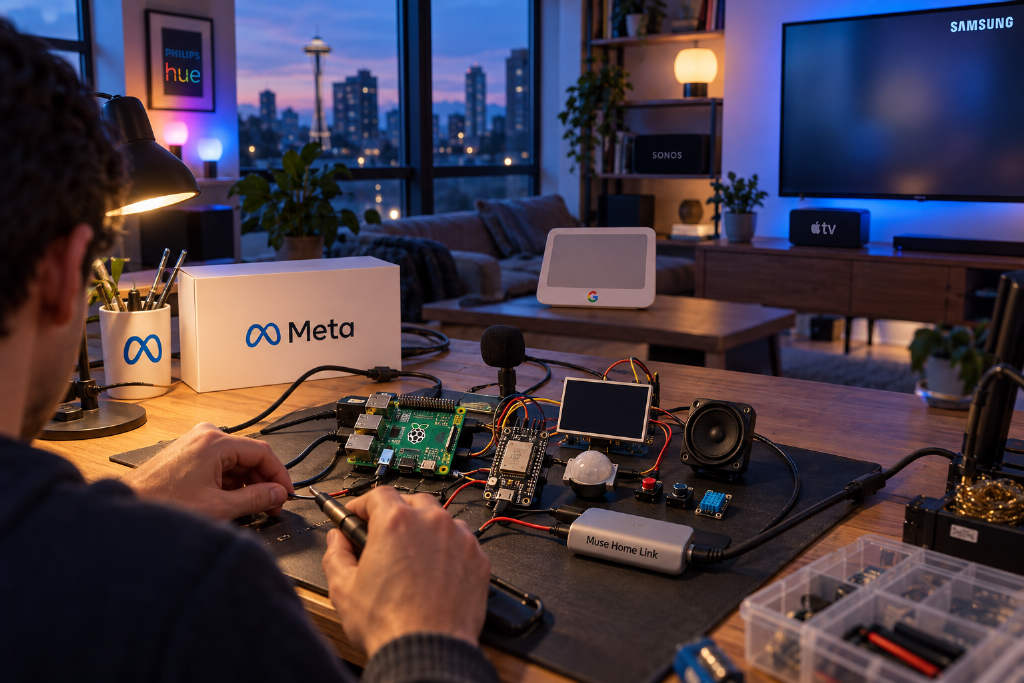
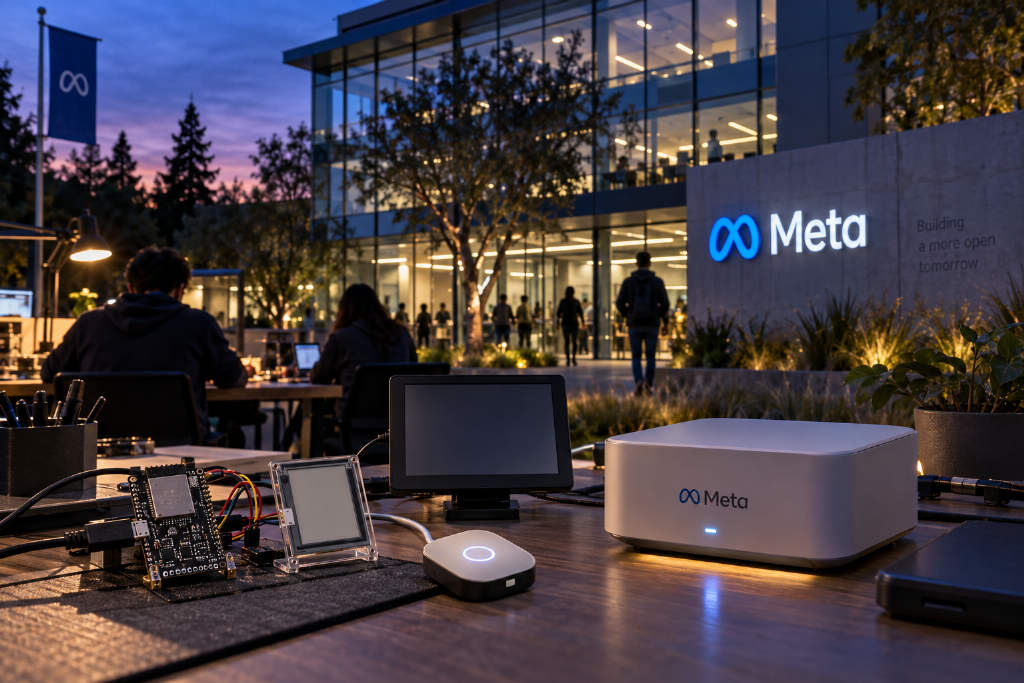
Meta has expanded its Muse push beyond software with the launch of Muse Gadgets, an open-source hardware initiative that lets developers build custom peripherals for its personal AI agent. According to the company’s description, developers can run Muse firmware on ESP32 boards or use a Linux SDK to connect more capable devices, including Raspberry Pi 5-class edge hardware. Meta also outlined several reference designs, such as color E Ink displays for schedules and reminders, HDMI display sticks for TVs and monitors, and handheld touch devices that work as portable Muse terminals. At the same time, Meta introduced Muse Home Link, a small USB-C-powered device designed to connect Muse to a home network and communicate with smart home products, including TVs, speakers, and any device that supports HTTPS interfaces. The company said the first production run totals 5,000 units, with shipments expected to begin in the coming weeks. Eligible Muse subscribers will be able to receive the device for free while inventory lasts. Meta framed the move as a way to let developers experiment with new hardware forms around AI agents. Early examples have already appeared, including an E Ink companion display built by Federico Viticci and a wine-cellar tool created with a roughly $50 SenseCAP Watcher device.

1570
Meta open-sources Muse Gadgets and rolls out Home Link for custom AI hardware
Meta
Oct 3, 2026

Meta opens Muse hardware SDK, letting ESP32 boards and Raspberry Pi devices connect

Meta has released Muse Gadgets and open-sourced the ESP32 firmware and Linux SDK used to connect to Muse, giving developers a way to build their own hardware without waiting for an official device. The code is available under the Apache 2.0 license, and the supported hardware path includes off-the-shelf ESP32 development boards, Raspberry Pi units, and other Linux devices. Meta said developers can attach components such as screens, microphones, speakers, buttons, and sensors to create custom Muse endpoints. The company also introduced Muse Home Link, a small USB-C device that connects Muse to a home local area network. Through community-built skills, it can control devices including lights, TVs, speakers, and printers. Existing integrations include Philips Hue, Sonos, Apple TV, Google Nest, and Samsung TV. Meta said it produced an initial batch of 5,000 units, which will be available free to Muse subscribers in the United States, with shipping set to begin in October. Meta had previously unveiled its own Muse Charm hardware, but that product has not officially launched.

1310
Meta opens Muse hardware SDK, letting ESP32 boards and Raspberry Pi devices connect
Apple Find My
Oct 1, 2026

Developer Uses Apple Find My Network to Send Bitcoin Cashu Tokens Offline

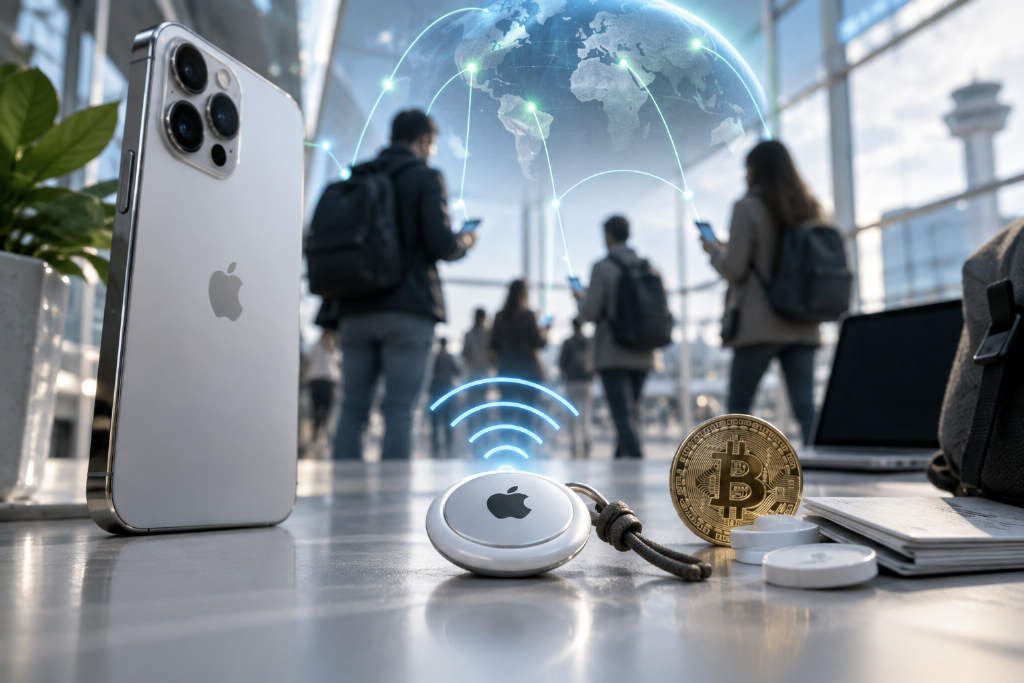
A developer has tested a way to send Bitcoin-denominated Cashu tokens over Apple’s Find My network without putting the sending device online. The setup uses a small device that imitates the beacon of a lost AirTag and embeds Cashu token data into Bluetooth signals. Passing iPhones pick up those signals and relay them through Apple’s Find My network, allowing the data to move without a direct internet connection on the sender’s side. On the receiving end, the recipient retrieves the relay reports through an Apple account and reconstructs the token step by step. The method is extremely low-bandwidth: each signal carries only two bits of data, so sending one typical token requires more than 1,000 broadcasts. The developer said the broadcast token is public and the transmission itself is not encrypted, which means the system should only be used for very small amounts. The project is currently a proof of concept rather than a finished payment product. Its code has been open-sourced on GitHub and runs on a low-cost ESP32 development board, according to Techub, citing BeInCrypto.

1070
Developer Uses Apple Find My Network to Send Bitcoin Cashu Tokens Offline