Power Landlords Emphasize Bitcoin Mining Roots During AI Market Decline
Power landlords emphasized their Bitcoin mining roots during a decline in the artificial intelligence market, Bloomberg reported, according to Techub News.
10

Power landlords emphasized their Bitcoin mining roots during a decline in the artificial intelligence market, Bloomberg reported, according to Techub News.
Atreides Management founder and CIO Gavin Baker said he had changed his tone on data centers after revisiting the debate over water use, taxes, jobs, power prices and environmental impact. He said many of the concerns raised over the past 18 months were fair, but argued that well-designed projects are increasingly addressing them. NVIDIA CEO Jensen Huang replied: “Gavin, spot on.” Baker said the case for AI data centers now runs through infrastructure spending, local tax revenue, electricity planning and a broader industrial buildout. He pointed to Loudoun County, Virginia, which he said collects about $1 billion a year from data centers, and Quincy, Washington, where data centers make up more than half of the local property tax base. Baker also said data center demand is creating work for electricians, plumbers, welders, HVAC technicians and contractors, while Huang described AI investment as a physical chain linking AI, data centers, chip factories, power plants, the grid, construction and manufacturing jobs. Huang said $400 billion has flowed into AI startups over the past six months.
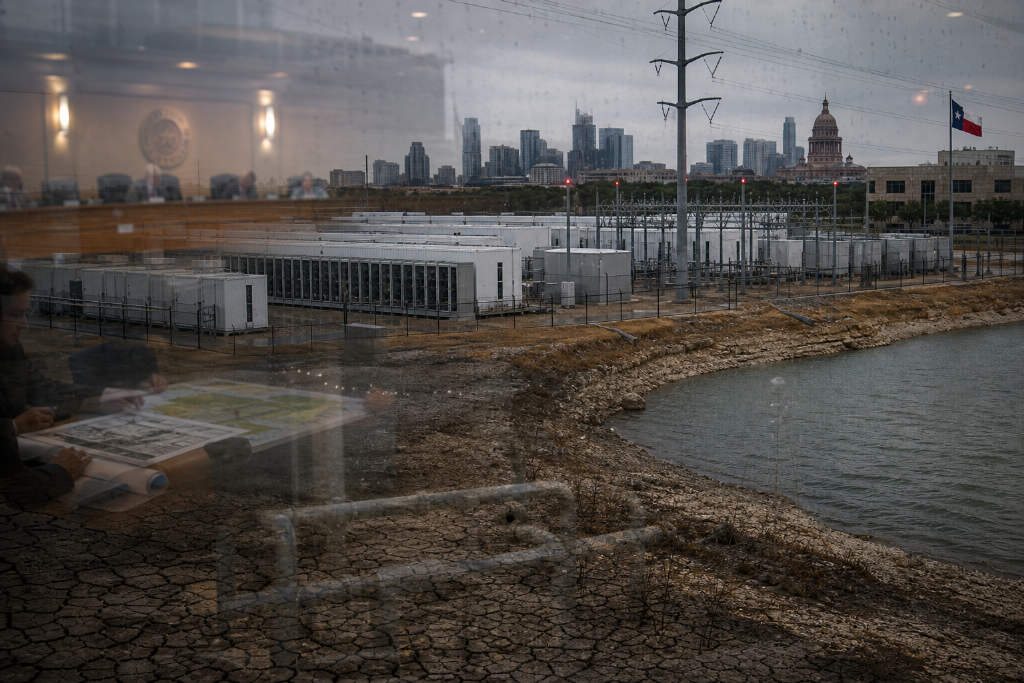
Cities across the United States are tightening oversight of AI data center construction as concerns build over water supplies, electricity costs, and land use. Austin, Texas, became the latest to act after its City Council voted unanimously on Thursday to begin drafting rules that could restrict or exclude new data centers. The move came after Ceres released a study on power plants serving data centers in seven states—Virginia, Texas, California, Illinois, Georgia, Ohio, and Arizona—which together host about half of the country’s data centers. According to the study, those plants withdraw roughly 3.4 trillion gallons of freshwater each year, or 10.4 million acre-feet, a volume that exceeds California’s average annual urban water demand and is about 12 times the combined annual water use of Los Angeles, Phoenix, and Washington, D.C. The debate is spreading beyond city halls. San Marcos, Durham, Cave City, and Jersey City have all taken steps to block or pause data center development, while Maine and Pennsylvania have also weighed in through state-level policy actions.
The U.S. now has 5,426 data centers—more than all other major countries combined. With $40 billion worth of new facilities under construction and AI-driven electricity demand soaring, experts warn of a looming power crisis.
The Kobeissi Letter reveals the US now hosts 5,426 data centers, more than all other major countries combined, with $40 billion in new projects underway. AI-driven electricity demand could consume 8.1% of US power by 2030, making electricity the world's most valuable commodity.