Europol
Oct 7, 2026

Europol urges early action on quantum threats in two new reports

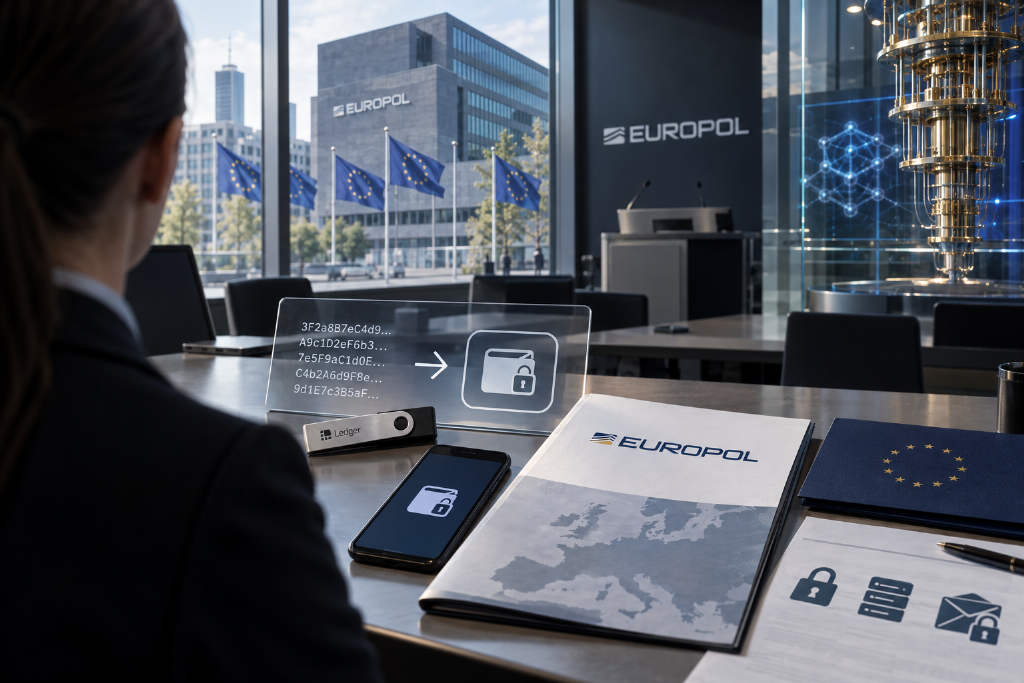
Europol on Wednesday released two reports calling on industry participants and policymakers to prepare for quantum-computing risks before they become operational. One report, written by the agency’s European Cybercrime Centre and titled Quantum Computing and Cryptocurrencies, says crypto wallets are the main point of exposure because a sufficiently powerful quantum computer could derive a private key from an exposed public key and let an attacker move funds without authorization. The report refers to that moment as Q-Day. At the same time, it says the hash functions used to link blocks and support mining are broadly quantum resistant, and argues cryptocurrencies would not collapse because of quantum computing alone. Instead, it recommends proactive defenses, including a phased move to post-quantum cryptography, stronger wallet security and better key management. It also says wallets whose public keys are already exposed on-chain cannot be fixed after the fact and must be migrated in advance. Europol’s second report, completed with Universidad Carlos III de Madrid, examines harvest-now-decrypt-later attacks and identifies risks for protocols including TLS, SSH and OpenPGP.
400
Europol urges early action on quantum threats in two new reports
Europol
Oct 2, 2026

Europol seizes KillSec leak site, says 16-year-old was a key operator

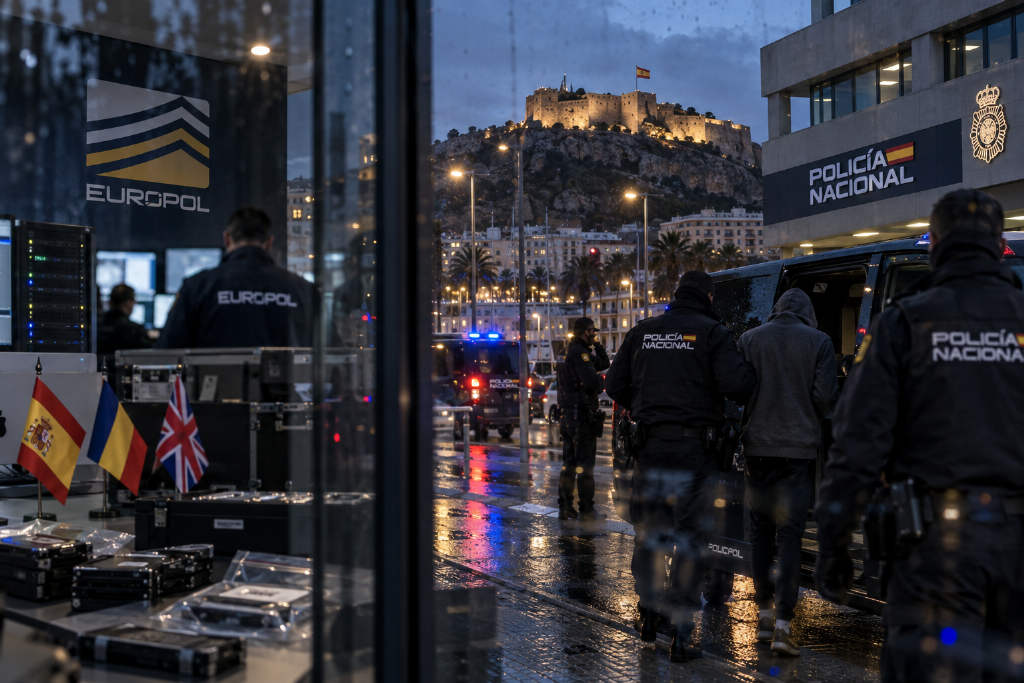
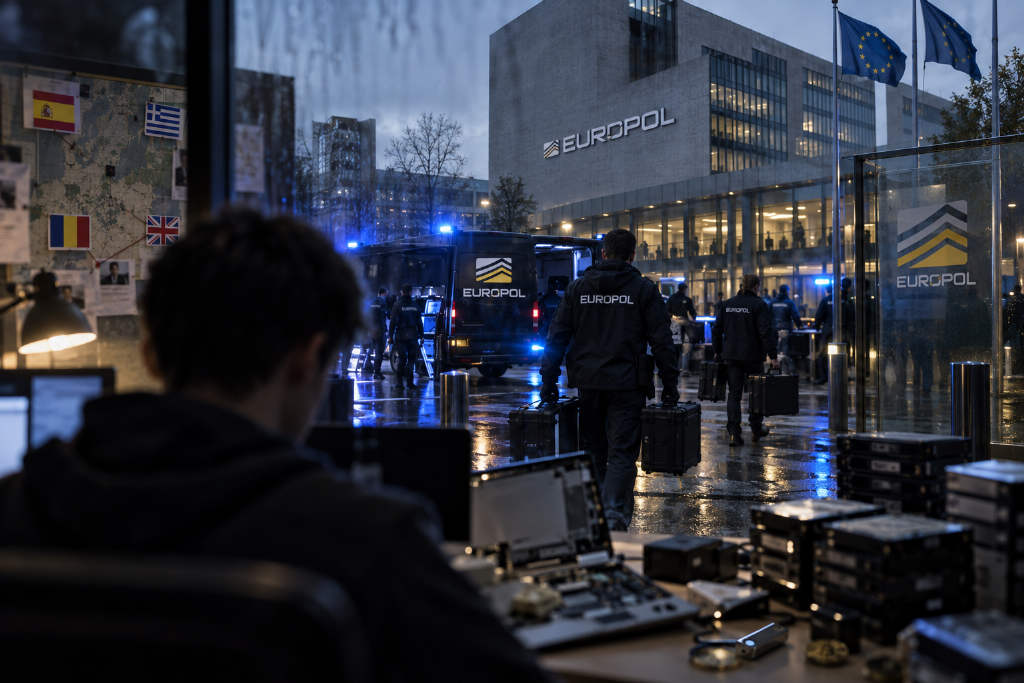
Europol said on Oct. 1 that law enforcement agencies took control of the leak site used by the ransomware group KillSec on Sept. 30, securing at least 110 TB of stolen data and blocking further outside access. The operation, called “KillSwitch,” was led by Hamburg state criminal police and prosecutors in Germany and included searches at eight locations across Spain, Greece, Romania, and the U.K., with three temporary arrests. Investigators identified a 16-year-old suspect as the group’s alleged administrator and main operator. Europol said KillSec was linked to about 1,000 attacks worldwide, with roughly 500 confirmed successful cases so far, though that figure could change as evidence is reviewed. The agency also said the group used AI to build and maintain its ransomware infrastructure and to identify potential victims, but did not disclose the tools involved or the exact tasks AI handled. According to The Hacker News, citing statements from national police forces and Reuters, the 16-year-old was arrested in Spain. Spanish authorities said more than 280 victims were affected and that some paid around €500,000 in cryptocurrency ransom. Investigators also seized computer equipment, phones, and crypto wallets, and said preliminary analysis found transactions matching some ransom payments.

810
Europol seizes KillSec leak site, says 16-year-old was a key operator
KillSec
Oct 2, 2026

Spanish Police Arrest 16-Year-Old Accused of Running KillSec Ransomware Group

Spanish police have arrested a 16-year-old Romanian national in Alicante on suspicion of serving as the main operator and administrator of the KillSec ransomware group, in a wider European law enforcement operation that also led to arrests in Britain and Romania. Europol said authorities seized the group’s servers and leak site, took control of five central servers, and secured at least 110 terabytes of stolen data. The September 30 action, part of Operation KillSwitch, is being led by the Hamburg State Criminal Police Office and the Hamburg public prosecutor. Investigators are looking into around 1,000 suspected attacks worldwide, with roughly 500 identified so far as successful. Eight properties were searched across Spain, Greece, Romania, and the UK. Authorities said KillSec had been active since around 2024, using software flaws and weak access points, especially in cloud storage, to steal internal corporate data and extort victims. Swiss federal police said the group used double extortion and often demanded payment in cryptocurrency. Investigators also found evidence that the group used AI to build and maintain its ransomware infrastructure and to identify potential victims. Europol’s European Cybercrime Centre is supporting the case with crypto tracing and digital forensics.

760
Spanish Police Arrest 16-Year-Old Accused of Running KillSec Ransomware Group
Spain Police
Oct 2, 2026

Spanish police arrest 16-year-old suspect linked to KillSec ransomware operation

Spanish police arrested a 16-year-old Romanian national in Alicante on suspicion that he served as an administrator and key operator of the KillSec ransomware group, according to an Odaily report citing Decrypt. Europol said law enforcement agencies have taken control of the group’s servers and leak site and secured at least 110 TB of stolen data. The coordinated operation included searches at eight properties across Spain, Greece, Romania, and the United Kingdom. Investigators are reviewing about 1,000 suspected attacks worldwide, with roughly 500 already confirmed as successful. Authorities also arrested two other suspects in their 20s in the UK and Romania. In a separate case tied to the investigation, a Dutch man living in the UK was charged and arrested in Puerto Rico and is awaiting extradition. KillSec has reportedly been active since around 2024, demanding ransom payments in cryptocurrency and using double-extortion tactics by threatening to publish stolen data. Europol’s European Cybercrime Centre provided cryptocurrency tracing and digital forensics support.

700
Spanish police arrest 16-year-old suspect linked to KillSec ransomware operation
Europol
Oct 2, 2026

European police arrest suspects tied to KillSec ransomware operation

Spanish police have arrested a 16-year-old Romanian national in Alicante on suspicion of serving as an administrator and key operator of the ransomware group KillSec, according to Decrypt, citing a Europol notice. Two other suspects in their twenties were also arrested in the UK and Romania. Investigators have identified another developer who turned 18 in August, though that person was not detained because part of the alleged conduct took place while they were still a minor. The coordinated law enforcement action, codenamed Operation KillSwitch and led by Hamburg state criminal police and prosecutors in Germany, examined about 1,000 suspected attacks worldwide, with roughly 500 already confirmed as successful intrusions. Authorities searched eight locations across Spain, Greece, Romania, and the UK, took control of five central servers, redirected related domains to seizure notices, and seized at least 110 TB of stolen data. Europol’s European Cybercrime Centre is assisting with cryptocurrency tracing and digital forensics.

740
European police arrest suspects tied to KillSec ransomware operation
Policy and Regulation
Aug 25, 2026

Recoveris executive warns AI is widening the gap between crypto criminals and law enforcement

Recoveris executive Sol Cinosi warned that artificial intelligence is rapidly increasing the scale and sophistication of crypto-enabled fraud while some jurisdictions still bar investigators from using the same class of tools. Speaking during a BeInCrypto Market Intelligence Committee discussion on crypto crime, Cinosi said criminals are already using AI every day to clone voices, write phishing emails, and expand scam operations. He added that older ways of spotting phishing attempts, such as checking for grammar mistakes, no longer hold up because AI-generated messages have become far more convincing. The warning lines up with figures cited from Chainalysis’ 2026 Crypto Crime Report. The report estimates that crypto scams caused $17 billion in losses in 2025. It also found that scam operations with on-chain links to AI providers earned an average of $3.2 million per operation, which is 4.5 times the average for operations without those links. Europol’s IOCTA 2026 report described the problem as a "speed gap" and said law enforcement needs technology to close it. Cinosi argued that AI could help investigators process large volumes of data, detect patterns and connections faster, and leave human teams to focus on judgment-heavy and critical decisions.

1340
Recoveris executive warns AI is widening the gap between crypto criminals and law enforcement
Total 30 items
Go topage