SoFi
Oct 24, 2026

SoFi launches 4.4% FDIC-insured tokenized deposit product for retail customers

SoFi has introduced SoFi Earn, or SOFIE, a yield-bearing tokenized deposit product that offers a 4.4% annual percentage yield and FDIC insurance within applicable limits. The company said the launch makes it the first U.S. nationally chartered bank to offer tokenized deposits directly to individual customers. Each SOFIE token represents $1 held in a SoFi Bank account and can be accessed through the SoFi Crypto platform. Users can convert SOFIE 1:1 into the SoFiUSD stablecoin to buy cryptocurrencies or transfer funds around the clock to supported external wallets. Deposits continue earning interest until conversion, while SoFiUSD itself is not covered by FDIC insurance. The rollout follows SoFi’s earlier crypto trading launch, the release of SoFiUSD, and its integration of the stablecoin into its consumer banking app. The company said it expects to complete distribution to all crypto members in November. The product arrives as banks and policymakers continue to debate whether yield-bearing stablecoins and similar instruments could pull deposits away from the traditional banking system.


1730
SoFi launches 4.4% FDIC-insured tokenized deposit product for retail customers
SoFi
Oct 23, 2026

SoFi rolls out 4.40% tokenized deposits as banks chase idle stablecoin cash

SoFi has begun a phased rollout of SoFi Earn to eligible SoFi Crypto users, introducing a tokenized deposit product called SOFIE that represents $1 held in a SoFi Bank account for each token. According to the company’s disclosure, eligible users can receive a 4.40% annual percentage yield, then convert SOFIE 1:1 into the dollar stablecoin SoFiUSD to buy crypto in the SoFi app or move funds to supported external wallets. The product draws a clear legal line between tokenized bank deposits and stablecoins. SoFi says SOFIE is a tokenized bank deposit tied to SoFi Bank deposit liabilities, while SoFiUSD is a dollar stablecoin built for payments and transfers. That distinction matters because SOFIE may earn interest and, if requirements are met, qualify for FDIC deposit insurance, while SoFiUSD is not a bank deposit and does not carry FDIC insurance. The launch also points to a broader shift in competition across digital dollars. The focus is no longer only on issuance, liquidity, and exchange access. Banks and stablecoin issuers are now competing over who can retain customer cash when it is sitting idle, and who can offer a smoother path between yield, transfers, and crypto market access under evolving U.S. rules, including the GENIUS Act and the FDIC’s 2026 proposal on tokenized deposits.

990
SoFi rolls out 4.40% tokenized deposits as banks chase idle stablecoin cash
SoFi
Oct 22, 2026

SoFi launches tokenized deposit SOFIE with 4.40% APY and 1:1 conversion to SoFiUSD

Fintech firm SoFi has launched SoFi Earn, or SOFIE, describing it as the first tokenized deposit issued by a U.S. national bank for consumers. Each SOFIE represents $1 held in a SoFi Bank deposit account, and holders can earn a 4.40% annual percentage yield. The funds are also covered by Federal Deposit Insurance Corporation insurance within applicable limits, according to the company. Users can convert SOFIE to SoFiUSD on a 1:1 basis. From there, they can buy cryptocurrencies inside the SoFi app or move dollars around the clock over blockchain networks. SoFi said the product is designed to let digital dollars keep earning before they are spent. The launch marks SoFi’s fifth crypto product introduced in less than a year. The company resumed cryptocurrency trading in late 2025 and now supports trading in more than 40 tokens. Its stablecoin, SoFiUSD, is already live on Ethereum and Solana and is used to settle all of SoFi’s card programs.

1130
SoFi launches tokenized deposit SOFIE with 4.40% APY and 1:1 conversion to SoFiUSD
SoFi
Oct 22, 2026

SoFi launches SOFIE tokenized deposit with 4.4% yield and FDIC coverage limits

SoFi Technologies has introduced SoFi Earn, a tokenized deposit product trading under the ticker SOFIE, according to The Block. The product offers a 4.4% annual percentage yield and is covered by Federal Deposit Insurance Corporation insurance within applicable limits. SoFi said the launch marks the first time a U.S. national bank has offered tokenized deposits directly to retail customers. Each SOFIE token represents $1 on deposit at SoFi Bank. Members can convert SOFIE 1:1 into the stablecoin SoFiUSD through SoFi Crypto, then use those funds to buy cryptocurrencies or move them at any time to supported external wallets. SoFi said deposits continue earning interest until conversion. Once converted, however, SoFiUSD is not an FDIC-insured deposit, in line with other stablecoins. The company expects a full rollout to crypto members in November. SoFi said it launched consumer crypto trading in November 2025, later introduced SoFiUSD, and added it to its consumer app in May this year. SoFi Crypto currently supports trading in more than 40 digital assets. CEO Anthony Noto said the goal is to let customer funds keep generating yield before they are used, while combining the yield and protections of bank deposits with the speed and utility of digital assets.

990
SoFi launches SOFIE tokenized deposit with 4.4% yield and FDIC coverage limits
OCC
Sep 29, 2026

Acting OCC chief opposes joint resolution plan feedback letter to American Express

Jonathan V. Gould, acting comptroller of the currency at the Office of the Comptroller of the Currency, said he voted against a joint resolution plan feedback letter sent to American Express by the Federal Deposit Insurance Corporation and the Board of Governors of the Federal Reserve System. In a statement, Gould explained the basis for his dissent and reiterated his view that the resolution planning framework under Section 165(d) of the Dodd-Frank Act needs reform. The update centers on the regulatory process around resolution plans rather than any newly disclosed action involving American Express beyond the feedback letter itself. The statement, as cited by Techub News, focused on Gould’s opposition vote and his broader call to revise the current approach under the law.

880
Acting OCC chief opposes joint resolution plan feedback letter to American Express
Polymarket
Sep 26, 2026

Polymarket bank failure contracts raise concerns inside the FDIC

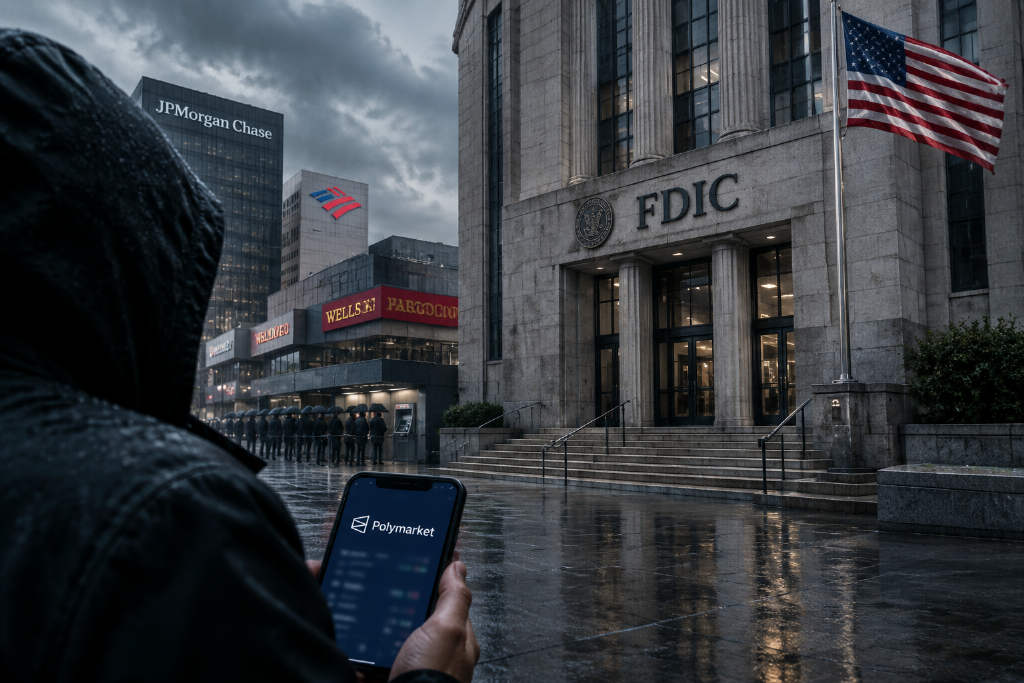
Prediction contracts on Polymarket tied to the potential failure of major banks including JPMorgan Chase, Bank of America, and Wells Fargo have drawn concern from officials at the U.S. Federal Deposit Insurance Corporation, according to Techub News. Some officials reportedly worry that if trading in such contracts grows larger, it could help fuel real-world bank runs. The FDIC also discussed whether employees could use inside information to trade these contracts. After internal review, officials concluded that existing ethics rules already prohibit that kind of conduct. The contracts are currently available only on Polymarket’s offshore platform, while its regulated U.S. platform does not list such products. Contracts tied to whether a bank will fail before the end of this year have recorded about $76,000 in total trading volume. Polymarket said these markets can give the public access to information that is usually available only to professional financial institutions.

780
Polymarket bank failure contracts raise concerns inside the FDIC
US regulation
Sep 11, 2026

U.S. regulators issue proposed guidance on third-party risk management for banks

U.S. banking regulators on Friday released proposed guidance on third-party risk management for banks and credit unions. The proposal was issued by the Federal Reserve, the Office of the Comptroller of the Currency, the Federal Deposit Insurance Corporation, and the National Credit Union Administration. The agencies said the draft is meant to help institutions better tailor their third-party risk management practices to the risk profile of each outside relationship. In a memo, Federal Reserve staff said the proposal comes as banks increasingly outsource certain functions and rely on third-party arrangements to improve efficiency and reduce costs. The proposal is nonbinding and will be open for public comment, with the agencies framing supervision around a principles-based approach. Federal Reserve Governor Barr opposed the proposal, citing concerns about the standard for what counts as a 「material financial risk」.

1530
U.S. regulators issue proposed guidance on third-party risk management for banks
OpenReserve
Sep 3, 2026

OpenReserve wins preliminary OCC approval for a national bank charter

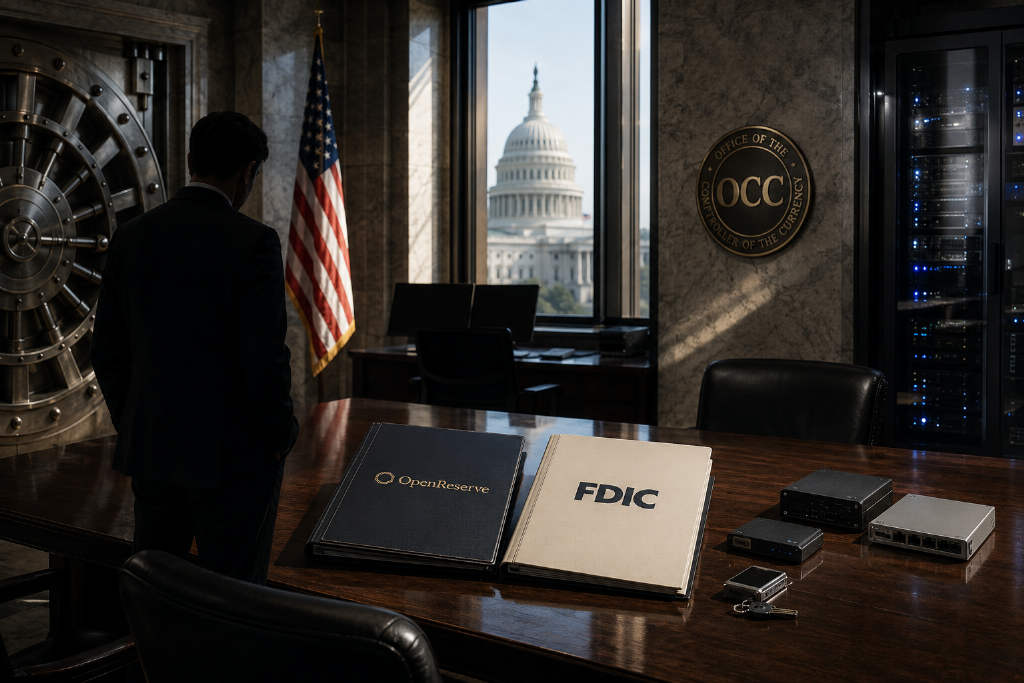
OpenReserve has received preliminary approval for a U.S. national bank charter from the Office of the Comptroller of the Currency, according to BlockBeats. The fintech-focused banking startup is also seeking Federal Deposit Insurance Corporation coverage and has already submitted its application to the FDIC. In April, the company raised $25 million in seed funding led by a16z crypto, with participation from Jump Capital, Acrew, Coinbase Ventures, Clocktower, Quona, and Middle East venture fund AAF Management. OpenReserve is led by fintech executives including MoneyLion co-founder Dee Choubey. The company says it is building a model that combines traditional banking services with blockchain infrastructure and digital asset offerings, using digital assets and technology to support round-the-clock, 24-hour operations.

1480
OpenReserve wins preliminary OCC approval for a national bank charter
Total 56 items
Go topage